What to know
- Wirecard, a German payments company that joined the prestigious DAX index in 2018, fabricated nearly €2 billion in cash balances across years of fraudulent financial reporting.
- Journalists and short sellers flagged the fraud years before regulators acted — and Germany's financial watchdog BaFin actually went after the accusers instead of the company.
- COO Jan Marsalek fled to Moscow after the collapse and is now living under a false identity as a suspected Russian intelligence operative.
On the morning of June 18, 2020, two auditors from Ernst & Young sat in a Manila conference room waiting for confirmation that never came. They had asked the Bank of the Philippine Islands and BDO Unibank to verify that €1.9 billion in cash — supposedly held in trust accounts on behalf of Wirecard AG, Germany's most celebrated fintech company — actually existed. The banks' replies, when they finally arrived, were identical in substance: we have no record of these accounts. Within seventy-two hours, Wirecard's CEO would resign, its stock would lose 90 percent of its value, and its chief operating officer would board a private jet and disappear from the face of the earth.
The Austrian Wunderkind
Munich, 2002 — a 22-year-old college dropout talks his way into the executive suite of a company most Germans have never heard of.
Jan Marsalek arrived at Wirecard's offices in Aschheim, a suburb east of Munich, sometime in 2002. He was twenty-two years old, Austrian, and had never finished a university degree. What he did have was a preternatural ability to talk — fast, fluently, in multiple languages — and an instinct for making himself indispensable to people who needed problems solved without too many questions asked.
Wirecard itself was barely a company at that point. Founded in 1999 during the dot-com frenzy, it had started life processing payments for online gambling and pornography sites — the kind of merchants that mainstream banks wouldn't touch. Its early years were messy, its accounting questionable, its reputation marginal. But the underlying business model — sitting between merchants and banks, skimming a fraction of every transaction — was a license to print money if you could scale it.
Marsalek understood this. He also understood something else: the payments industry was a labyrinth of intermediaries, shell companies, and cross-border fund flows where money could be routed through so many jurisdictions that tracing it became nearly impossible. For a legitimate operator, this complexity was a headache. For someone with different intentions, it was an opportunity.
By 2010, Marsalek had risen to the position of Chief Operating Officer. He was thirty years old. His boss was Markus Braun, a quiet, methodical Austrian who had taken over as CEO in 2002 and who projected the kind of reassuring competence that institutional investors wanted to see. Braun was the face. Marsalek was the engine. Together, they would transform Wirecard from a fringe payment processor into what appeared to be one of Europe's most important technology companies.
The division of labor was clean: Braun handled investors, strategy, the German regulators. Marsalek handled Asia. He traveled constantly — to the Philippines, to Singapore, to Dubai — building what Wirecard described as a vast network of third-party acquiring partners who processed payments on the company's behalf in markets where it didn't hold its own licenses. These partners, Wirecard told auditors, generated hundreds of millions of euros in revenue and held billions in escrow.
The partners were real, in the sense that they had names, addresses, and incorporation documents. Whether they actually processed the transactions Wirecard claimed was another matter entirely. But for now, no one was asking. Germany's newest tech champion was growing too fast for anyone to slow it down.
Joining the Aristocracy
September 24, 2018 — Wirecard replaces Commerzbank in Germany's most prestigious stock index, and the champagne flows in Aschheim.
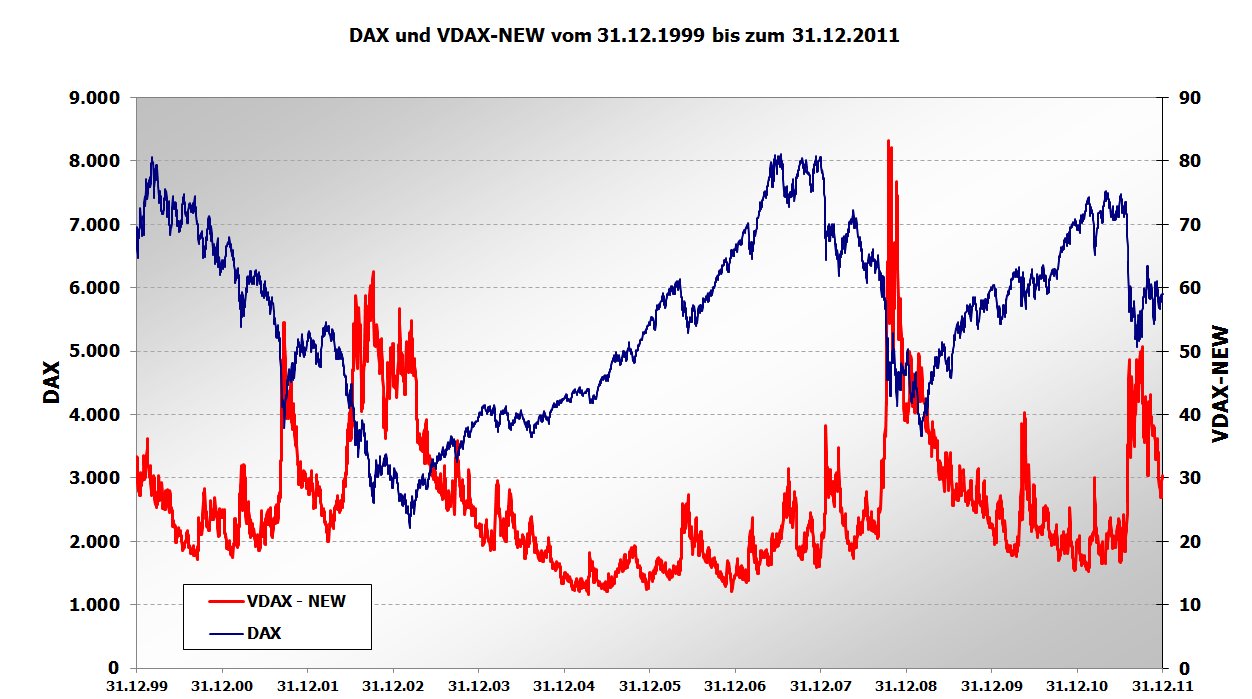
The day Wirecard entered the DAX was the day it became untouchable — or so its executives believed. On September 24, 2018, the company officially replaced Commerzbank, one of Germany's oldest banks, in the DAX 30, the blue-chip index that serves as the benchmark for the country's entire equity market. It was a coronation. A payment processor founded in the wreckage of the dot-com bust, once associated with gambling and adult entertainment, had now taken a seat alongside Siemens, BMW, and Deutsche Bank.
The implications were enormous. Every passive fund tracking the DAX — every pension, every ETF, every sovereign wealth allocation benchmarked to German equities — was now automatically a Wirecard shareholder. Billions of euros in index-tracking capital flowed into the stock mechanically, without a single analyst reviewing the company's books. The stock price, already elevated, climbed further. At its peak, Wirecard's market capitalization exceeded €24 billion.
Markus Braun became a fixture at Davos and Munich investor conferences, speaking softly about artificial intelligence in payments, about Wirecard's proprietary risk-management technology, about the company's banking license and its ambitions to become a full-service digital financial platform. The narrative was irresistible: Europe finally had a technology company that could compete with the American giants.
But there were people who didn't believe the story. Dan McCrum, a reporter at the Financial Times, had been investigating Wirecard's Asian operations since 2015. His early articles, published under the series title "House of Wirecard," documented suspicious round-tripping of funds, questionable acquisitions, and accounting irregularities at the company's subsidiaries in Singapore and other Asian markets. Short sellers — most prominently, a London-based firm — had been betting against the stock for years.
Germany's response to these accusations was extraordinary, and not in the way the accusers had hoped. BaFin, the Federal Financial Supervisory Authority, did not open an investigation into Wirecard. Instead, in February 2019, it took the remarkable step of banning short selling in Wirecard shares — one of the only times in its history it had used such a power to protect a single company. BaFin then filed a criminal complaint against the Financial Times journalists, accusing them of market manipulation.
The message was clear: Wirecard was a national champion. Questioning it was not merely unwelcome — it was potentially criminal. The short sellers retreated. McCrum kept reporting. And inside Wirecard's offices in Aschheim, Jan Marsalek continued building his empire in Asia, secure in the knowledge that the most powerful financial regulator in Germany was, for all practical purposes, working for him.
BaFin filed a criminal complaint against the Financial Times journalists, accusing them of market manipulation. The message was clear: questioning Wirecard was not merely unwelcome — it was potentially criminal.
The Spreadsheet That Didn't Add Up
Late 2019 — Ernst & Young's auditors begin asking questions about trust accounts in the Philippines that no one can quite explain.
The cracks had been visible for years if you knew where to look. But it was in the autumn of 2019 that the edifice began to wobble in a way that even Wirecard's protectors couldn't ignore.
KPMG had been brought in by Wirecard's own board to conduct a special audit — an attempt to silence the critics once and for all. The idea was simple: let an independent Big Four firm examine the contested transactions, confirm they were legitimate, and put the Financial Times stories to rest. Instead, KPMG's report, published in April 2020, said something devastating: the auditors could not confirm the existence of revenues totaling roughly €1 billion from Wirecard's third-party acquiring business in Asia. They hadn't found evidence of fraud, exactly. They simply couldn't verify that the money was real.
The stock dropped, but it didn't collapse. Wirecard's defenders argued that KPMG's inability to verify wasn't the same as proof of fabrication. Braun went on the offensive, calling the report a vindication because it hadn't found definitive fraud. It was a masterclass in misdirection.
But now Ernst & Young, Wirecard's statutory auditor, was under pressure. EY had signed off on Wirecard's accounts for a decade. If KPMG couldn't verify the Asian revenues, EY needed to do something it had apparently never done with sufficient rigor: confirm that the cash balances Wirecard claimed to hold in trust accounts at Philippine banks actually existed.
The amounts were staggering. Wirecard's balance sheet showed approximately €1.9 billion sitting in escrow accounts at two Philippine banks — money that supposedly represented the accumulated cash flows from its third-party partners. This was not a rounding error. It was roughly a quarter of the company's total assets.
EY sent confirmation requests directly to the banks. The process should have been routine. Banks confirm balances for auditors thousands of times a day. But this time, the confirmations didn't come back clean. They didn't come back at all — not in any form that matched what Wirecard had claimed.
On June 18, 2020, Wirecard issued a terse announcement: the company's auditor had been unable to confirm the existence of €1.9 billion in cash. The trust accounts, it appeared, did not exist. The money had never been there.
The announcement landed like a bomb. Wirecard's stock, which had been trading above €100 just days earlier, cratered. Within forty-eight hours it was below €20. Within a week, below €5. Markus Braun resigned as CEO on June 19 and was arrested on June 22. But his arrest was almost an afterthought compared to the question that consumed investigators, journalists, and intelligence agencies across three continents: where was Jan Marsalek?
The Vanishing Act
June 19, 2020 — Marsalek tells colleagues he's flying to the Philippines to find the missing money. He never arrives.
Jan Marsalek's last known movements in the West trace a path that reads like the opening of a spy novel — because, as it turned out, that's essentially what it was.
On June 19, 2020, the day after Wirecard admitted the €1.9 billion was missing, Marsalek told colleagues he was flying to Manila to sort out the situation with the trust accounts. He left Germany. But flight records and immigration data later showed he never entered the Philippines. Instead, investigators believe he traveled to Minsk, Belarus, and from there to Moscow.
He has not been seen in the West since.
The story that emerged over the following months and years was far stranger than a simple financial fraud. Marsalek, it turned out, had been living a double life that went well beyond cooking Wirecard's books. Investigative journalists and European intelligence agencies pieced together evidence suggesting he had cultivated relationships with intelligence operatives from multiple countries — but most significantly with Russian intelligence services.
In Moscow, Marsalek assumed a new identity: Alexander Mikhailovich Nelidov. He obtained Russian documents under this name and settled into a life that, according to multiple investigative reports, was facilitated by Russian state actors. The implication was extraordinary: the chief operating officer of a DAX-listed company — a man who had attended high-level European political events, who had access to vast amounts of financial data flowing through Wirecard's payment systems — appeared to have been, at minimum, a useful asset for Russian intelligence.
The espionage connections didn't end with Marsalek himself. In Austria, a trial began for Egisto Ott, a former intelligence officer accused of working with Marsalek on behalf of Russian interests. The charges suggested a network that blurred the lines between corporate fraud, intelligence gathering, and geopolitical manipulation in ways that European authorities were only beginning to understand.
Back in Singapore, the legal system moved faster. Businessmen who had helped create the fictitious documentation supporting Wirecard's phantom transactions were arrested, tried, and sentenced to prison for falsifying documents. Their convictions confirmed what the Financial Times had reported years earlier: Wirecard's Asian operations were, in significant part, a paper fiction — a network of shell companies generating fake invoices to support revenue that didn't exist.
Meanwhile, Markus Braun sat in a Munich jail cell, awaiting a trial that would become one of the longest and most complex in German legal history. He maintained his innocence, claiming he had been deceived by Marsalek. Prosecutors argued otherwise: that Braun had been a knowing architect of the fraud from the beginning. The truth, as is often the case in corporate scandals of this magnitude, likely lived somewhere in the murky space between willful blindness and active conspiracy.
But for the hundreds of thousands of investors who had held Wirecard stock — many of them ordinary Germans whose pension funds and index ETFs had automatically bought shares when the company entered the DAX — the question of who knew what mattered far less than a simpler, more painful one: would they ever get their money back?
Marsalek assumed a new identity: Alexander Mikhailovich Nelidov. The COO of a DAX-listed company appeared to have been, at minimum, a useful asset for Russian intelligence.
The Empty Estate
German courtrooms, 2021–2024 — shareholders discover that winning a fraud case and recovering money are two very different things.
The legal aftermath of Wirecard's collapse became its own kind of tragedy — slower, quieter, but in some ways crueler than the fraud itself.
Wirecard filed for insolvency on June 25, 2020, just seven days after admitting the €1.9 billion didn't exist. An insolvency administrator was appointed to pick through the wreckage and determine what, if anything, could be recovered for creditors. The answer, when it came, was devastating.
The company's assets — its real assets, stripped of the phantom billions — were a fraction of what it owed. Creditors lined up: banks that had lent Wirecard money, bondholders who had purchased its debt, and at the very back of the line, shareholders. In insolvency proceedings, shareholders are the last to be paid, and in Wirecard's case, there was nothing left by the time the queue reached them.
Germany's Federal Court of Justice made this painfully explicit. In a ruling that left no room for ambiguity, the court determined that there was no money for Wirecard shareholders from the insolvency estate. The shares were worthless. The legal claims were worthless. The years of litigation were, for all practical purposes, worthless.
Even sophisticated institutional investors fared poorly. Weil, the law firm, successfully asserted a €900 million claim against Wirecard AG on behalf of a Luxembourg-based bond issuer — a significant legal victory on paper. But as any insolvency lawyer will tell you, winning a claim against a bankrupt entity is not the same as collecting money. The claim was valid. The cash to pay it was not.
Some investors tried a different route, suing Ernst & Young for its decade of failed audits. Others pursued claims against BaFin for its regulatory failures. But these cases faced their own obstacles: proving that an auditor's negligence, rather than the company's fraud, caused specific losses is a notoriously difficult legal argument. And suing a sovereign regulator in its own country's courts is rarely a winning proposition.
By 2024, investor groups were abandoning their cases entirely. Bloomberg reported that Wirecard investors dropped a fraud case as recovery money fizzled out. The litigation had become a money pit — lawyers' fees consuming whatever energy and capital the plaintiffs had left.
The Wirecard trial itself, centered on Markus Braun and two co-defendants, dragged on in a Munich courtroom, becoming a case study in the risks of slow legal process. Witnesses testified. Documents were examined. But the trial's glacial pace — years of proceedings with no verdict — meant that justice, if it came at all, would arrive long after the damage had been done and the money had vanished.
For Germany, the wound was not just financial. It was reputational. The country that prided itself on engineering precision, regulatory rigor, and institutional trustworthiness had produced the largest corporate fraud in its postwar history — and its own regulator had protected the fraudsters while attacking the journalists who exposed them.
The Long Shadow
Berlin, 2023–2025 — Germany tries to rebuild what Wirecard destroyed.
Scandals of this magnitude don't just destroy companies. They reshape entire systems. And Wirecard's collapse — precisely because it was so total, so humiliating, and so avoidable — sent shockwaves through German and European finance that are still reverberating years later.
BaFin was overhauled. Its president, Felix Hufeld, was forced out. New leadership was installed with a mandate to transform the agency from a passive, document-reviewing bureaucracy into something closer to the SEC's enforcement-oriented model. Germany passed new legislation expanding BaFin's powers and requiring more aggressive oversight of financial technology companies. The country that had once banned short selling to protect Wirecard was now, scarred by the experience, trying to rebuild its credibility as a serious financial regulator.
But credibility, once lost, is not easily recovered. European fintech companies found themselves facing a new reality: investors demanded more transparency, more audited proof of revenue, more direct verification of customer relationships. The "trust discount" that Wirecard imposed on the sector was real and measurable. Valuations compressed. Fundraising slowed. Companies that had nothing to do with Wirecard paid the price for its sins.
The auditing profession faced its own reckoning. Ernst & Young's failure to detect the fraud — despite years of red flags, despite the Financial Times' reporting, despite KPMG's inability to verify the same numbers EY had signed off on — became a case study in every accounting classroom in the world. How had EY accepted Wirecard's representations about trust account balances without independently confirming them with the banks? How had the firm missed what a newspaper reporter had found? The questions were uncomfortable because the answers pointed to structural problems in the audit industry that went far beyond one engagement: the conflicts of interest inherent in a system where the audited company pays the auditor, the competitive pressure to retain clients, the tendency to accept management representations at face value.
And then there was the question of short sellers. For years, the people who had been right about Wirecard — Dan McCrum at the Financial Times, the short sellers who had bet against the stock — had been vilified, investigated, and in some cases threatened with prosecution. The collapse vindicated them completely. Their story became a powerful argument for the social utility of adversarial financial research: the idea that markets need skeptics, that short sellers perform a public service by identifying fraud, and that regulators who silence them are not protecting investors but endangering them.
As for Jan Marsalek, he remained in Moscow, living under his assumed identity, beyond the reach of German prosecutors and European arrest warrants. The trial of the Austrian ex-spy connected to his network continued in Vienna. The full scope of his intelligence activities — what information he had access to through Wirecard's payment systems, what he shared with Russian handlers, how deep the connections ran — remained unknown. The espionage dimension of the scandal, which most financial analysts initially dismissed as a sideshow, increasingly appeared to be the most consequential part of the story.
Wirecard was not just a fraud. It was a failure of every institution that was supposed to prevent it — the auditors, the regulators, the index committees, the banks, the board of directors. And at its center, a man who had parlayed a college dropout's charm into a seat at the table of German capitalism, and then used that seat to serve interests that had nothing to do with shareholder value.
Wirecard was not just a fraud. It was a failure of every institution that was supposed to prevent it — the auditors, the regulators, the index committees, the banks, the board of directors.
What This Story Tells Us Today
Wirecard is the most important corporate fraud of the 21st century outside the United States, and its lessons extend far beyond Germany's borders. The first is about passive investing: when a fraudulent company enters a major index, every investor tracking that index becomes an unwitting accomplice to the fraud's valuation. The DAX inclusion mechanically funneled billions into Wirecard shares, inflating a bubble that no amount of index rebalancing methodology could have prevented. For the growing majority of investors whose portfolios are built on passive index funds, this is a structural vulnerability that deserves more attention than it receives.
The second lesson is about the geography of trust. Investors routinely assign a "governance premium" to companies domiciled in countries with strong regulatory reputations — Germany, Switzerland, Japan. Wirecard demonstrated that this premium can be dangerously misplaced. BaFin's failure was not a case of a regulator being outmatched by sophisticated criminals; it was a case of a regulator actively choosing to protect the company and attack its critics. When the institution designed to catch fraud instead becomes its shield, the entire framework of trust-based investing in that jurisdiction comes into question.
The third lesson is the simplest and the oldest: if a company's cash balances can't be independently verified, nothing else in its financial statements matters. Revenue growth, operating profit margins, customer acquisition metrics — all of it is meaningless if the cash isn't real. Wirecard's phantom €1.9 billion was not hidden in complex derivatives or obscure off-balance-sheet vehicles. It was supposedly sitting in bank accounts. And for a decade, no one checked.
Get the weekly digest
One email every Saturday. New stories, new research, no upsell. Unsubscribe with one click.