What to know
- Sea Limited — Southeast Asia's biggest e-commerce, gaming, and fintech company — just partnered with Google.
- The real prize isn't shopping or gaming: it's becoming the bank for hundreds of millions of unbanked consumers.
- Google's AI and cloud tools could transform SeaMoney's credit-scoring economics in ways no local competitor can replicate alone — and that capability gap is what makes this partnership a potential inflection point, not just a headline.
Sea Limited's market cap rivals some of Europe's largest tech companies — yet most Western institutional investors couldn't pick it out of a lineup.
The company is based in Singapore. It runs Shopee (e-commerce), Garena (gaming), and SeaMoney (fintech) across Indonesia, Vietnam, Thailand, and the Philippines — a region of nearly 700 million people as of 2024. Those three services are becoming as essential there as Amazon, Venmo, and Fortnite are in the U.S.
Sea trades on the NYSE under the ticker SE. And it just got a major endorsement: Google formalized a strategic partnership with the company. When the world's most valuable advertising and cloud company decides to ally with a Southeast Asian super-app, it's worth asking what they see that the rest of us don't.
The answer involves a digital economy that's still in its early innings — and a fintech opportunity that could dwarf everything else.
What just happened
Sea Limited, the Singapore-headquartered company behind Shopee, Garena, and SeaMoney, entered a strategic partnership with Google. The deal signals that one of the world's largest tech companies sees Sea's platform as mature enough — and its market as big enough — to warrant a formal alliance.
The public announcement confirmed the partnership; the specific commercial terms have not been fully disclosed. Given how both companies are built, the deal likely covers cloud infrastructure, ad tech, and AI tools. But treat those details as informed guesses, not confirmed facts. For Sea, this is a stamp of credibility. For Google, it's a beachhead into a fast-growing digital economy where local players have built deep moats.
Southeast Asia is home to nearly 700 million people (as of 2024), and internet adoption is accelerating rapidly. Think of it as a region compressing decades of digital transformation into a few years — and Sea Limited sits at the center of it.
First domino: Sea Limited gets a turbocharger — but not where you'd expect
Sea Limited's strategic partnership with Google isn't a generic tech alliance — it's a bet on a specific asymmetry across Sea's business lines. Shopee gets better ad targeting and cloud infrastructure, which is useful but incremental. Garena, whose user base has been declining since Free Fire's peak, benefits least — better game recommendations don't fix a shrinking player count.
The disproportionate winner is SeaMoney. When you're trying to lend money to people who've never had a credit score, machine learning for credit scoring and fraud detection isn't a nice-to-have — it's the entire business model. Google's AI toolkit could dramatically improve how SeaMoney underwrites risk at scale. The market has barely priced that capability into Sea's current valuation.
When Google formalizes a partnership, it signals the platform has reached meaningful scale — Google doesn't do handshake deals with small players. For Sea, this widens the moat across all three business lines, but the fintech edge is where the real leverage sits.
Which Sea Business Benefits Most from Google Partnership
| Metric | Garena (Gaming) | SeaMoney (Fintech) | Shopee (E-commerce) |
|---|---|---|---|
| Google Ad Targeting | Limited value | Foundational | Useful |
| Cloud Infrastructure | Standard need | Essential for scale | Incremental benefit |
| AI/ML for Core Product | Game mechanics | Credit scoring & fraud detection | Recommendations |
Second domino: Capital flow mechanics pull Grab into the spotlight
Most Western emerging-market funds that can buy SE are index-weight constrained. Say a portfolio manager wants real exposure to Southeast Asia. They can't just load up on Sea. They need to spread bets across the region's tradable names to meet their fund's rules. That means buying Grab Holdings almost automatically.
Grab dominates ride-hailing, food delivery, and digital payments across Southeast Asia. It's the other pillar of the region's digital economy. This isn't just "more attention on SE means more attention on GRAB." It's that money flowing into SE automatically creates buying pressure on GRAB — regardless of Grab's own near-term fundamentals.
This is a market-structure insight, not a sentiment call. When Western investors decide to put more money into Southeast Asian tech, there aren't many big, easy-to-trade stocks in the region. So capital piles into the same handful of names. Sea and Grab are the two biggest recipients of that flow.
Third domino: Google gets a backdoor into 700 million consumers
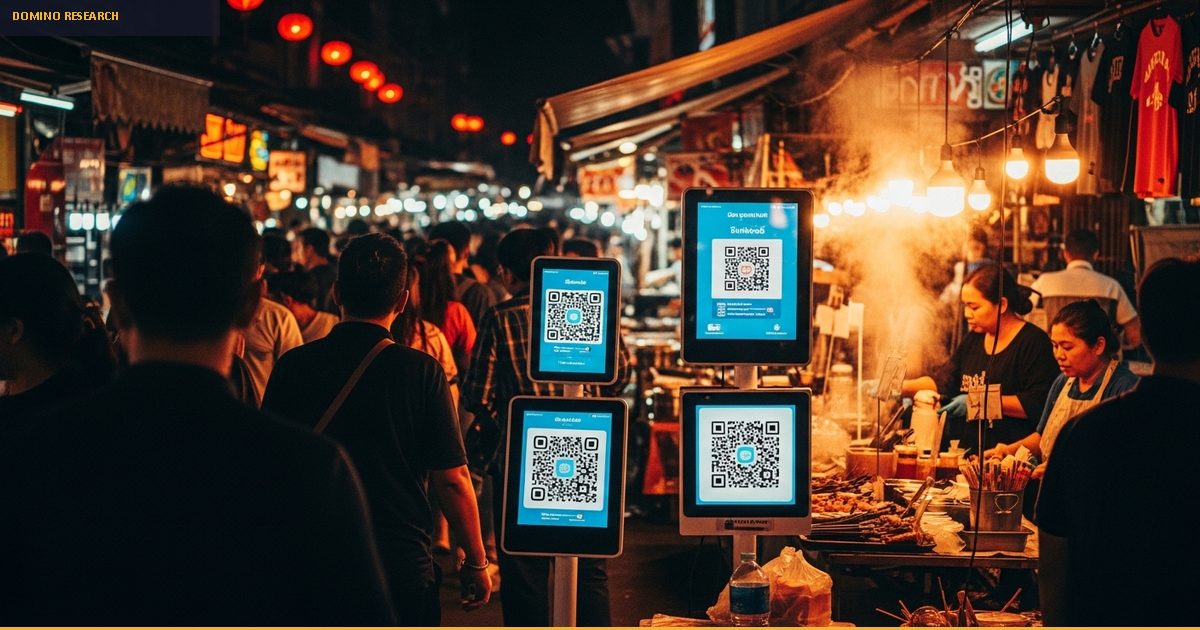
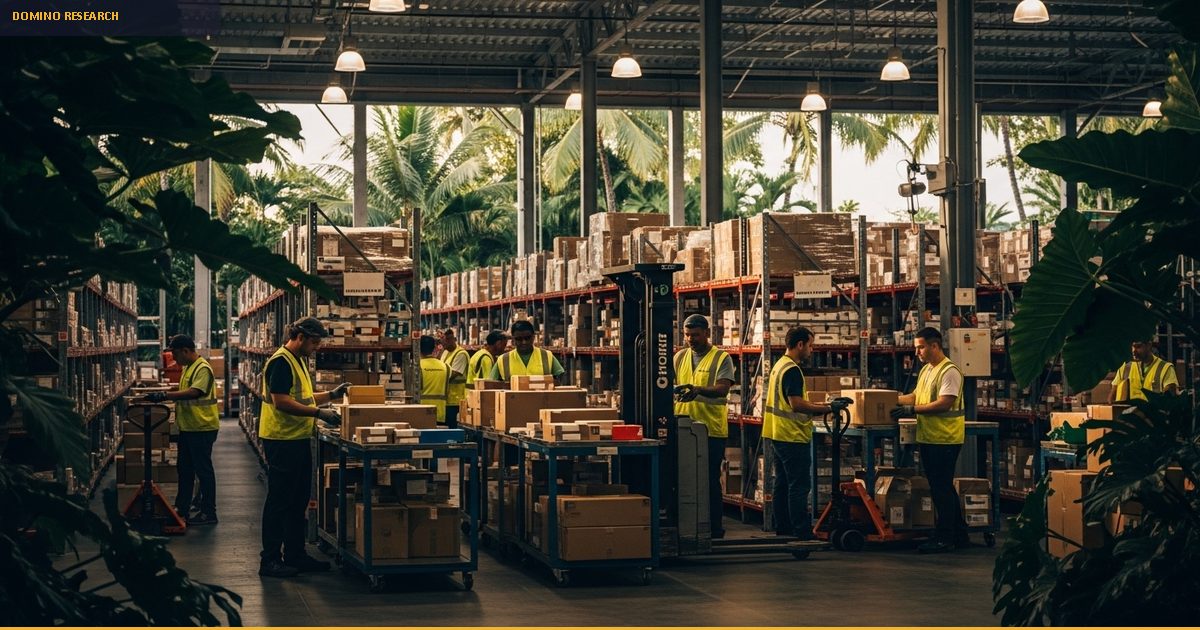
Large-scale e-commerce platforms generate enormous demand for two things Google sells: cloud infrastructure and digital advertising. Every product listing on Shopee, every transaction on SeaMoney, every gaming session on Garena — they all run on servers and they all create opportunities to show ads.
By partnering with Sea, Google essentially gets a distribution channel into a region where local players own the customer relationship. Building that from scratch would take years and billions of dollars — as Google's own struggles with payments in India demonstrated. Partnering with the incumbent is faster and cheaper.
This is a two-way street. Sea gets Google's technology. Google gets Sea's users. Both companies are betting that Southeast Asia's digital economy is entering a rapid growth phase — and neither wants to be left out.
Fourth domino: The fintech layer could be worth more than everything else
Hundreds of millions of Southeast Asian adults remain unbanked — no traditional accounts, no credit cards, no financial history. They pay for everything in cash.
Now imagine you already have an app on their phone that they use every day to shop or order food. You have their trust. You have their transaction history. You can offer them a digital wallet, a micro-loan, or an insurance product — and your cost to acquire that customer is essentially zero.
This is the playbook that turned Ant Financial (Alibaba's fintech arm) into one of the most valuable private companies in the world. SeaMoney and GrabFin are running the same play. Google's AI and cloud tools could accelerate this by improving credit scoring and fraud detection — critical capabilities when you're lending to people who've never had a credit score before.
The fintech layer of these super-apps could eventually become more valuable than their commerce or ride-hailing businesses. That's not a crazy prediction. It's what already happened in China.
Fifth domino: The moat that Western tech can't cross
Southeast Asia covers dozens of countries, languages, currencies, and sets of rules. Indonesia alone has over 17,000 islands and 700 languages. To succeed, you need years of navigating this complexity. You have to build relationships with regulators in each country and earn trust market by market. That fragmentation is precisely what makes the moat so durable for incumbents like Sea.
The track record of Western tech companies trying to crack fragmented emerging markets is not encouraging. Amazon poured billions into India and still hasn't turned a profit there after a decade. Meta attempted to build a payments ecosystem in multiple emerging markets and largely failed. Google itself tried to go direct in Asian payments and pulled back. These aren't small companies with limited resources — they're the most well-funded tech firms on earth, and the complexity still defeated them.
That's why Google chose partnership over competition. And it's why Sea and Grab's local entrenchment may be more durable than Western investors — accustomed to seeing Big Tech steamroll every market — tend to assume.
The last time this happened
The closest parallel is Alibaba's trajectory in China. Western investors mostly ignored Alibaba until its September 2014 IPO. Then the stock surged. Global capital realized Alibaba wasn't just a shopping site — it was a financial services company, a cloud company, and a logistics company all at once.
Analysts frequently draw the comparison between Sea Limited's current position in Southeast Asia and where Alibaba stood in China during that era. The region is earlier in adopting digital tools. The population is similar in scale. And the dominant local platform is branching into fintech.
But the parallel has a critical structural difference that makes it more than a lazy comparison. Alibaba operated under one government with implicit state backing. Beijing wanted a national champion. Sea operates across six-plus sovereign nations with no home-country regulatory shield. That fragmentation means Sea can't rely on a single government's support, which makes the Google partnership load-bearing in a way Alibaba's partnerships never were. Google provides the technology layer and global credibility that no single Southeast Asian government can offer.
The question is whether Sea Limited — and the broader Southeast Asian tech ecosystem — is at a similar inflection point. The Google partnership feels like the kind of catalyst that puts a company on the global investor map. But the multi-sovereign risk profile means the path will be bumpier than Alibaba's was.
What could go wrong
Regulatory fragmentation is real — and measurable. Sea operates across multiple countries, each with its own rules for e-commerce, fintech, and data privacy. Indonesia (Sea's largest market as of its most recent annual filings) is the key risk. Here's one example: Indonesia's OJK (Financial Services Authority) could issue new fintech licensing rules. If those rules require local majority ownership or restrict non-bank digital lenders, SeaMoney would face a costly restructuring. Watch for any draft regulations targeting foreign-owned fintech platforms — that's the early warning signal.
Currency risk is structural. Sea earns revenue in Thai baht, Indonesian rupiah, Vietnamese dong, and other local currencies, but reports in U.S. dollars. A strong dollar environment could make the company's growth look worse than it actually is — or erode real returns for U.S.-based investors.
Competition has a specific invalidation trigger. TikTok Shop has been aggressively expanding in Southeast Asia, and local players like Tokopedia (now merged with GoTo) are fighting for market share. The thesis is materially impaired if Shopee's Indonesia GMV growth turns negative for two consecutive quarters — that would signal the competitive moat is eroding, not just being tested.
The Alibaba parallel has a dark side. China's tech crackdown starting in 2020 showed that dominant platforms in emerging markets can become targets for regulators. If Southeast Asian governments decide that Sea or Grab have too much power over commerce and finance, the same playbook could apply. Watch for political rhetoric around "digital monopolies" in Indonesia, Thailand, or Vietnam as a leading indicator.
Execution risk on fintech is the highest-stakes bet. Lending to unbanked consumers is high-reward but also high-risk. If SeaMoney's credit models are wrong — especially during an economic downturn — loan losses could pile up fast. The specific signal to watch: SeaMoney's non-performing loan ratio in quarterly disclosures. A sharp increase over two consecutive quarters would suggest the credit-scoring models aren't working as advertised, regardless of what the Google partnership promises.
Watchlist
| Ticker | Level | Status | Why |
|---|---|---|---|
| SE | Thesis strengthens if SeaMoney's quarterly active users and loan book grow simultaneously without a spike in non-performing loans over the next two earnings prints. Thesis weakens significantly on a break below $40, or if Indonesia introduces fintech licensing rules restricting foreign-owned digital lenders. | watching | The Google partnership is a potential inflection point for all three business lines, but the disproportionate value sits in SeaMoney's credit-scoring upgrade. The stock is the most direct way to play Southeast Asia's digital economy. |
| GRAB | Watch for Western EM fund inflows creating a structural bid. Thesis strengthens if Grab achieves EBITDA profitability on a sustained basis. Thesis weakens if ride-hailing market share in Indonesia or Vietnam declines for two consecutive quarters. | watching | Southeast Asia's other super-app. Dominates ride-hailing, food delivery, and digital payments. Benefits from structural capital flow dynamics — most Western EM funds that buy SE will need to buy GRAB to build a meaningful regional position. |
| GOOGL | Southeast Asia is a growth vector, not a thesis driver at Google's scale. Watch for management commentary on Southeast Asian cloud and ad revenue in upcoming earnings calls — any specific revenue disclosure would signal the region is becoming material. | watching | The partnership gives Google a distribution channel into a region of nearly 700 million consumers for cloud and ads — two of its highest-margin businesses. Meaningful but incremental relative to Google's total revenue base. |
Get the weekly digest
One email every Saturday. New stories, new research, no upsell. Unsubscribe with one click.