What to know
- Sea Limited surged double digits on heavy volume after reporting 47% revenue growth in Q1 2026, yet the stock remains roughly half its 52-week high.
- The valuation gap exists because Garena's 2022-2023 decline drove a de-rating — and that specific headwind has now reversed, which changes the re-rating math.
- The most underappreciated downstream effect: SeaMoney's fintech flywheel is replicating MercadoLibre's Mercado Pago playbook across eight currencies and 660 million ecosystem users.
Sea Limited, the company behind Shopee and the mobile game Free Fire, just posted the kind of quarter that forces portfolio managers to revisit their models.
Revenue grew 47% year-over-year. The stock surged double digits on institutional-grade volume. And yet the company still trades at roughly half its recent peak.
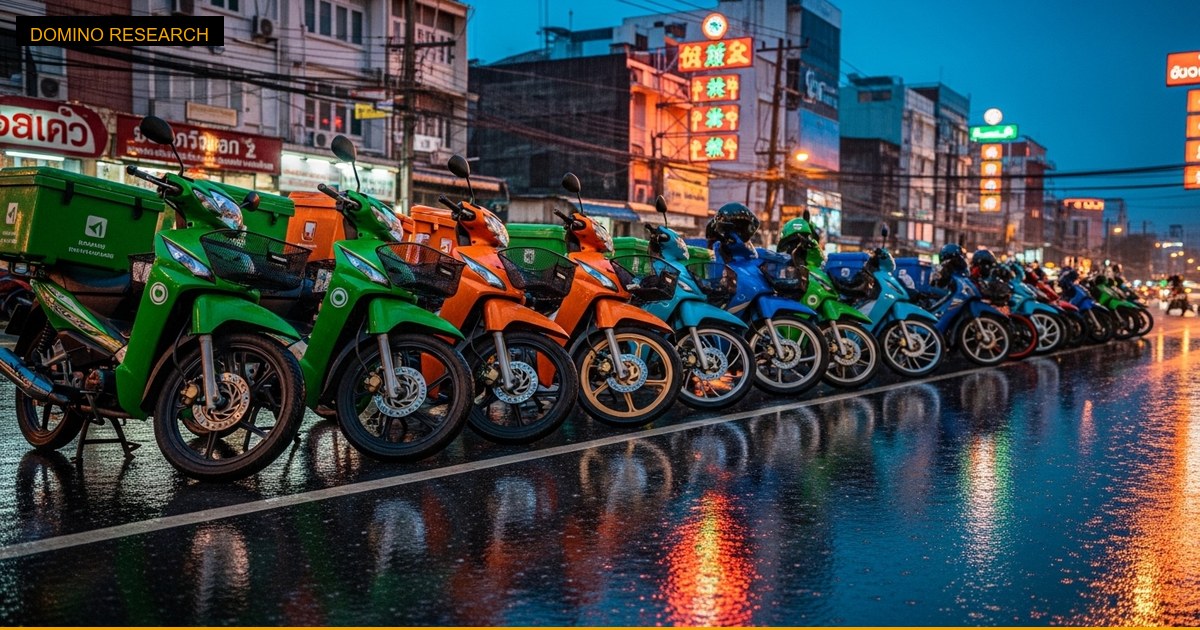
That gap — between what the business is doing and where the stock sits — is the story. Not because it's a simple "buy the dip" setup. It matters because it reveals how 660 million digital consumers across Southeast Asia are spending, saving, and borrowing — in ways most American investors haven't fully priced in.
What just happened
Sea Limited reported Q1 2026 earnings on May 12, 2026, blowing past expectations. Revenue grew 47% year-over-year, powered by Shopee's e-commerce dominance and a resurgence from its gaming arm, Garena.
The market's reaction was immediate and loud. SE surged more than 13% on May 12, gapping up from a prior close of $84.87. Trading volume spiked to roughly three times the stock's recent average.
To put that volume in context: imagine a restaurant that normally serves 150 dinners on a Monday suddenly serving 460. That doesn't happen by accident. It happens when a lot of new customers show up at once.
Imagine a restaurant that normally serves 150 dinners on a Monday suddenly serving 460. That doesn't happen by accident.
First domino: The source of SE's cheapness explains how fast it can re-rate
Even after the May 12 surge, Sea Limited's stock sits at roughly half its 52-week high of $199.30. But the interesting question isn't that it's cheap — it's why it got cheap in the first place.
The answer is Garena. Between 2022 and 2023, Free Fire's user base and bookings declined sharply as post-COVID gaming engagement faded globally. Investors who had valued Sea as a high-growth triple-threat — e-commerce, gaming, fintech — suddenly re-rated it as a single-engine e-commerce story with a shrinking gaming liability. That's what drove the stock from its all-time highs down to the $40s.
Here's why that matters now: the specific headwind that caused the de-rating has reversed. Garena is growing again. That means the re-rating isn't just about Shopee beating estimates — it's about the market recognizing that the reason for the discount no longer exists. Stocks re-rate fastest when the original bear case breaks, and that's what happened on May 12.
The heavy volume — roughly 3x the recent average — suggests institutional buyers recognized this structural shift, not just a one-quarter beat.
Second domino: Shopee's moat isn't just market share — it's the logistics infrastructure that didn't exist before
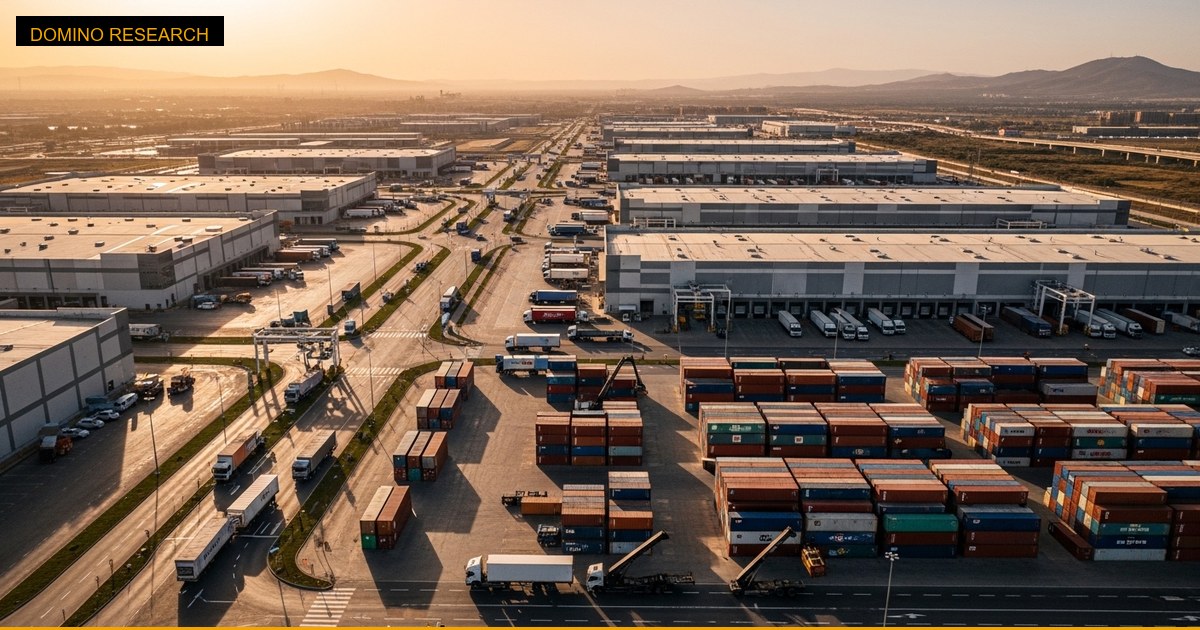
Shopee is the dominant e-commerce platform across Indonesia, Vietnam, Thailand, and the Philippines. Its marketplace drove a significant portion of that 47% revenue growth.
But the defensibility of that growth is what matters for investors. In Indonesia — Shopee's largest single market — the company didn't just build an app. It built fulfillment centers, partnered with local couriers, and created payment systems for a population where fewer than 10% of people have credit cards. That physical layer is extraordinarily hard to replicate.
And Shopee's monetization runway is still early. Its take rate — the percentage of each transaction it captures as revenue — remains well below what mature platforms like Alibaba's Tmall charge. That means Shopee can grow revenue not just by adding users, but by gradually increasing its cut of each transaction as merchants become more dependent on the platform.
Dominant market share, a physical infrastructure moat, and low take rates with room to grow — that's why fund managers treat Shopee's results as a signal for the entire region's digital economy.
Third domino: Garena's comeback changes the narrative on mobile gaming
Garena's resurgence was explicitly called out as a key driver of Q1 2026 results. This matters. Mobile gaming peaked globally during COVID, then cooled off. The fact that Free Fire is growing again in Indonesia, the Philippines, and Latin America tells you something: engagement is picking back up in markets where smartphone adoption is still rising.
This read-through is especially relevant for companies with exposure to Southeast Asia and Latin America, two regions where Free Fire has massive player bases.
The gaming rebound also diversifies Sea's revenue story. A company firing on two engines — e-commerce and gaming — is harder to bet against than one relying on a single business line. And as noted in domino one, Garena's decline was the specific reason investors de-rated the stock. Its return removes the original bear case.
Fourth domino: SeaMoney's fintech flywheel is the most underpriced part of the story
Sea reported 666.5 million quarterly active users across its ecosystem in Q1 2026. Every one of those users could become a SeaMoney customer. The flywheel is simple: more Shopee purchases create more digital payment volume. That generates more spending data. Better data means smarter lending decisions. Smarter lending drives more revenue. And that revenue funds more Shopee promotions.ns.
This is the same flywheel MercadoLibre built with Mercado Pago in Latin America. But there's an important nuance: MELI operated primarily in markets with one or two dominant currencies. Sea operates across eight — Thai baht, Indonesian rupiah, Vietnamese dong, Philippine peso, and more. That currency fragmentation adds FX drag and regulatory complexity that MELI didn't face at the same scale.
Still, the structural opportunity is enormous. Digital lending in Southeast Asia is early-innings, and SeaMoney has a data advantage that standalone fintechs can't match: it knows what its users buy, how often, and whether they pay on time. That's the kind of proprietary credit signal that turns a payment app into a lending machine.
The flywheel is the most interesting part of Sea's story — and the part the market is slowest to price in, because fintech revenue is still a fraction of Shopee's contribution.
More Shopee users → more SeaMoney users → more data → better credit products → more Shopee purchases. It's a flywheel.
Fifth domino: If SE gets rewarded on fundamentals, which peers are mispriced on the same logic?
SE has a beta of 1.57, meaning it amplifies market moves by about 50% in either direction. The S&P 500 rose 2.6% in the week ending May 12, 2026, while SE gained more than 13% — outpacing the market on fundamentals, not momentum.
The consumer discretionary sector was largely flat on May 12. The fact that SE surged while its broader sector stayed quiet suggests the market is rewarding individual merit, not blindly buying everything. That's healthy price discovery.
The investable question is: which other Southeast Asian internet names are sitting in the same "de-rated on old headwinds, growing into a re-rating" position? Grab Holdings (GRAB), the region's dominant ride-hailing and delivery platform, trades at depressed multiples despite improving unit economics (how much money you make or lose on a single sale). GoTo Group, Indonesia's merged ride-hailing and e-commerce player, is further behind on profitability but exposed to the same consumer tailwinds.
Say SE's earnings show that big funds are buying Southeast Asian internet stocks again based on real results. GRAB is the closest peer to watch for a similar price reset. It operates in the same region, plays in the same fintech space, and carries a valuation shaped by the same post-2022 hangover. Skepticism that SE just shattered.
The last time this happened
Sea Limited and MercadoLibre share a striking structural similarity. Both are dominant e-commerce platforms in underpenetrated emerging markets with adjacent fintech arms.
MELI followed this exact script. After COVID-era highs, the stock dropped hard as growth-stock valuations shrank in 2022. Then Latin American e-commerce growth picked back up, and MELI staged a steady recovery — eventually reclaiming and passing its old highs.
SE is at roughly half its 52-week high of $199.30 with 47% growth. The pattern suggests similar upside potential if sentiment re-rates Southeast Asia as a structural growth region rather than a cyclical trade.
The parallel isn't perfect. One difference matters most: MercadoLibre scaled Mercado Pago across markets that were mostly dollarized or closely tied to the dollar. Brazil's real was the main exception. Sea's fintech arm must navigate eight distinct currencies with meaningful FX volatility — Indonesian rupiah, Thai baht, Vietnamese dong, and more. That currency fragmentation means SeaMoney's path to MELI-like fintech margins will likely be slower and lumpier, even if the destination is similar.
What could go wrong
The most immediate risk is overhead supply. SE's 52-week high is $199.30, which means many investors bought at much higher prices. Those investors often sell into rallies to reduce their losses, creating resistance. If SE can't close above $120 within two quarters — or drops below $85 on the next earnings cycle — it likely means the big buyers from May 12 are already selling into strength, not building positions.
SE's trailing P/E of 38.10 looks reasonable at 47% growth but becomes expensive fast if growth decelerates. A slowdown from 47% to 25-30% would justify significant multiple compression, potentially pushing the stock below $80.
The most measurable macro risk is the US dollar. Indonesia is Shopee's biggest single market. Historically, when the DXY dollar index stays above 108 for more than one quarter, Indonesian consumer spending shrinks. Import costs climb, and local buying power drops. On the Q1 2026 earnings call, management called out macro headwinds — including pressure from weaker local currencies. If the dollar strengthens further, Shopee's largest market takes the first hit.
Finally, SE's beta of 1.57 means that in a risk-off episode — a sudden market selloff, a geopolitical shock — SE would likely fall harder than the broader market. The same volatility that amplified Monday's gains would amplify any reversal.
Watchlist
| Ticker | Level | Status | Why |
|---|---|---|---|
| SE | ~$96 (May 12, 2026) | holding | Surged 13%+ on heavy volume after 47% revenue growth. Still at roughly half its 52-week high. The de-rating catalyst (Garena decline) has reversed. |
| Confirms: Closes above $105 within 20 trading days = institutional follow-through confirmedBreaks: Closes below $85 for 3 consecutive days = post-earnings enthusiasm has faded and overhead supply is winning | |||
| MELI | Structural comp | watching | The closest structural twin to SE — dominant EM e-commerce platform with adjacent fintech. If the 'emerging-market e-commerce re-rating' narrative takes hold, MELI benefits from the same fund flows. |
| Confirms: MELI breaks to new 52-week high within 30 days of SE's earnings = sector-wide re-rating underwayBreaks: MELI drops below its 200-day moving average = the read-through thesis is SE-specific, not sector-wide | |||
| GRAB | Direct SE peer | watching | Grab Holdings is the most direct Southeast Asian internet peer — dominant in ride-hailing and delivery with a growing fintech arm. If institutional capital is rotating back into the region on fundamentals, GRAB is the next logical beneficiary. |
| Confirms: GRAB rises 10%+ within 30 days of SE's earnings on improving unit economics = regional re-rating is realBreaks: GRAB fails to hold current levels or reports deteriorating margins next quarter = SE's move was company-specific, not a regional signal | |||
Get the weekly digest
One email every Saturday. New stories, new research, no upsell. Unsubscribe with one click.