What to know
- Grab needs to raise its take rate by several percentage points across rides and delivery to hit EBITDA breakeven — but Southeast Asian income-per-ride ceilings make that math harder than Uber ever faced.
- If Grab proves the model works, it could reopen the entire Southeast Asian tech IPO window — or keep it shut for years.
- The real story isn't rides or food — it's whether Grab's financial services arm can bank even a fraction of Southeast Asia's 400 million underbanked people.
Open one app to hail a cab, order dinner, pay your electric bill, and take out a small business loan. That's Tuesday in Jakarta. Or Bangkok. Or Manila.
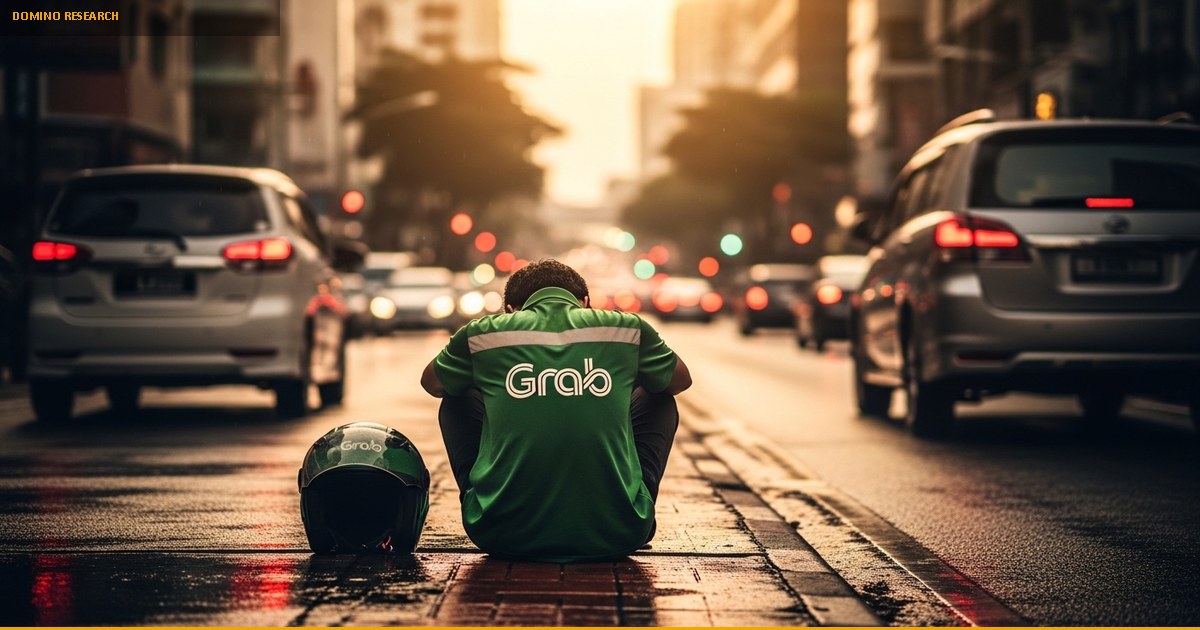
Grab is the company behind that app. It operates across eight Southeast Asian countries, touching the daily lives of hundreds of millions of people. It went public through a SPAC merger in December 2021 at a roughly $40 billion valuation — the largest-ever Southeast Asian listing. Then the stock cratered.
Now Grab is trying to do something that very few money-losing super-apps have ever done: actually make money. The outcome matters way beyond one stock — it's a referendum on whether the entire Southeast Asian tech ecosystem can graduate from hype to substance.
What just happened
Grab started as a simple ride-hailing service — basically Uber for Southeast Asia. Over the years, it bolted on food delivery, digital payments, insurance, and lending, growing into a full-blown "super app".
The company went public through a SPAC deal in December 2021, riding the peak of cheap-money euphoria. Then reality hit. Grab's stock tumbled roughly 70% from its debut highs. The collapse wasn't unique to Grab — it was part of a global repricing of unprofitable tech companies once interest rates started climbing.
But Grab didn't disappear. It kept cutting costs, trimming driver subsidies, and pushing into higher-margin financial services. Analysts have described it as an undervalued super-app with an accelerating path to profitability. The question is whether that path is real or just another mirage.
First domino: The take-rate trap — why Grab's breakeven math is harder than Uber's
Grab is capitalizing on Southeast Asia's regional growth potential as a super-app. The region has nearly 700 million people, a fast-growing middle class, and relatively low penetration of digital services. That's a long runway.
But the income-per-ride ceiling in Southeast Asia is dramatically lower than in Western markets. An average Grab ride in Jakarta costs a fraction of an Uber ride in San Francisco, which means each percentage-point increase in take rate extracts far fewer absolute dollars. To hit EBITDA (earnings before interest, taxes, depreciation, and amortization) (earnings before interest, taxes, depreciation, and amortization) breakeven, Grab needs to charge more across rides, delivery, and financial services — all at the same time. And it has to do that without losing drivers or causing rider churn (the rate at which customers stop using the app) (the rate at which customers stop using the app). That's hard when a competitor is always just one discount code away.
Some see Grab as undervalued, with a faster path to profitability. But the stock's recovery depends on one big question: can Grab keep improving margins across several business lines — all of which earn small amounts per transaction — at the same time? That's a fundamentally different challenge than what Uber faced in higher-spending Western markets.
Income-per-ride ceiling: Southeast Asia vs. West
| Metric | Jakarta (Grab) | San Francisco (Uber) |
|---|---|---|
| Average ride fare | ~$2–3 | ~$15–25 |
| Take-rate headroom | Limited; income ceilings lower | Higher per-ride dollar upside |
| Path to EBITDA | Requires several percentage-point raises | Achieved at lower take rates |
Second domino: GoTo gets squeezed — the FX trap inside a two-horse race
Questions have been raised about whether GoTo's stock is actually worth investors' money. GoTo faces a tougher path than Grab. It's trying to merge two very different businesses — ride-hailing and e-commerce — while also cutting losses at the same time.
In a market driven by subsidies, the first company to turn a profit attracts more capital. That kicks off a virtuous cycle. Higher stock prices mean cheaper funding, which enables more investment and widens competitive gaps.
But the non-obvious wrinkle is currency. Tokopedia earns its e-commerce revenue in Indonesian rupiah. That currency has lost significant value against the dollar in recent years. That means GoTo's biggest revenue source converts into fewer dollars for the ride-hailing subsidy war. It's a currency-driven disadvantage that most analyst models ignore. Picture two boxers in the same ring, except one of them has to convert his prize money at a worse exchange rate before he can afford to train for the next fight. If Grab crosses the profitability line first while the rupiah stays weak, GoTo could find itself stuck in a capital-starved spiral with no obvious exit.

Third domino: Financial services — the real prize hiding inside the super-app
Grab expanded from ride-hailing into financial services as part of its super-app strategy. It now offers digital payments, lending, and insurance products — and this segment is where the margin profile changes entirely.
Platforms that process millions of daily transactions — rides, meals, grocery orders — accumulate incredibly detailed data about how people spend money. Grab doesn't just know that a driver works 50 hours a week; it knows which routes they take, how consistently they show up, and how their earnings trend month over month. That data lets Grab underwrite credit risk more accurately than traditional banks, especially for populations that have never had a credit score. The frequency advantage is massive: a bank might see a customer's account balance once a month, while Grab sees hundreds of micro-transactions per week.
If Grab can bank even 10% of Southeast Asia's roughly 400 million underbanked people, the financial services arm becomes a multi-billion-dollar business. Ride-hailing is a low-margin, capital-intensive grind. Lending and payments can be high-margin businesses with strong network effects. In our view, financial services — not rides or food — will ultimately determine whether Grab's super-app model justifies a premium valuation. The difference between a glorified taxi dispatcher and a regional fintech giant comes down to how fast this segment scales.
Fourth domino: The TikTok driver problem — Grab's supply side has options
Some taxi drivers in Southeast Asia are earning more from viral TikToks than from rides — and it creates a hard ceiling on Grab's ability to raise driver take rates without triggering a supply exodus.
When Grab raises its take rate (the percentage it keeps from each ride) to improve margins, driver earnings get squeezed. Gig workers now have more choices than ever — content creation, rival platforms, and traditional jobs in a recovering economy. Drivers with options will go wherever the pay is better.
This dynamic creates an underappreciated ceiling on Grab's long-term margin expansion. The supply side has more optionality than investors realize. Grab can't squeeze drivers indefinitely without risking a supply shortage that degrades service quality, which then pushes riders to competitors. It's a delicate balancing act that doesn't show up in most analyst models.
Fifth domino: The IPO window — Grab's stock is a referendum on all of Southeast Asian tech
Grab's roughly 70% stock tumble was described as showing the limits of Singapore's tech dream. That narrative didn't just hurt Grab — it froze the entire regional tech funding pipeline.
Public-market performance of flagship tech companies influences the venture capital and IPO pipeline for an entire region. When Grab's stock was in freefall, venture investors pulled back from Southeast Asian deals. Startups that were planning IPOs shelved them. The message from capital markets was clear: prove you can make money first.
A sustained Grab recovery could reopen that window and trigger a wave of Southeast Asian tech listings that have been waiting in the wings. Continued underperformance could keep that window shut for years. That would strand a generation of startups that need to go public so they can pay back their investors.
The last time this happened
The closest parallel is Sea Limited, another Southeast Asian tech company that went through a similar boom-bust-recovery arc. Sea's stock surged roughly 300% before plunging roughly 80% — a ride that looked a lot like Grab's trajectory, just a few years earlier.
Sea proved that a Southeast Asian platform company could go from massive losses to profitability. Its e-commerce arm, Shopee, went from hemorrhaging cash to generating positive EBITDA. The stock eventually stabilized and partially recovered.
But the parallel is imperfect in a way that matters. Sea's recovery ran on an internal cash cow. Its gaming division, Free Fire, generated billions in revenue. That money effectively covered Shopee's losses during the transition. Grab has no equivalent backstop. There's no hidden profit engine funding the money-losing segments while they mature. Grab has to reach profitability the hard way — by making each individual business line work on its own.
That distinction cuts both ways. If Grab pulls it off without a gaming crutch, the signal to the market is even stronger: the super-app model itself works. If it can't, the lesson is that Sea was the exception, not the template.
What could go wrong
A subsidy war reignites. If GoTo or a new competitor (say, TikTok's parent ByteDance expanding into ride-hailing) starts burning cash on promotions again, Grab may be forced to match. Here's the tripwire to watch. If Grab's blended take rate stops growing for two straight quarters — and a competitor ramps up monthly promo spending — the subsidy war is back on. That would blow up the profitability timeline.
Regulatory fragmentation bites harder than expected. Grab operates across eight countries, each with different rules on ride-hailing, fintech licensing, data privacy, and foreign ownership. Running across multiple countries means these platforms face shifting exchange rates and a patchwork of different regulations. A single hostile regulatory move in Indonesia or Vietnam could cut off a major market overnight.
The driver supply crunch materializes. If Grab pushes take rates too aggressively and drivers leave for better opportunities, service quality degrades. Longer wait times and fewer available cars push riders to competitors. This is a slow-moving risk, but it's real — and it's the hardest one to reverse once it starts.
Financial services don't scale. Lending to underbanked populations sounds great until default rates spike. If Grab's loan book sours during an economic downturn, the financial services division becomes a liability instead of the crown jewel. The metric to watch: non-performing loan ratios in quarterly earnings. A sustained rise above industry averages would be an early warning.
We assign roughly 55–60% odds to the bull case playing out. The single event that would drop those odds below 50%: a confirmed new entrant (ByteDance or equivalent) launching subsidized ride-hailing in two or more of Grab's core markets simultaneously.
Watchlist
| Ticker | Level | Status | Why |
|---|---|---|---|
| GRAB | Prices as of mid-2025; levels will shift | watching | The main character. Watch for quarterly take-rate expansion and financial services revenue growth as proof the profitability story is real. |
| SE | Prices as of mid-2025; levels will shift | watching | Sea Limited is the regional peer that already went through the boom-bust-recovery cycle. Its trajectory is a leading indicator for how markets value Southeast Asian tech. |
| GOTO | IDX-listed | watching | Grab's main rival. If GoTo's losses widen while Grab's narrow, the divergence trade becomes compelling. |
| UBER | Prices as of mid-2025; levels will shift | watching | The Western comp. Uber's path from cash incinerator to profitable company is the template Grab is trying to follow. Valuation multiples here set the ceiling for Grab. |
Get the weekly digest
One email every Saturday. New stories, new research, no upsell. Unsubscribe with one click.