What to know
- Cocoa's supply damage is structural — climate change, aging trees, and crop disease mean this isn't a one-season blip that bounces back.
- Chocolate makers are shrinking products and hiking prices, but non-chocolate snack brands and premium chocolate players could quietly benefit from the reshuffling.
- Retail chocolate prices haven't followed cocoa's partial retreat from its highs, and the margin pain for major producers may still be intensifying as hedging contracts roll off.
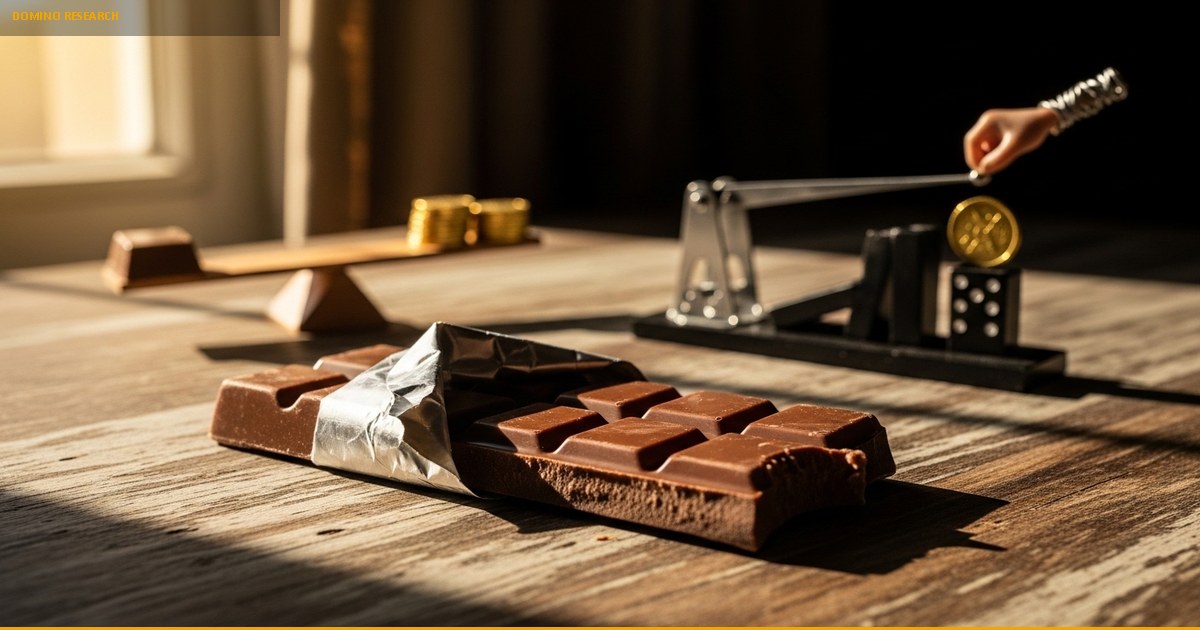
Go pick up a Chocolate Orange at the store. You'll notice two things: it costs twice what it did a couple years ago, and it's smaller.
That's not a coincidence — it's a symptom. The world's cocoa supply just went through its worst crisis since at least the 1970s.
Most people noticed pricier Halloween candy and half-dipped Kit Kats. Almost nobody is asking: who actually wins and loses — and where does this end?
We traced the dominoes. Some of them surprised us.
What just happened
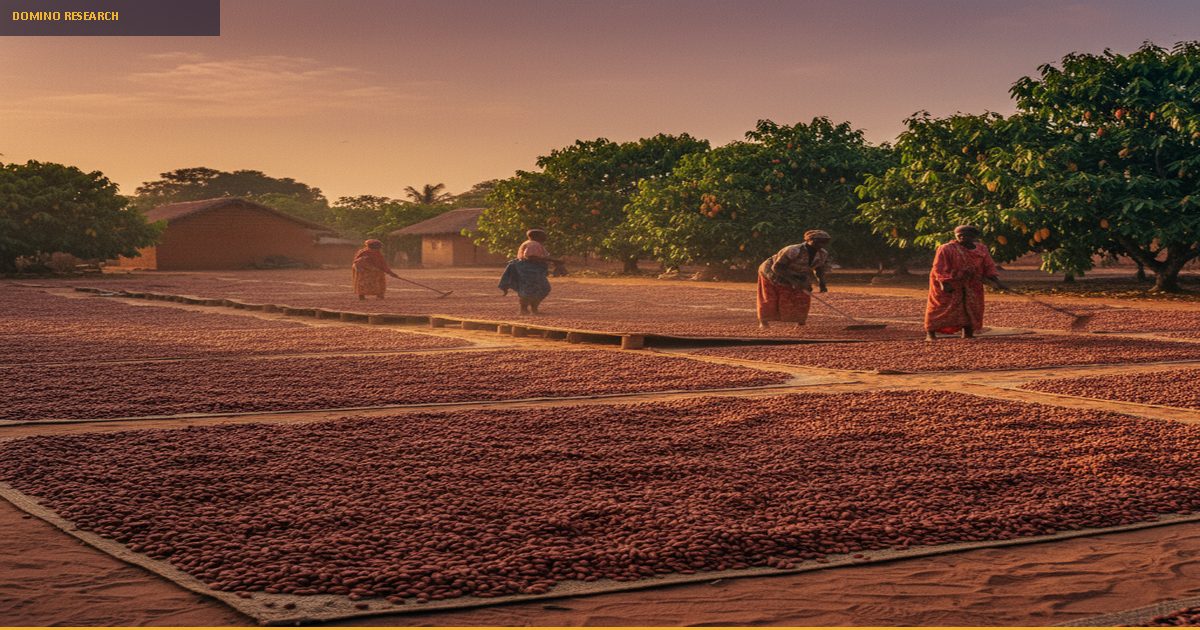
The cause wasn't a demand boom. It was a supply collapse. Climate change hammered cocoa crops across West Africa — the region that grows the vast majority of the world's cocoa beans — and cocoa prices tripled during 2024. Prices have remained elevated well into 2026.
Erratic rainfall, disease, and aging trees combined to slash harvests. The damage may not be temporary. Climate projections suggest growing conditions for cocoa will keep getting worse for years.
On top of the raw commodity spike, tariffs now threaten to push consumer chocolate costs even higher. The result: chocolate prices have roughly tripled at the consumer level since the crisis began, and they're still climbing.
First domino: The worst margin pain for chocolate makers may still be ahead
Major producers like Hershey and Mondelez hedged their cocoa purchases with forward contracts locked in at pre-crisis prices. Those contracts are now rolling off. That means the full impact of elevated cocoa costs is only now hitting income statements — even as spot cocoa has partially retreated from its 2024 peaks.
Cadbury doubled down on shrinkflation this Easter, selling fewer eggs at higher prices. The iconic Chocolate Orange has doubled in price and gotten physically smaller. Halloween candy costs nearly doubled between roughly 2020 and 2025. Easter chocolate across the board is more expensive.
Smaller regional chocolate brands face an even sharper version of this squeeze. Mega-caps like Hershey and Nestlé have the balance sheet to absorb quarters of margin compression. A mid-size specialty chocolatier doesn't. Watch for consolidation or closures among smaller players as hedging runways expire.
The Cocoa Crisis Timeline
Chocolate Makers' Pricing Response
| Brand | Price change | Product change |
|---|---|---|
| Cadbury Chocolate Orange | Doubled | Smaller size |
| Kit Kat (reports) | Higher | Half-dipped instead of fully coated |
| Halloween candy (market) | Nearly doubled (2020–2025) | Smaller portions, fewer items per pack |
Second domino: West African economies are wobbling — and that's an investable signal
Cocoa prices spiked because harvests collapsed. Farmers in Côte d'Ivoire and Ghana — which together produce most of the world's cocoa — have far less to sell. Higher price per ton, but dramatically fewer tons.
That's not just a farming problem. Côte d'Ivoire and Ghana depend on cocoa export revenue for a significant share of government income and foreign exchange. When production keeps falling, these countries struggle to pay their debts, keep their currencies stable, and fund the replanting programs that could eventually fix the supply problem.
The structural damage compounds over time. Climate change is reshaping rainfall patterns and accelerating crop disease. Aging cocoa trees take years to replace. This creates a vicious cycle: less revenue means less replanting, which means less future supply, which means the crisis extends itself.
Third domino: Non-chocolate snack brands have a stealth cost advantage
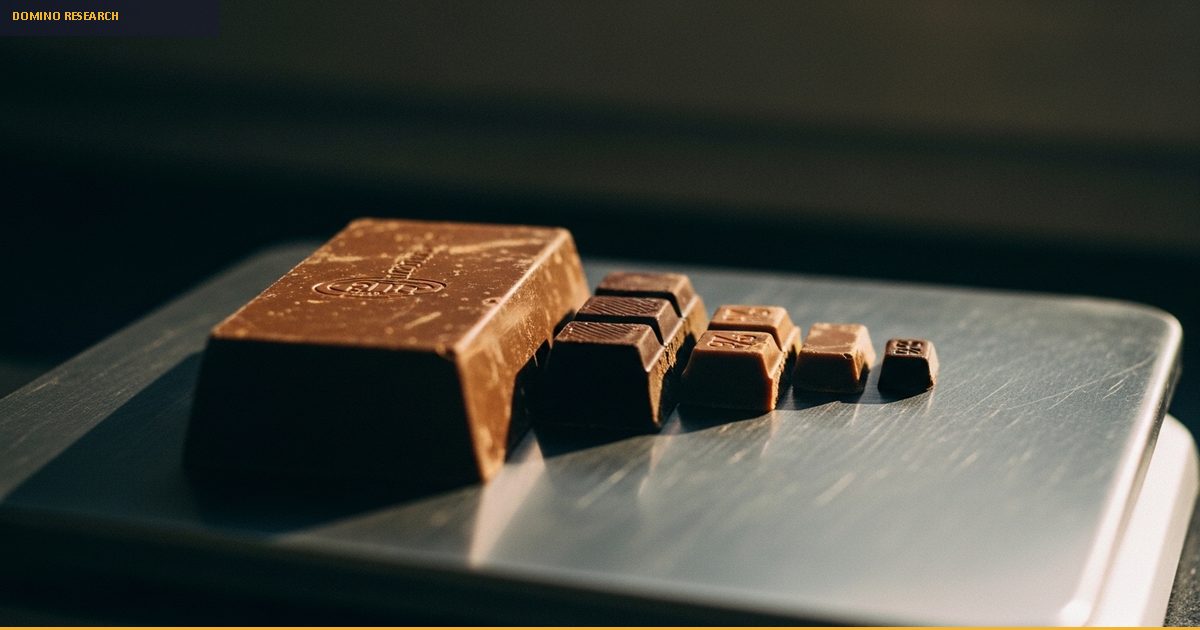
Manufacturers are already reworking recipes to use less cocoa. Reports indicate that some Kit Kats are now half-dipped rather than fully coated in chocolate. That's not a design choice — it's cost engineering.
Companies making gummies, hard candies, or salty snacks have a structural cost advantage: they use no cocoa. If a Hershey bar costs the same as a bag of Swedish Fish, some shoppers will switch. The question is whether this is already showing up in sales data.
This isn't guaranteed — brand loyalty in candy is strong. But at these price levels, the math starts to push consumers toward alternatives. Investors should track store-level sales volume data from retailers and scanner-data providers. That will show whether shoppers are actually switching — or if the substitution story is just a theory.
Fourth domino: Premium chocolate brands may actually benefit
It sounds backward, but rising commodity costs can actually help premium brands. But it's real. Premium chocolate makers use higher-quality beans, charge bigger markups, and have customers who are less price-sensitive to begin with. Their margin cushion is thicker.
The narrowing price gap effectively repositions premium chocolate from "splurge" to "might as well." That's a powerful shift in consumer psychology, and it benefits brands with strong identity and national distribution — think Lindt or Ghirardelli.
For investors, the signal to watch is same-store sales (how much existing locations grew) and volume trends at premium chocolate companies. If they're holding or growing volume while mass-market peers report declines, the trade-up thesis is confirmed.
When a Cadbury bar and a Lindt bar are only a couple dollars apart, some consumers trade up rather than down
Fifth domino: Don't expect cheaper chocolate anytime soon — even if cocoa drops
Cocoa has retreated somewhat from its 2024 record highs. But retail chocolate prices haven't followed. Chocolate at the store is still expensive.
Companies locked in forward contracts at peak prices. They changed packaging, reworked recipes, and reset what consumers expected. They have no incentive to rush price cuts back to shelves — and many have publicly signaled they won't.
Even the commodity pullback may be temporary. Structural climate damage to West African cocoa production suggests prices will remain well above pre-2024 levels through at least 2026 and likely beyond. New cocoa trees take three to five years to produce. The era of cheap chocolate may simply be over.
The last time this happened
The tightest analog isn't the broad 2000s commodity supercycle — it's the coffee rust crisis of 2012–2013. A fungal outbreak wiped out Central American coffee crops. Arabica prices spiked, and small-farm economies were crushed. The supply damage was biological and structural, not demand-driven — just like cocoa today.
What happened next is instructive. Coffee futures eventually retreated from their highs, but retail coffee prices stayed elevated for years. Brand-name roasters used the crisis to reset shelf prices upward and never fully gave back the increases. Commodity-exposed producers without pricing power got squeezed out.
The broader 2000s supercycle offers a second lesson. From 2000 to 2014, commodity prices surged. That followed roughly two decades of low prices — the 1980–2000 stretch that came after the 1970s stagflation era. That boom was driven mostly by demand — China and other emerging markets industrializing at unprecedented rates.
The distinction matters for investors. Supply-driven shocks persist because new agricultural supply takes three to five years to mature. You can't plant a cocoa tree and harvest next quarter. And cocoa's problem isn't underinvestment — it's a changing climate. That's harder to fix with capital alone. If the coffee-rust playbook repeats, retail chocolate prices will stay high long after futures cool down. And the strongest brands will come out the other side with wider margins.
What could go wrong
A bumper harvest. Weather is unpredictable. If West Africa gets good weather and ICCO's mid-season crop estimate for 2025/26 comes in well above recent depressed levels, cocoa futures could drop fast. That would relieve pressure on chocolate makers faster than anyone expects.
Consumer resilience. Chocolate is an emotional purchase — people buy it for comfort, for gifts, for holidays. Watch Hershey's next quarterly results. If volumes drop by less than low-single-digit percentages, it means shoppers are stomaching the higher prices without buying much less. The margin squeeze would ease on its own.
Tariff reversal. Tariffs are currently threatening to push chocolate costs even higher. But trade policy can change quickly. A tariff rollback would remove one layer of price pressure and could trigger a rapid repricing of the bearish thesis on chocolate stocks.
Substitution doesn't materialize. Non-chocolate snack makers only benefit if consumers actually switch. If chocolate demand proves inelastic — if people just pay more and grumble — the substitution thesis falls apart. Watch store scanner data closely. If non-chocolate candy volume growth doesn't speed up within the next two quarters, the trade-up-to-gummies story is noise, not signal.
Watchlist
| Ticker | Level | Status | Why |
|---|---|---|---|
| HSY | Watch earnings margins as hedging contracts roll off | monitoring | Hershey is the most cocoa-exposed major U.S. candy company. The key risk isn't just elevated input costs — it's that forward-contract expirations mean the worst margin compression may still be ahead even as spot cocoa retreats. |
| MDLZ | Watch volume trends | monitoring | Mondelez owns Cadbury, which is actively shrinking products and raising prices. Volume declines in upcoming quarters would signal consumer pushback is accelerating. |
| NSRGY | Watch product mix shifts | monitoring | Nestlé has a major chocolate portfolio including Kit Kat and Aero. Already reformulating products to use less cocoa — watch for margin impact as hedges expire. |
| TR | Watch for relative strength vs. chocolate peers | monitoring | Tootsie Roll makes mostly non-chocolate candy. Could benefit if consumers substitute away from pricier chocolate. Compare its volume trends against HSY and MDLZ for confirmation. |
Get the weekly digest
One email every Saturday. New stories, new research, no upsell. Unsubscribe with one click.