What to know
- Iran opened the Strait of Hormuz on April 17, oil plunged over 10% to below $90/bbl in hours, and stocks hit record highs — then Iran re-closed the strait on April 18, potentially reversing all of it.
- The real story isn't the oil move — it's the temporal mismatch between contracts priced at crisis levels and spot prices that just whipsawed, creating hidden earnings distortions across airlines, petrochemicals, and upstream producers.
- Markets that price in de-escalation tend to reprice re-escalation disproportionately — the asymmetry is the risk, and the ceasefire deadline is the tripwire.
Twenty percent of the world's oil supply just got switched on, switched off, and switched on again in the span of 48 hours.
The Strait of Hormuz — a narrow waterway between Iran and Oman — is the single most important chokepoint in global energy. Following U.S.-Israeli strikes in late February 2026, Iran closed the strait in response. For weeks, prices spiked, markets panicked, and economists started whispering the word "stagflation."
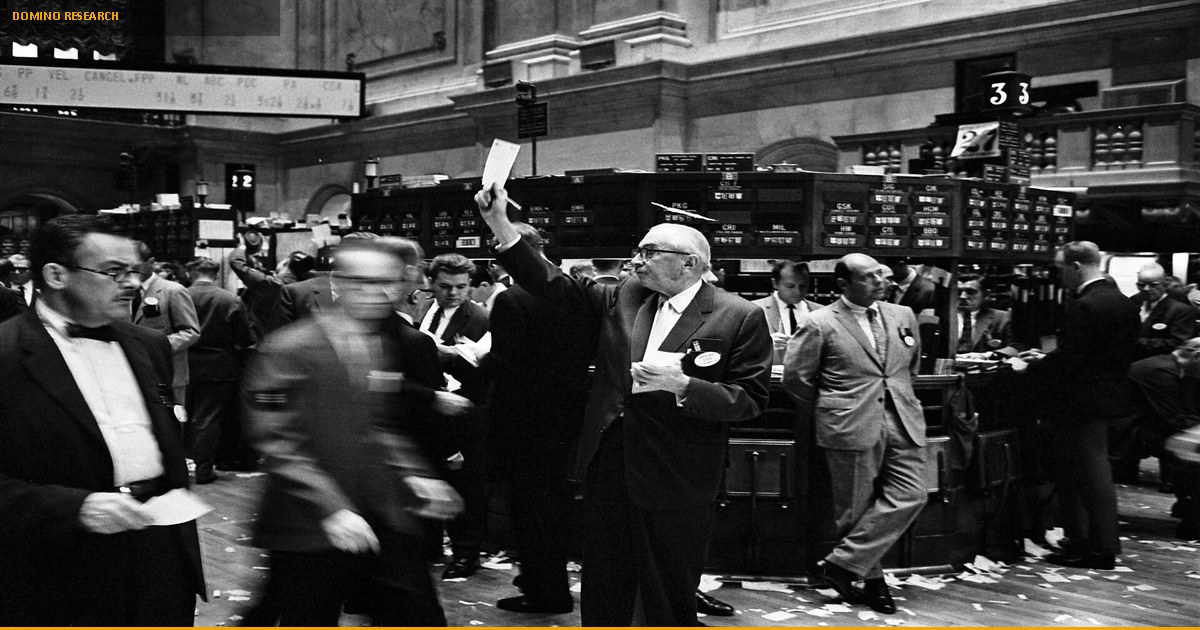
Then, on April 17, Iran announced a conditional reopening. Oil plunged over 10% to below $90 a barrel. Stocks ripped to all-time highs. The mood flipped from crisis to celebration in a single session.
It lasted less than a day. On April 18, Iran re-closed the strait after the ceasefire terms collapsed. The obvious trade — buy stocks, sell oil — just got trapped in a revolving door. The interesting dominoes are the ones created by the whiplash itself.
For a few terrifying months, one-fifth of the world's oil couldn't get where it needed to go.
What just happened
The sequence matters. In late February, the U.S.-Israeli Operation Epic Fury struck Iranian targets and killed Supreme Leader Ali Khamenei. Iran hit back by closing the Strait of Hormuz. The International Energy Agency called it the "largest supply disruption in the history of the global oil market".
On April 17, Iran announced it would conditionally reopen the strait — with coordinated shipping routes and restrictions on U.S.-allied vessels. Oil plunged more than 10% to below $90 per barrel. U.S. Stock indexes hit record highs the same day, in what The New York Times described as an "astonishing" rally as Middle East tensions appeared to ease.
Then it unraveled. The U.S. Maintained its blockade of Iranian ports despite the conditional reopening. On April 18, Iran re-closed the strait. The rally landed right as earnings season was heating up — and now every company reporting results has to navigate a market that priced in relief and may have to price it back out.
First domino: The 48-hour price gap creates an earnings distortion
Oil plunged more than 10% to below $90 per barrel on April 17, but physically-settled futures contracts signed during the blockade were already locked at crisis-era prices. Companies that took delivery of crude in March and early April paid the scarcity premium. Companies selling products made from that crude are now selling into a market that — for at least 24 hours — repriced dramatically lower.
The re-closure on April 18 adds another layer. Spot prices are whipsawing, but quarterly earnings are calculated over 90 days, not 48 hours. The result is a timing mismatch. Companies booked revenue at one price and locked input costs at another. On top of that, mark-to-market (valuing assets at their current market price) adjustments — valuing assets at their current market price — on hedging books may not reflect economic reality.
This is the distortion that won't show up in headlines but will show up in earnings calls. Analysts will need to separate the signal — how the business actually performed — from the noise of a once-in-a-generation price shock landing mid-quarter.
Second domino: Upstream producers face a credit squeeze, not just margin compression
During the blockade, upstream E&P companies drew down revolving credit facilities sized to crisis-era oil prices. Some used that capital to fund aggressive drilling programs, locking in equipment leases and labor contracts at elevated rates. Oil's plunge on April 17 — even if partially reversed by the re-closure — introduced borrowing-base risk.
Here's how it works: banks periodically redetermine the borrowing base of reserve-backed credit facilities. If oil prices are materially lower at the next redetermination, the calculated value of reserves drops, and the credit line shrinks. Companies that drew heavily against those facilities could face covenant pressure or forced repayment — even if oil partially recovers.
The companies most exposed aren't the majors with fortress balance sheets. They're the mid-cap and small-cap producers in the XOP index that levered up during the blockade windfall. Earnings season will reveal who hedged and who gambled.
Third domino: Airlines are sitting on losing hedge books — and the market will misread the headline
Oil's plunge on April 17 is unambiguously good for airlines' cash fuel costs going forward — if it sticks. But airlines with active fuel hedging programs locked in contracts at blockade-era prices. Those derivatives are now underwater.
The accounting gets tricky. On the cash side, airlines buying spot fuel save immediately. On the derivatives side, mark-to-market losses on hedging books hit the income statement. The net effect on reported EPS could be negative even as the underlying economics improve. Market analysis suggests investors who only read the earnings headline — without digging into the hedging footnotes — will misinterpret the quarter.
The re-closure on April 18 complicates this further. If oil spikes back to blockade levels, those "losing" hedges become winners again. Airlines are now straddling two realities — and the market will need to parse which one earnings reflect.
Fourth domino: The inflation math changed for 24 hours — and the Fed noticed
During the blockade, the conflict looked a lot like the 1970s energy crisis. Sharp supply shortages drove wild currency swings, rising inflation, and stagflation risk. Markets pushed back their expectations for rate cuts — or scrapped them entirely.
With oil's plunge on April 17, that calculus shifted — briefly. Lower energy prices pull down headline inflation, which gives the Fed breathing room. If oil had stayed down, the door to rate cuts would have reopened. Rate cuts are rocket fuel for stocks, housing, and corporate borrowing.
But the April 18 re-closure means the Fed is back to watching the same thermometer spike. The whiplash itself sends a message. It tells the Fed that energy-driven inflation hinges on one geopolitical variable — which makes giving forward guidance nearly impossible. Supply chain math indicates the Fed will wait for sustained price stability — not a single day's move — before adjusting policy.
Cheaper oil doesn't just help drivers at the pump. It reshapes the entire interest-rate outlook.
Fifth domino: Petrochemical producers got a 24-hour window — and the smart ones locked it in
The supply disruption during the strait closure raised input costs across petrochemical-dependent industries. Oil's plunge on April 17 gave companies making everything from plastic packaging to agricultural fertilizer a brief window of cheaper feedstock.
The question is who moved fast enough. Sophisticated procurement teams at major petrochemical producers would have locked in forward contracts during the April 17 price collapse. Those companies will report lower input costs next quarter regardless of what happens to spot prices now. Companies that hesitated — or lacked the treasury infrastructure to act in hours — missed the window.
The beneficiaries won't show up in a "Strait of Hormuz" stock screener. These are companies buried in industrial indexes. Their margins will quietly expand over the next two quarters because their buying teams locked in deals during a 24-hour pricing anomaly.
The last time this happened
The closest analog is the 1974 Arab oil embargo lift. The 2026 conflict echoed that era: sharp supply shortages, wild currency swings, rising inflation, and growing risks of stagflation and recession.
But the specific mechanism to watch is the inventory overhang. After the 1974 embargo lifted, refiners who had stockpiled crude at crisis prices had to work down expensive inventory before cheaper oil flowed through to retail prices. That created a multi-month lag between the crude price drop and actual consumer relief. Gas stations were still charging embargo-era prices weeks after tankers were flowing freely.
The same lag exists now — and it has a direct implication for when the Fed can declare victory on energy-driven inflation. The signal to watch: refinery crack spreads. When the gap between crude input costs and refined product prices narrows back to pre-blockade levels, it means the expensive inventory has been flushed. Until then, cheaper crude at the wellhead doesn't mean cheaper diesel at the pump, and the Fed knows it.
What could go wrong
The first risk is already showing up. Months of the largest supply disruption in oil market history left real scars: broken supply chains, delayed capital spending, and inflation that crept into wages and rents. Even if oil eventually stabilizes at lower levels, those costs take quarters to unwind.
The second risk is the one dominating headlines: Iran re-closed the strait on April 18. The ceasefire terms collapsed, and every domino in this chain is now in flux. If the re-closure holds through the end of April, the April 17 relief rally becomes a bull trap.
Third risk: the April 17 rally was indiscriminate euphoria. When everything rallies on the same headline, some of those gains are built on mood, not math. This is speculative, not sourced analysis: if gasoline had stayed cheap, consumers would have had less reason to switch to electric vehicles. That means even the EV sector's rally on April 17 may have been trading against its own fundamentals.
Here's exactly what would prove re-escalation is real: WTI crude climbs back above $100/bbl and stays there for more than five trading days. At the same time, the 5-year breakeven inflation rate pushes past its March 2026 peak. If both happen, markets are pricing in a new crisis before the headlines catch up. Watch crude futures and the TIPS market — they'll move before the news cycle does.
Watchlist
| Ticker | Level | Status | Why |
|---|---|---|---|
| USO | Thesis requires oil to stay below $100/bbl — if USO reclaims blockade-era highs and holds for 5 sessions, exit the watch | monitoring | U.S. Oil Fund ETF — the most direct way to track whether the April 17 price collapse sticks or fully reverses on the April 18 re-closure |
| DAL | Thesis requires fuel hedging book disclosures in Q2 earnings — if mark-to-market losses exceed cash fuel savings, the headline EPS will mislead | monitoring | Delta Air Lines — the interesting story isn't cheaper fuel, it's whether the hedging book distortion masks the underlying improvement in next quarter's report |
| DOW | Thesis requires feedstock cost relief to flow through — watch Q2 gross margins vs. Q1 for confirmation | monitoring | Dow Inc. — major petrochemical producer; the question is whether procurement locked in cheaper feedstock during the April 17 window before the re-closure |
| XOP | Thesis requires borrowing-base redeterminations to tighten — watch for covenant breach disclosures in Q2 filings | monitoring | Oil & Gas E&P ETF — upstream producers that drew down revolving credit facilities at peak oil face borrowing-base risk if prices stay volatile |
| SPY | Thesis requires the April 17 record highs to hold — if SPY gives back the full April 17 gain within two weeks, the relief rally was a head-fake | monitoring | S&P 500 ETF — broad market hit all-time highs on April 17; the April 18 re-closure tests whether those levels were earned or euphoric |
| ITA | Thesis requires de-escalation to hold — if the re-closure persists, the war premium in defense stocks reflates and ITA outperforms | monitoring | U.S. Aerospace & Defense ETF — the April 18 re-closure may reverse the brief deflation of the war premium that began on April 17 |
Get the weekly digest
One email every Saturday. New stories, new research, no upsell. Unsubscribe with one click.