What to know
- The 1911 Supreme Court ruling broke Standard Oil into 34 separate companies — Rockefeller, who owned ~25% of the trust, watched his fortune nearly double in the months that followed because the parts traded at a higher combined value than the whole had.
- The case was triggered by a 19-part magazine investigation by Ida Tarbell, daughter of an oilman whose business Rockefeller had crushed in 1872, that ran in McClure's from 1902 to 1904 and laid out the secret railroad rebates that built the trust.
- The 34 successor companies became Exxon, Mobil, Chevron, Amoco, Conoco, BP's American business, and most of the modern majors — antitrust didn't kill Big Oil, it created Big Oil.
On May 15, 1911, John D. Rockefeller was at Augusta Country Club in Georgia, three holes into a round of golf, when a messenger reached him on the fairway with a Reuters dispatch. The Supreme Court of the United States had just ruled, 8–0, that Standard Oil — the company he had built for forty years — had to be dismantled.
Rockefeller read the slip of paper, handed it back, and said, according to the man caddying for him, only one thing.
"Buy Standard Oil."
He was 71 years old. He had retired from active management a decade earlier. He owned roughly a quarter of the trust's stock. And he had just figured out — faster than the markets, faster than the government, faster than the lawyers who had spent four years preparing the case — what the breakup would actually do.
It would not destroy the company. It would multiply it.
The Daughter of a Ruined Oilman
How a personal grievance from 1872 became the most consequential business journalism in American history.
Ida Tarbell was eight years old in 1872, living in Titusville, Pennsylvania, when her father came home and announced the family was finished. Franklin Tarbell was an independent oil refiner — one of dozens in the Pennsylvania oil regions, where commercial petroleum had been pulled out of the ground for the first time only thirteen years earlier. Then, that February, a strange new entity called the South Improvement Company arrived in town with a deal already signed.
The deal was simple and devastating. Three railroads — the Pennsylvania, the Erie, and the New York Central — had agreed to give the South Improvement Company a cut of every barrel of oil shipped, including barrels shipped by the Company's competitors. Independent refiners would pay double the rate. Standard Oil refiners, secretly the principal owners of South Improvement, would pay half. The deal hadn't been announced. A railroad clerk had leaked it.
Franklin Tarbell organized the protest meeting in Titusville. He helped lead what came to be called the Oil War of 1872. The oil men marched, refused to sell crude to Standard refineries, demanded the railroads cancel the contracts. The railroads cancelled. South Improvement was abandoned. The oil men celebrated.
But Standard Oil had already learned the lesson that mattered. Public opposition could kill an open conspiracy. A secret conspiracy was much harder to kill. Over the next decade, Standard Oil would simply do the same deal — secret rebates, drawback payments on competitors' shipments, control of pipelines and refineries — without making the mistake of putting it on paper. By 1880, it controlled roughly 90 percent of American refining capacity.
Ida Tarbell's father did not recover. He sold his refinery at a loss. His business partner committed suicide. And his eight-year-old daughter, who would grow up to study at Allegheny College and become one of the first investigative journalists in America, would carry the story with her for the next thirty years.
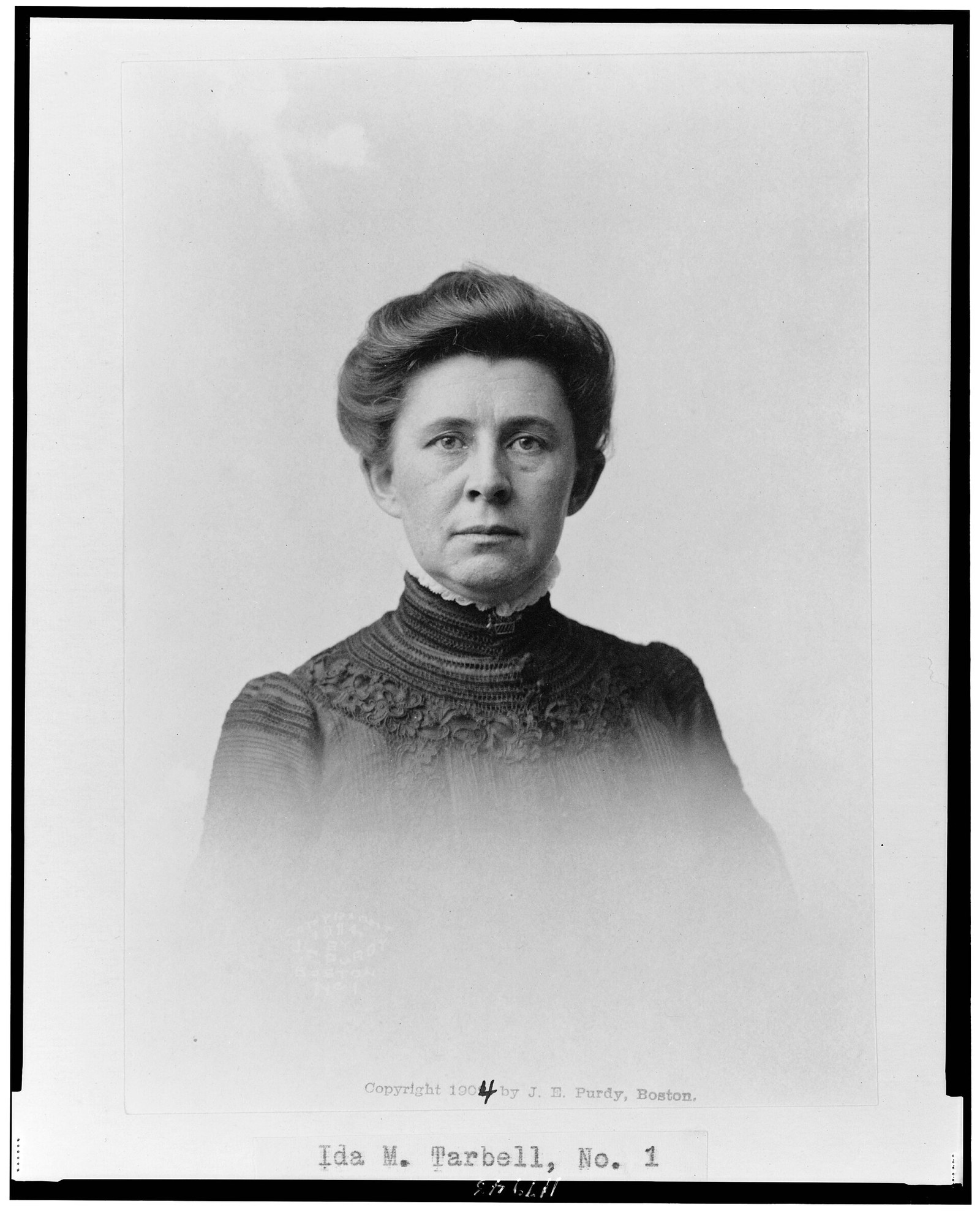
Ida Tarbell, the McClure's reporter whose 19-part investigation broke open Standard Oil's hidden contracts. (Photo: James E. Purdy / Public domain)
The Trust
Standard Oil wasn't a company. It was a legal innovation that became the template for every monopoly that followed.
By 1882, John D. Rockefeller had a problem. His company controlled most of American oil refining, but it was technically dozens of separate corporations chartered in different states. The 1882 Standard Oil Trust Agreement solved this. Forty-one stockholders signed a document transferring their shares of those individual companies to nine trustees, who would manage them centrally. In exchange, the stockholders received trust certificates.
This was a new legal entity. A trust. The shareholders kept their economic interest in the companies but surrendered control of the companies themselves. Rockefeller and a small group in 26 Broadway, New York, ran everything.
The Trust did three things that no individual company had been able to do. It set prices nationally. It rationalized capacity — closing inefficient refineries, expanding the best ones. And it integrated forward and backward: it bought the pipelines that carried oil out of Pennsylvania, the tank cars that loaded it onto trains, the marine terminals that shipped it overseas, and eventually the gas stations that sold kerosene to households.
Kerosene was the killer product. Until the late 1870s, American homes were lit by whale oil, which was expensive, and town gas, which was dangerous. Standard Oil drove the price of refined kerosene from 26 cents a gallon in 1870 to under 8 cents by 1885. For a working-class family, this was the equivalent of having electricity arrive twenty years early. Rockefeller, in his own telling, was bringing light to the world.
He was also, of course, crushing every competitor in his path.
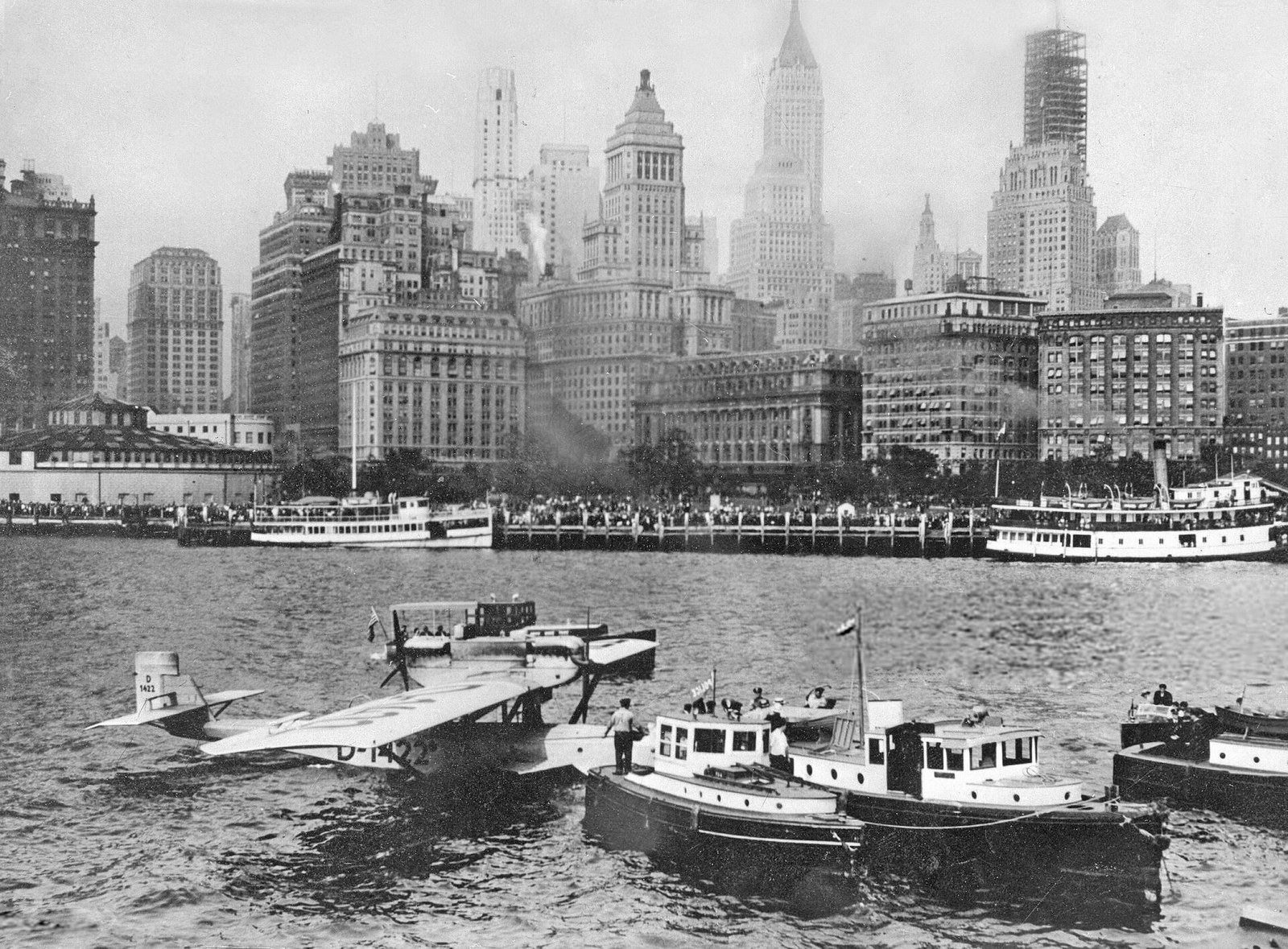
26 Broadway, New York City — the Trust's headquarters and the place where 34 companies were run as one. (Photo: Unknown authorUnknown author / Public domain)
Nineteen Installments
How a woman who had set out to write a sympathetic profile of Rockefeller came back with the document that would destroy him.
In 1900, Sam McClure, the editor of McClure's Magazine, asked Ida Tarbell what she thought she could write that Americans hadn't read before. She proposed a series on a great American business. Andrew Carnegie's steel? J.P. Morgan's banking? Standard Oil?
They chose Standard Oil. Tarbell was forty-three. She had already written biographies of Napoleon and Lincoln. McClure thought she would write a balanced corporate history. Standard Oil's executives initially cooperated — Henry Rogers, one of Rockefeller's senior partners, met with her every Tuesday morning for two years and walked her through the company's accounts.
What Rogers did not realize was that Tarbell was using those meetings to triangulate. She had also obtained — through court records, through ex-employees, through railroad clerks who had kept their copies of the original 1872 contracts — the documentary evidence of the secret rebates. The paper trail her father had been one of the first victims of.
The series ran for nineteen installments in McClure's between November 1902 and October 1904. It is, with the qualified exception of Lincoln Steffens's reporting on city government, the founding work of American investigative journalism. It named individuals. It quoted contracts. It traced specific competitors who had been driven out by specific tactics. It was meticulously footnoted. And it was, in the cumulative weight of what it documented, devastating.
The key insight was not that Standard Oil was big. Americans already knew that. It was that Standard Oil had become big through means that were not merely competitive but were specifically — and provably — coercive. The railroad rebates were not just clever pricing. They were a private tax that Standard Oil's competitors paid to Standard Oil, on every barrel of oil they shipped, whether or not they used Standard's services. The 1872 leak had hidden a bigger ongoing reality.
The series ran for nineteen installments in McClure's between November 1902 and October 1904. It is, with the qualified exception of Lincoln Steffens, the founding work of American investigative journalism.
McClure's Magazine, where Tarbell's investigation ran from November 1902 to October 1904. (Photo: McClure, S. S. (Samuel Sidney), 1857-1949 / Public domain)
The President Reads the Articles
Theodore Roosevelt was already looking for a Big Trust to break. Tarbell handed him the case.
Theodore Roosevelt had become president in September 1901 after William McKinley was shot, and he had spent his first years moving carefully on antitrust. The Sherman Antitrust Act had been passed in 1890 — a single-page law that prohibited "every contract, combination, or conspiracy in restraint of trade" — but in the eleven years since, it had been used mainly against labor unions and a handful of small mergers. The Supreme Court had read its main provisions narrowly.
Roosevelt wanted a test case. In 1902, against J.P. Morgan's railroad holding company Northern Securities, he filed his first major antitrust action. The Supreme Court upheld the dissolution of Northern Securities in 1904. This was, in a sense, the warm-up.
By then, the Tarbell series was running. Roosevelt read it. So did his attorneys general. So, more importantly, did the prosecutors at the Department of Justice, who began assembling evidence that closely tracked Tarbell's findings.
In November 1906, the Roosevelt administration filed United States v. Standard Oil Co. of New Jersey. The complaint accused Standard Oil of forty-three years of restraint of trade. It listed specific violations going back to the 1872 South Improvement Company. The case would take four years to work through the lower courts and another year for the Supreme Court to rule.
What made the timing work was that the political climate had shifted. Roosevelt's successor, William Howard Taft, was less personally interested in trust-busting but had a more methodical attorney general, George Wickersham, who actually pursued the case to conclusion. Taft, often dismissed as a do-nothing one-term president, brought ninety antitrust cases — more than Roosevelt. Standard Oil was the biggest of them.
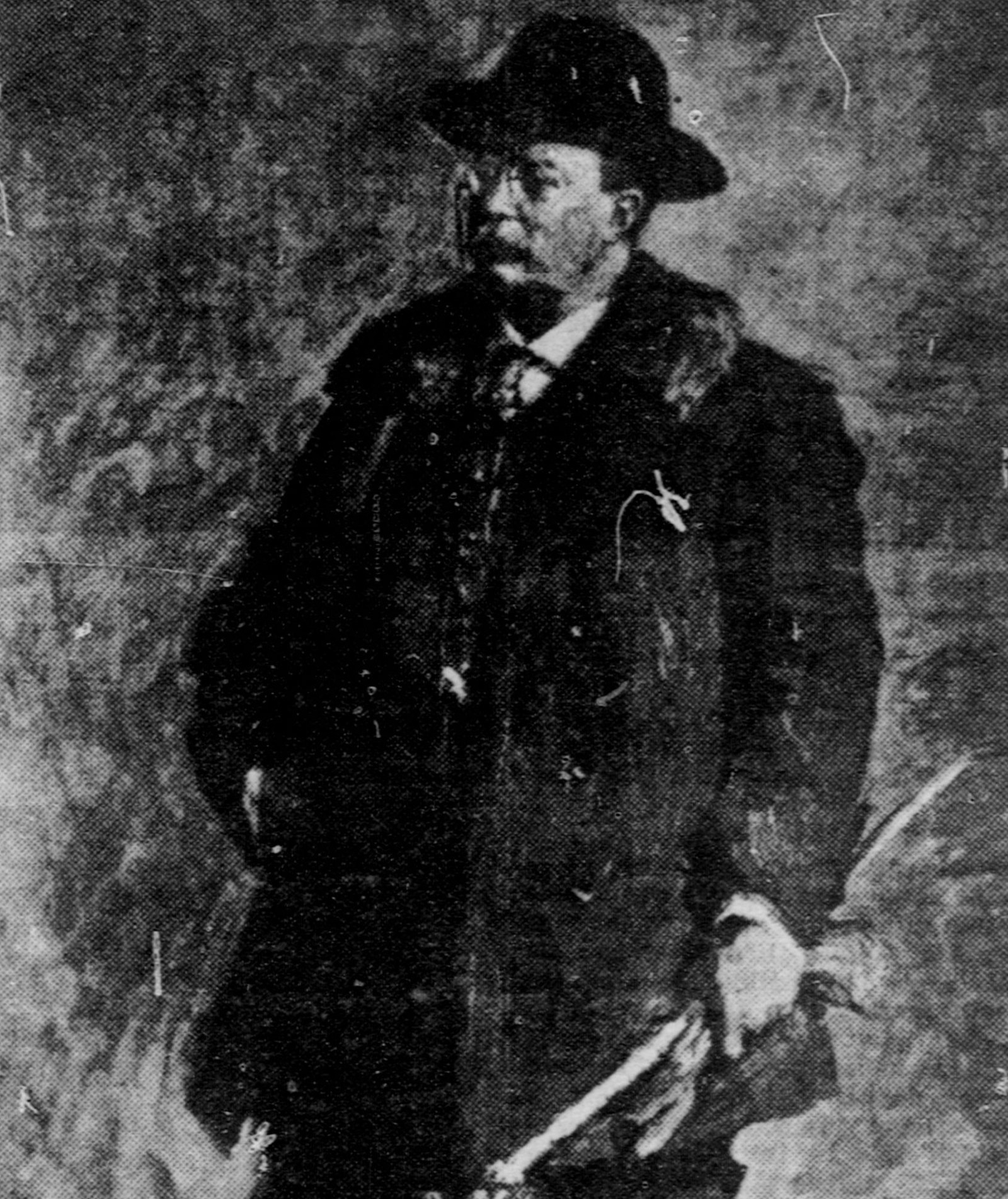
Theodore Roosevelt and William Howard Taft — between them, the political will that filed and finished the case. (Photo: Unknown authorUnknown author / Public domain)
The Ruling
Eight to nothing. Six months to dissolve. The first time the Supreme Court told an American company that big was, on its own, a problem.
Chief Justice Edward White read the opinion on May 15, 1911. The vote was 8–0. The verdict was unambiguous. Standard Oil's structure was an unreasonable restraint of trade under the Sherman Act. The trust had to be dissolved within six months. Its stock in the 34 subsidiary companies — which had been held centrally for thirty-three years — would be distributed to the trust's existing shareholders pro rata.
The ruling did two things that mattered for everything that followed. First, it introduced the "rule of reason" — the idea that not every restraint of trade was illegal, only unreasonable ones. This sounds technical but mattered enormously: it gave courts judgment about which monopolies to break and which to leave alone. The U.S. Steel case three years later, in 1920, would use the rule of reason to leave Carnegie's combine intact.
Second, it set the template for structural remedy. When a monopoly was found to be illegal, the response was breakup — not regulation, not a fine, not behavioral conduct rules. The pieces had to be made to compete with each other. Antitrust law, under the Standard Oil precedent, was about firm size and firm structure, not about behavior or pricing.
When the dissolution actually happened on December 1, 1911, the trust's stock was divided among the 34 successor companies. Most of those companies were small and regional. Standard Oil of New Jersey — the largest, holding the New York City refineries and the international trade — became Esso, then Exxon. Standard Oil of New York became Mobil. Standard Oil of California became Chevron. Standard Oil of Indiana became Amoco. Standard Oil of Ohio became Sohio, later acquired by BP. Continental Oil became Conoco. Atlantic Refining became Atlantic Richfield, later ARCO. The names are still familiar.
What happened next is the part that economists are still arguing about.
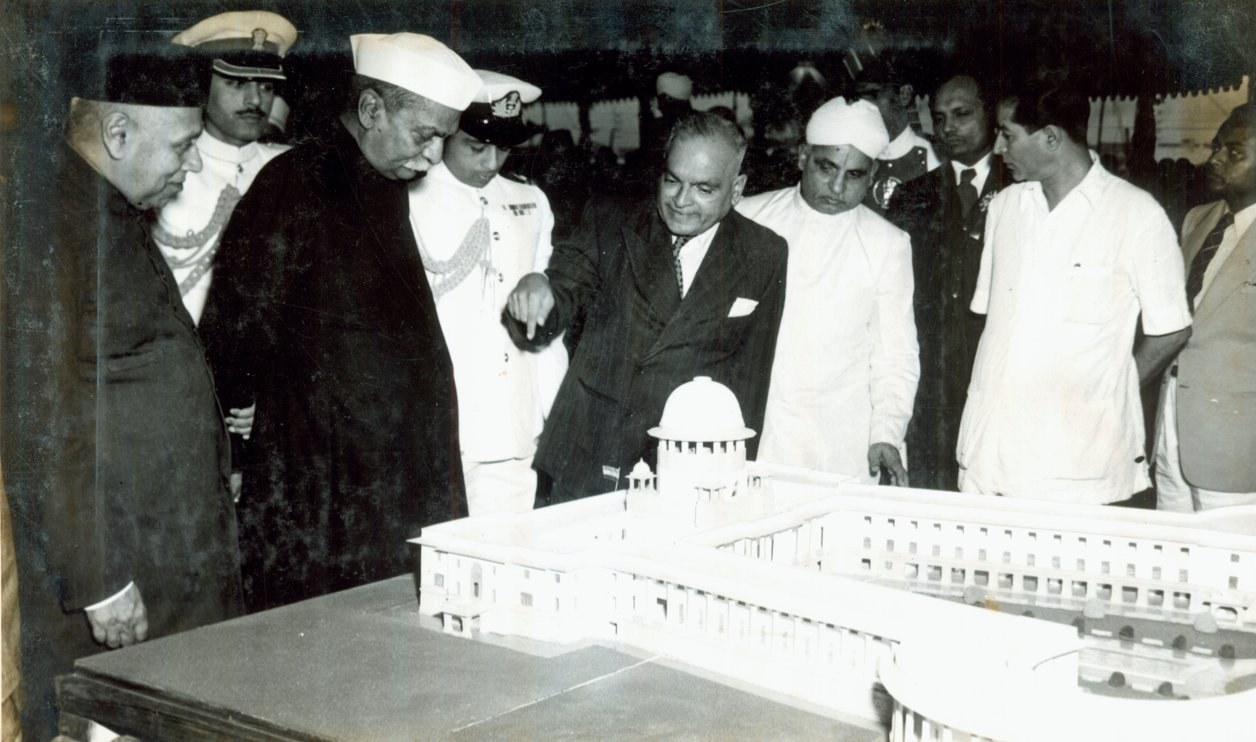
Chief Justice Edward White, who read the unanimous opinion on May 15, 1911. (Photo: Unknown authorUnknown author / Public domain)
The Multiplication
Within a year, Rockefeller's fortune had nearly doubled. The pieces, valued separately, were worth more than the whole.
Rockefeller had owned about a quarter of Standard Oil Trust before the breakup. The dissolution gave him a quarter of each successor company. In the months following the December 1911 split, the stock prices of the 34 companies traded up — collectively much higher than the trust had been valued the day before the ruling.
There were three reasons. First, the holding-company discount disappeared. The trust had been a complex, opaque entity that Wall Street had always discounted. The successor companies, individually, were simpler businesses with cleaner financials. Investors paid up. Second, several of the successor companies had been sitting on assets the trust had never properly monetized — pipelines whose tariffs had been kept artificially low to favor Standard refineries, refineries with excess capacity that could now be expanded without internal politics. Once independent, they could optimize on their own terms. Third, the demand environment was shifting in a way the trust had been slow to recognize. Kerosene, the original killer product, was being displaced by gasoline as automobiles moved into the mass market. The Model T had launched in 1908. Henry Ford was producing 200,000 cars a year by 1913. The successor companies, freed from the trust's kerosene-centric strategy, retooled for gasoline faster than the trust ever would have.
Rockefeller's personal net worth went from roughly $300 million in 1911 to nearly $900 million in 1913. Adjusted for inflation, this was the largest individual wealth gain in American history at the time. He spent most of the rest of his life giving it away — the Rockefeller Foundation was founded in 1913, just as the breakup was paying him out.
The broader lesson was less reassuring for trust-busters. The Standard Oil precedent had established that the federal government could break up the most powerful corporation in the country. It had also established that doing so might make the corporation's owners much richer. That paradox would shape every major antitrust action since.
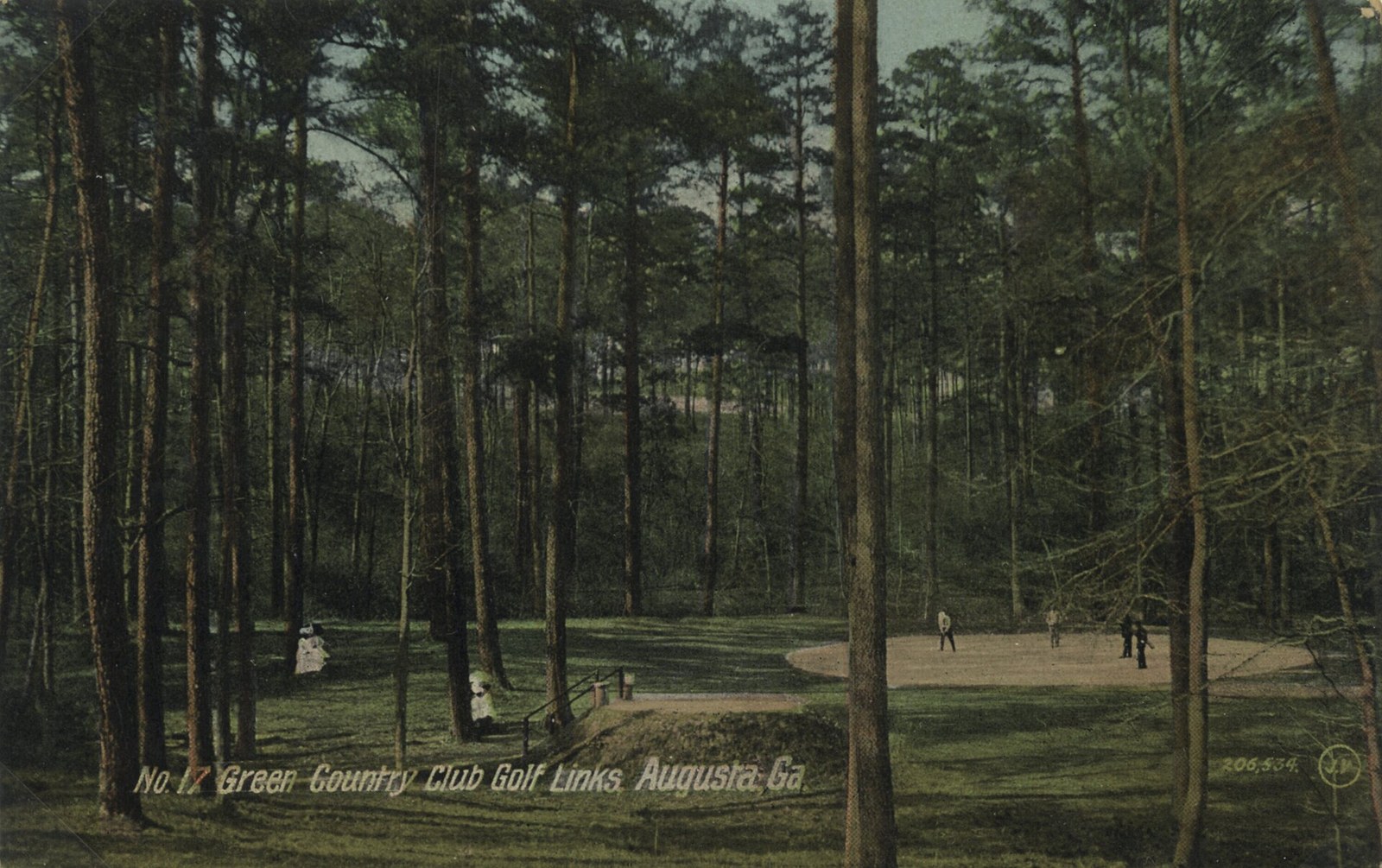
Esso — Standard Oil of New Jersey, soon to be Exxon — one of 34 companies that emerged from the dissolution. (This file was contributed to Wikimedia Commons by Augusta-Richmond County Public Library System as part of a cooperation project. The donation was facilitated b)
The Template
AT&T 1984. Microsoft 1998. Google 2024. Every modern antitrust case is arguing with Standard Oil.
When the Department of Justice broke up AT&T in 1984, splitting the long-distance company from the seven regional Baby Bells, the playbook was Standard Oil. Structural separation, pro rata distribution of stock to existing shareholders, behavioral promises about future conduct. AT&T shareholders, like Rockefeller's, did fine. Within fifteen years most of the Baby Bells had merged back into a smaller number of large carriers. The ones that didn't — Verizon, AT&T itself after reabsorbing several pieces — became more valuable than the original AT&T.
When the DOJ tried to break up Microsoft in 1999, after Judge Thomas Penfield Jackson found Microsoft had used its operating-system monopoly to crush Netscape, the proposed remedy was again Standard Oil-style: split Windows from Office. The D.C. Circuit Court of Appeals overturned that remedy in 2001. Microsoft survived as a single company. Its stock, twenty-five years later, has compounded faster than virtually any Standard Oil successor.
The modern Big Tech antitrust cases — the 2020 Google search case, the 2023 Google ad-tech case, the Apple case, the Amazon case — all sit in this lineage. The plaintiffs argue size. The defendants argue reasonable competition on merits. The remedies, when there are remedies, are some hybrid of the Standard Oil structural template and the AT&T behavioral one.
What the 1911 breakup actually proved is that the wealth in a monopoly is not in the monopoly. It is in the underlying business — the kerosene that lit homes, the gasoline that moved cars, the search advertising that prices ten million keywords every minute. Take the structural lock off, and the underlying business often grows faster, not slower. The shareholders who owned the trust the day before dissolution owned something more valuable the day after.
This does not mean breakups are pointless. It means the case for them — Tarbell's case, Roosevelt's case, the Sherman Act's case — has always been about something other than wealth. It is about competition, prices for consumers, the political danger of a single corporation owning a critical industry. Those are still good reasons. They are just not the reasons most often given.
The wealth in a monopoly is not in the monopoly. It is in the underlying business. Take the structural lock off, and the underlying business often grows faster, not slower.
What This Story Tells Us Today
Ida Tarbell's nineteen installments did one thing the antitrust laws couldn't have done on their own: they made the secret operations of a monopoly legible to ordinary readers. Not through rhetoric, but through documents, names, dates, and specific transactions. The political conditions for breakup followed the journalism, not the other way around.
For the current generation of antitrust cases, this is the missing ingredient. The complaints against Google, Apple, Amazon, and Meta read like legal filings, because they are legal filings. There is no Tarbell. There is no nineteen-installment investigation in a popular magazine that walks an ordinary reader through the specific contracts, the specific competitors crushed, the specific moments where a different decision would have produced a different industry. Until that exists, the cases will move slowly, and the public will remain uncertain whether to root for the prosecutors or the defendants.
The other lesson is the one Rockefeller already knew at Augusta Country Club. Breaking up a company doesn't destroy the value in it. It often releases value the central structure was suppressing. Investors holding shares of a Big Tech company that gets broken up should not necessarily panic. The pieces, freed from internal politics and forced to compete on their own merits, frequently grow faster than the whole. The 34 Standard Oil descendants are now Exxon, Chevron, BP's American business, and most of the modern oil majors — and between them they are worth more than any single integrated company in the industry has ever been.
Get the weekly digest
One email every Saturday. New stories, new research, no upsell. Unsubscribe with one click.