What to know
- Brent crude dropped 6% and WTI fell nearly 7% as the Iran conflict de-escalated and the Strait of Hormuz reopened.
- Central banks now have more room to cut rates — a domino most investors are missing that reshapes mortgage costs, corporate borrowing, and growth-stock valuations.
- Chemical companies like Dow Inc. could see margin expansion within one to two quarters as cheaper crude flows through to feedstock contracts — a second-order effect the initial sell-off missed.
Brent crude fell 6% in a single day this week, unwinding months of geopolitical premium built on the Iran conflict. WTI dropped nearly 7%.
That's not just an energy story. It's a rate-cut story, a consumer story, and an OPEC discipline story — all playing out at once.
For months, the Iran conflict kept oil elevated. Shipping lanes were threatened. Prices climbed past $100 a barrel. Grocery bills crept up. The Fed stayed cautious. Then, almost overnight, the picture changed. Oil didn't just dip — it cratered.
The ripple effects are hitting corners of the market that have nothing to do with drilling rigs or tanker ships. Let's trace the dominoes.
What just happened
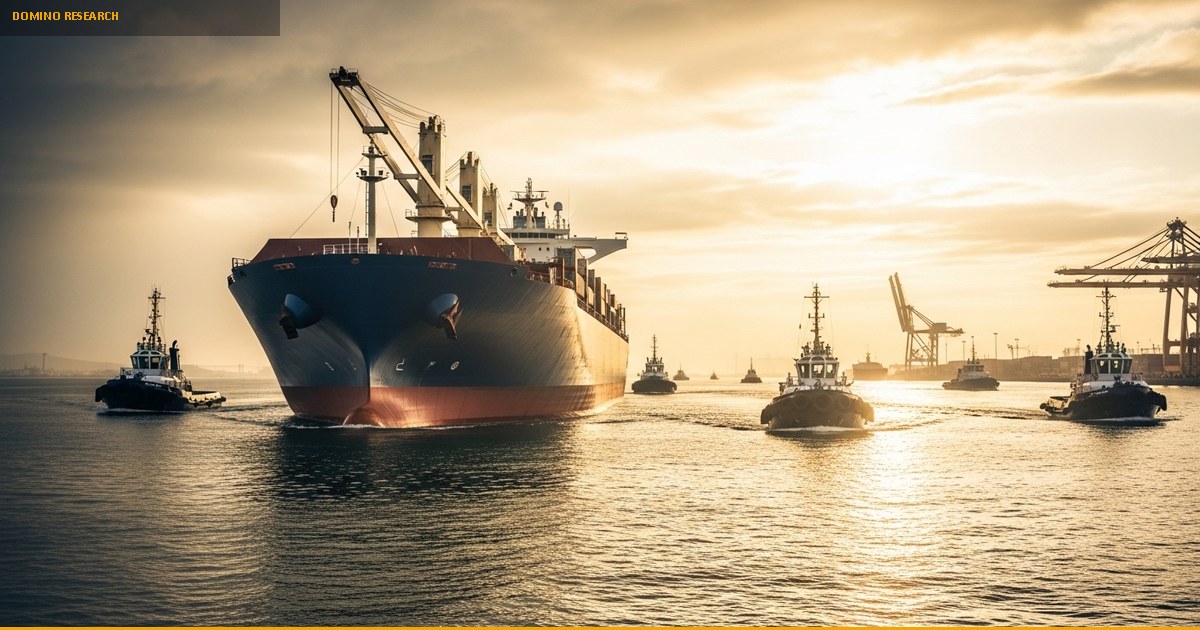
Brent crude fell roughly 6% and WTI crude dropped nearly 7% in a single sharp move. The catalyst: a dramatic shift in the Iran conflict. Earlier in 2026, when Iran rejected negotiations, Brent had surged above $100 a barrel. The Strait of Hormuz — the narrow waterway through which roughly a fifth of the world's oil passes — was effectively closed to commercial traffic.
Then Iran signaled the Strait was open again. Oil prices plunged sharply on that announcement. Stocks like APA and Dow Inc. Moved in response.
The International Energy Agency called the Hormuz closure one of the largest supply disruptions in the modern oil market. Now that disruption is unwinding — fast. And the market is scrambling to reprice everything that was built on $100 oil.
The IEA called the Hormuz closure the largest supply disruption in the history of the global oil market. Now that disruption is unwinding — fast.
First domino: The hedging cliff hits upstream producers
Upstream companies face exactly this problem: their drilling costs, lease payments, and labor contracts don't change when crude drops, but their revenue does — immediately.
Barron's flagged APA Corporation as one of the stocks that sank when the Strait of Hormuz reopened. What makes APA particularly exposed isn't just its upstream revenue mix — it's the timing. Many mid-cap producers locked in hedging contracts when crude was lower, and those hedges have been rolling off throughout 2026 as prices stayed elevated. Companies that let hedges expire during the $100 run-up are now fully exposed to the downside with no protection.
Earlier in 2026, Brent above $100 meant fat margins across the upstream sector. Now the trade is reversing. Producers that need higher prices to turn a profit get hit the hardest. That especially means companies with offshore or deepwater wells, where it costs far more per barrel to pump oil than in the Permian Basin shale fields. If oil stays this low, their margins shrink fast.
Second domino: The sectors you're not watching get a quiet earnings lift
We've already seen this dynamic play out in 2026. When oil surged on Iran war fears, the Dow plunged sharply as the oil spike rattled markets. When a US-Iran ceasefire plan emerged, oil dropped and shares jumped. For the broad market, cheaper oil is unambiguously bullish.
But the more interesting question is where the tailwind hits hardest. Energy is a much smaller slice of the S&P 500 than it was during the last big oil crash. So falling energy earnings drag down the index less than they used to. But the upside for the other 90%+ of the index from cheaper inputs is just as big. Airlines, trucking firms, and logistics companies get instant relief on their biggest variable cost: fuel. Retailers and restaurants benefit from consumers with more cash after filling up their tanks.
If oil stays down, sectors that benefit most from cheaper inputs — industrials, consumer discretionary, and transportation — could see analysts raise their earnings estimates before the next reporting cycle. Energy estimates, meanwhile, would get cut.
Third domino: Chemical companies flip from victim to beneficiary
When oil spiked earlier this year, Dow Inc.'s input costs jumped and the stock moved sharply alongside energy names as the market repriced the whole geopolitical picture. But if oil stays down, the math flips. Dow buys petroleum-based raw materials, so cheaper oil means cheaper inputs and wider margins — even if they don't raise prices.
The key question is timing. Contracts for petrochemical raw materials — especially ethylene and naphtha — usually reprice one to two quarters after crude oil moves. That means if oil stays down, the margin benefit won't show up in Dow's next earnings report. It'll show up in the one after that. Patient investors who understand this lag have a window before the market fully prices it in.
This is one of those second-order effects that gets missed in the initial sell-off chaos. The market's first instinct is to sell anything connected to oil. The smarter trade, if the decline holds, is to buy the companies that consume oil rather than produce it.
Fourth domino: Central banks get breathing room on rate cuts
The 2026 Iran conflict sent oil prices surging, echoing the 1970s energy crisis. It brought supply shortages, wild currency swings, and inflation that forced the Fed to delay rate cuts.
Falling oil prices directly reduce headline inflation. Gas is cheaper. Shipping costs drop. Food prices ease. That gives central banks the data they need to justify cutting rates sooner.
A sustained oil decline doesn't just help companies that burn fuel. It reshapes the entire outlook for interest rates. That affects mortgage rates, what companies pay to borrow, and how every growth stock in the market gets valued. If the next CPI (the consumer price index, the main gauge of inflation) print shows meaningful energy deflation, expect rate-cut expectations to shift forward on the calendar within days.
Fifth domino: OPEC's discipline gets tested
OPEC accounts for a significant share of global oil production. The cartel works by coordinating supply cuts to keep prices elevated.
But when prices fall sharply, individual members face a brutal choice. They can stick to their quotas and accept lower revenue. Or they can quietly pump more to make up the difference — which pushes prices even lower and tempts other members to do the same.
This is the self-reinforcing spiral that makes oil crashes so hard to stop. If even two or three OPEC members break ranks, the supply glut deepens, prices fall further, and more members feel pressure to cheat. We saw this exact dynamic in 2014–2016, when Saudi Arabia refused to cut production and crude collapsed from over $100 to below $30 as members pumped at will. The big question: can OPEC's leaders keep members in line when their national budgets are getting squeezed? And will the cartel call an emergency meeting to cut production before countries start breaking ranks?
OPEC's discipline works great when prices are high. When prices crash, every member has an incentive to cheat — and that can turn a dip into a spiral.
The last time this happened
The closest structural parallel is the 2014–2016 OPEC supply-war breakdown. In mid-2014, Brent crude sat above $110. By early 2016, it had collapsed below $30 — a 70%+ decline driven not by demand destruction but by OPEC's failure to coordinate production cuts.
The trigger then was Saudi Arabia's decision to defend market share rather than prices, flooding the market with supply. Members who had been quietly cheating on quotas suddenly had no incentive to restrain output at all. The defection spiral crushed oil-dependent economies, triggered a wave of U.S. shale bankruptcies, and forced the Fed to delay rate hikes.
The key difference today: the 2014 crash happened because OPEC flooded the market with supply. This time, the decline is driven by geopolitical forces outside the cartel. That distinction matters because OPEC still has the option to announce emergency cuts and put a floor under prices — an option it chose not to exercise in 2014. If the cartel acts quickly, this crash may stabilize. If it doesn't, the 2014 playbook suggests the decline could deepen far beyond what today's move implies.
What could go wrong
The Iran conflict re-escalates. This is the biggest risk. Earlier in 2026, a ceasefire plan sent oil lower — then Iran rejected negotiations and crude surged right back above $100. If the current de-escalation collapses, every domino in this chain reverses. Tripwire: If Brent reclaims $95 within 30 days, the de-escalation trade is likely a head fake and the thesis breaks.
OPEC cuts production aggressively. Instead of members cheating on quotas, OPEC leadership could announce emergency production cuts to put a floor under prices. That would limit the downside in oil and mute the benefits for consumers and downstream companies. Tripwire: If OPEC announces an emergency meeting or unscheduled production cut before mid-June, assume a price floor is coming and the downstream benefits (Dominoes 2–4) get significantly muted.
The oil decline signals demand destruction, not just supply normalization. If crude is falling because the global economy is slowing — not just because the Hormuz chokepoint reopened — then the tailwind for consumer and industrial stocks evaporates. Cheaper fuel doesn't help airlines if nobody's booking flights. Tripwire: If the next round of global PMI data (due early June) prints below 48, the demand-destruction interpretation gains credibility and the bullish read on Dominoes 2–4 weakens sharply.
The rate-cut timeline doesn't actually compress. Even if oil falls, core inflation (which strips out energy) could remain sticky from services, shelter, or wages. The Fed watches core more than headline. Tripwire: If the next CPI print shows energy deflation but core CPI remains above 3.5% annualized, the rate-cut breathing room in Domino 4 is smaller than this article suggests.
Watchlist
| Ticker | Level | Status | Why |
|---|---|---|---|
| APA | Current levels near 52-week lows | watching for downside | Pure-play upstream oil producer with revenue tied directly to crude prices. Hedging books have been rolling off in 2026, leaving the company more exposed to spot prices than peers with longer-dated protection. |
| Confirms: Sustained close below the May 27 level for 5+ trading days = oil decline thesis playing out and market pricing in lower forward earningsBreaks: Rally of 15%+ from current levels within 14 days = geopolitical re-escalation likely, thesis invalidated | |||
| DOW | Current levels | watching for upside | Chemical giant whose feedstock costs drop when oil drops. Margin expansion candidate, but the benefit lags crude moves by one to two quarters as petrochemical contracts reprice. |
| Confirms: Outperformance vs. XLE (energy ETF) over next 30 days = market beginning to price in the feedstock tailwindBreaks: Underperformance vs. SPY over 30 days despite sustained low oil = recession fears overwhelming the input-cost benefit | |||
| USO | Current levels | watching for direction confirmation | Oil ETF that tracks WTI crude futures. The simplest way to monitor whether this decline holds or reverses. |
| Confirms: Sustained close below the May 27 level for 10+ trading days = oil decline is sticking and downstream dominoes are in playBreaks: Rally above the level implied by $95 Brent within 14 days = Iran re-escalation or OPEC intervention, entire thesis breaks | |||
| JETS | Current levels | watching for upside | Airline ETF. Jet fuel is derived from crude, so lower oil directly cuts airlines' biggest variable cost. Airlines typically see fuel savings flow to the bottom line within one quarter. |
| Confirms: Outperformance vs. SPY over next 30 days with rising volume = airlines pricing in sustained fuel savingsBreaks: Decline of 10%+ from current levels despite low oil = demand fears dominating fuel savings, macro deterioration | |||
Get the weekly digest
One email every Saturday. New stories, new research, no upsell. Unsubscribe with one click.