What to know
- From 1998 to 2000, the US Department of Justice tried Microsoft for using its 95% Windows monopoly to crush the web browser market — and won, with a federal judge ordering the company split into two entities.
- The trial pivoted on a 20-hour deposition tape of Bill Gates that became famous for his evasive answers, deliberate misunderstandings of common words, and the moment he claimed he could not recall sending an email he had written three weeks earlier.
- The breakup order was overturned on appeal in 2001, then settled by the Bush administration in 2002 with mostly behavioral remedies. Microsoft kept its empire — but the trial paralyzed the company for a decade and gave Google, Apple, and the open web the runway they needed.
It is August 27, 1998. Bill Gates is sitting in a conference room in Redmond, Washington, being deposed by a Department of Justice attorney named David Boies. The video camera is rolling. Gates is being asked about a series of internal Microsoft emails. He answers each question with a long pause, a stare at the ceiling, and a precisely worded denial that the email means what it says. The transcript runs more than 600 pages. Two years later, when the federal judge in the case watches the tape, he will tell associates it was the moment he decided Microsoft had to be broken up.
The Browser Wars
Mountain View, 1995. A startup called Netscape released a free web browser. Microsoft did not have one.
By the mid-1990s, Microsoft Windows ran on more than 90% of personal computers in the United States. Microsoft Office ran on most of those. The company had a near-perfect lock on the desktop. What it did not have was a browser. The internet, in 1994, was still a thing accessed mostly via dial-up connections to commercial services like AOL and CompuServe. The web, as a separate phenomenon, was just becoming visible.
In December 1994, a small Mountain View company called Netscape Communications released a browser called Netscape Navigator. By the end of 1995 it had 80% market share among people browsing the web. Netscape went public in August 1995, gained 108% on the first day, and signaled to anyone paying attention that the next computing platform might not be Windows. It might be the browser. If applications increasingly ran inside the browser instead of inside Windows, Microsoft's monopoly would slowly stop mattering.
Bill Gates saw the threat early. In May 1995 he sent a famous internal memo titled 'The Internet Tidal Wave' redirecting the entire company toward the web. The first Microsoft browser, Internet Explorer 1.0, shipped that August. It was free. So was IE 2.0 in November. And IE 3.0, IE 4.0, IE 5.0. Microsoft also paid PC manufacturers — under threat of losing favorable Windows licensing terms — to ship Internet Explorer pre-installed and to remove or hide Netscape Navigator. By 1998 Internet Explorer had passed Netscape in market share. By 2000, Netscape was effectively dead, sold to AOL in 1999 for $4.2 billion in stock that lost most of its value within two years.
The Department of Justice was watching. So was a small Texas trial lawyer named David Boies, who had recently left the firm Cravath, Swaine & Moore after representing IBM in a different antitrust matter. He would prosecute the case Microsoft would later wish had never been brought.

Netscape Navigator, the browser whose 1995 launch put Microsoft on notice that the web could replace Windows. (Photo: Unknown Details on Google Art Project / Public domain)
The Deposition
Redmond, August 1998. Bill Gates spent three days answering questions in a conference room and produced one of the most-watched legal videos in American history.
The case the Department of Justice filed in May 1998 alleged that Microsoft used its Windows monopoly to crush competitors in adjacent software markets — particularly browsers. The legal theory was straightforward: a company with monopoly power in one market may not use that power to monopolize a second market. Tying Internet Explorer to Windows, paying PC makers to bundle it, and threatening retaliation against companies that supported Netscape — all of these, the DOJ argued, were textbook illegal tying.
Microsoft's defense was that Internet Explorer was simply part of Windows, that Windows itself was a competitive product, and that bundling a browser was no different from including a calculator. The defense was technical, lawyerly, and probably correct on at least some of the legal merits.
What broke the defense was the Bill Gates deposition. Boies questioned Gates over three days in August 1998. The transcript ran more than 600 pages. Gates was, by all accounts, extraordinarily uncooperative. He would pause for 30 seconds before answering simple yes-or-no questions. He claimed not to recognize his own emails. When asked what 'concerned' meant in a sentence he had written, he said he was not sure what 'concerned' meant in this context. When shown an email in which he had written 'Do we have a clear plan on what we want Apple to do to undermine Sun?' he claimed he could not recall what 'undermine' meant. At one point he and Boies spent six minutes arguing about the meaning of the word 'we.'
The judge in the case was Thomas Penfield Jackson, a 64-year-old Reagan appointee. He watched the deposition tape in court. Other judges and journalists later wrote that they could see Jackson's face change as the hours went by. By the end of the trial, Jackson would later tell journalists for a series of interviews — interviews that would eventually be used to overturn his ruling on appeal — that he had concluded Gates was 'a Napoleon' and that the company needed to be broken up to discipline its leadership.
Bill Gates spent three days answering questions in a conference room and produced one of the most-watched legal videos in American history.
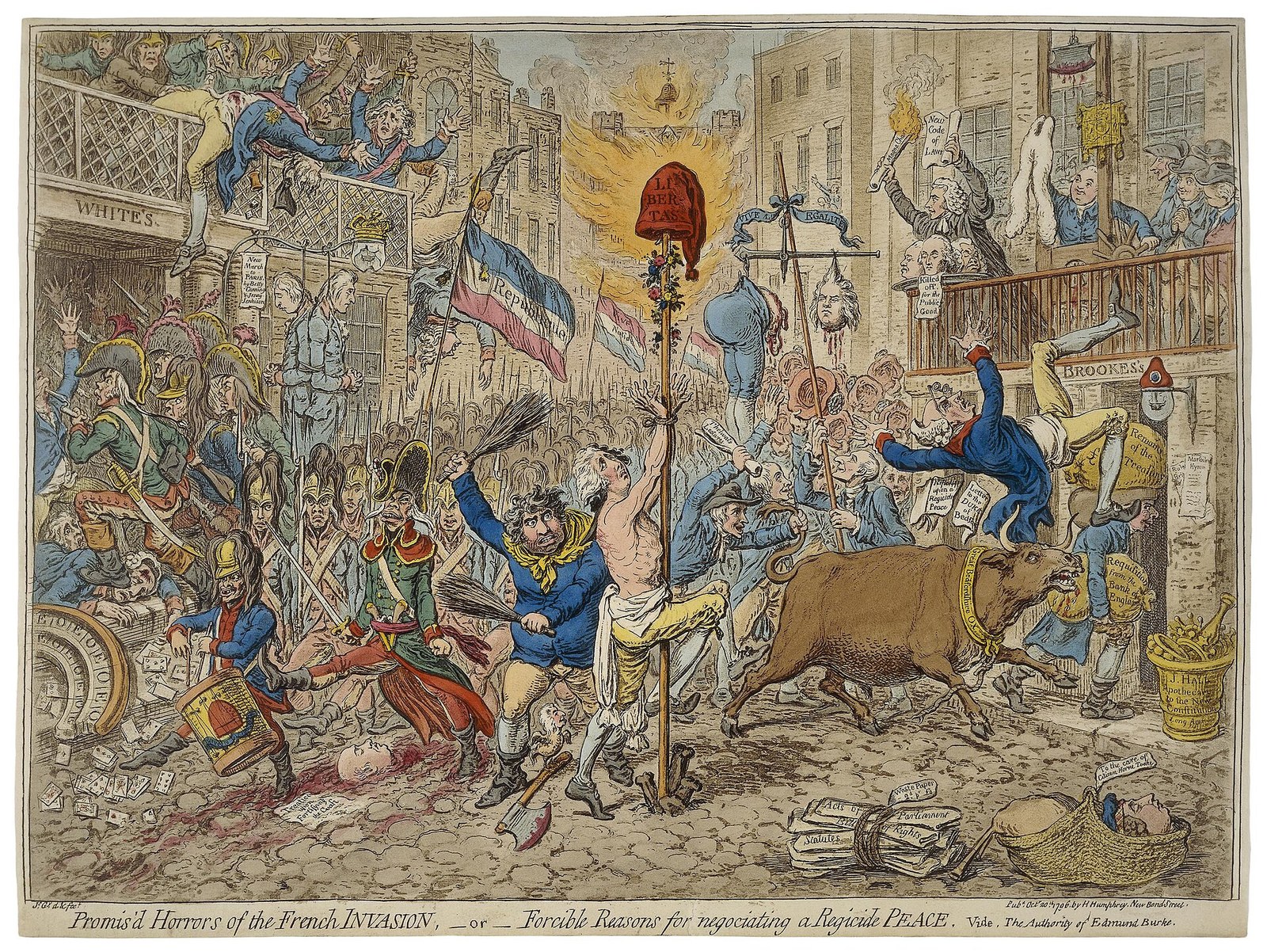
Bill Gates in 1998, around the time of the antitrust deposition that would help determine the case. (Photo: Print made by: James Gillray Published by: Hannah Humphrey / Public domain)
The Verdict
Washington, April 3, 2000. Judge Jackson ruled Microsoft an illegal monopoly. Two months later he ordered it split in two.
Judge Jackson's findings of fact, issued in November 1999, were detailed and damning. He ruled that Microsoft had monopoly power in the market for Intel-compatible PC operating systems, that it had used that power illegally, and that consumers and competitors had been harmed.
The legal conclusions came in April 2000. Microsoft was an illegal monopolist. Two months later, in June 2000, Jackson ordered the remedy: Microsoft would be broken into two companies. One would own Windows. The other would own everything else — Office, the developer tools, the consumer products. The two companies would be barred from sharing technical information beyond what they made publicly available.
The ruling was the first time the United States had ordered the breakup of a major American technology company since AT&T in 1982. Microsoft's stock dropped 14% on the day of the verdict, a loss of roughly $80 billion in market value. Bill Gates told employees in an internal memo that the company would appeal and would 'win on appeal.' Most legal observers thought he was overconfident.
Most legal observers were wrong. The appeal was filed within days. It would take fourteen months to be heard. In the interim, the 2000 election happened. George W. Bush won the presidency. The Department of Justice changed leadership. The political appetite for breaking up Microsoft, which had been strong under the Clinton administration's Joel Klein, was much weaker under Bush's John Ashcroft. The board was being reset before the appeal even started.
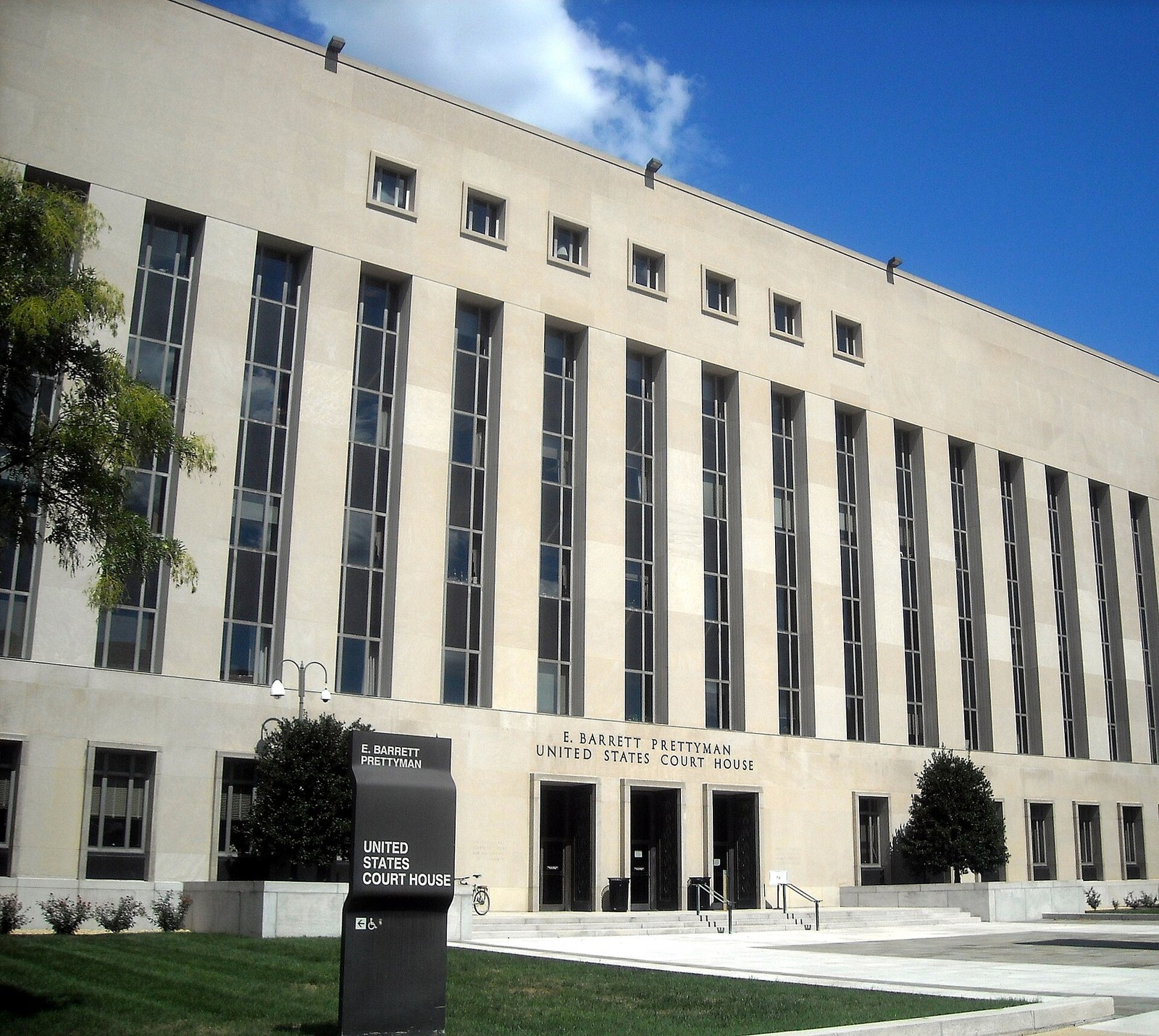
The federal courthouse in Washington DC where Judge Thomas Penfield Jackson ruled Microsoft an illegal monopoly. (Photo: AgnosticPreachersKid / Public domain)
The Reversal
Washington DC, June 2001. The DC Circuit Court of Appeals threw out the breakup order. The case that almost ended Microsoft was about to end something else entirely.
In June 2001 the United States Court of Appeals for the DC Circuit issued its ruling. It upheld most of Judge Jackson's underlying findings — that Microsoft had monopoly power and had used it illegally — but reversed the breakup order. The court's reasoning was twofold. First, Jackson had given the parties only a brief evidentiary hearing on the breakup remedy and the appeals court found the procedure inadequate. Second, and more damaging, Jackson's repeated post-trial interviews with journalists during the appeal period — interviews in which he had compared Bill Gates to a gangland boss and the Microsoft executive team to drug traffickers — had created the appearance of judicial bias. The case was sent back for a new remedy hearing in front of a different judge.
The new judge was Colleen Kollar-Kotelly. By the time she heard arguments, the Bush DOJ had already opened settlement negotiations with Microsoft. The settlement that emerged in November 2001 was almost entirely behavioral. Microsoft would be required to share more technical information with competitors. It would have to allow PC manufacturers more flexibility in how they configured Windows. It would not be broken up. It would not even be required to unbundle Internet Explorer.
The trial ended without consequence in any direct sense. But the consequences were enormous in indirect senses. From 1998 to 2002, Microsoft was paralyzed by the case. The company's product velocity slowed dramatically. Major decisions had to be cleared with antitrust lawyers. Internal documents were drafted with the assumption they would one day be subpoenaed. The cultural change was permanent. Microsoft became cautious about exactly the kinds of aggressive bundling moves that had built its empire.
What Microsoft lost was something the courts never even tried to take. It lost its appetite for the kinds of aggressive moves that had built it.

The DC Circuit Court of Appeals, which overturned the breakup order in June 2001. (Photo: Jelson25 / Public domain)
What Filled the Vacuum
While Microsoft was distracted, the next decade of the internet got built on top of it.
The companies that became the giants of the modern internet — Google, Facebook, Amazon, Apple — all rose during the period from 2002 to 2012, the exact decade when Microsoft was at its most cautious and slow. Google was founded in September 1998, four months after the antitrust trial began. By 2002 it had passed every other search engine. By 2004 it had gone public. By 2010 it dominated the web in ways that strongly resemble how Microsoft had dominated the desktop a decade earlier.
Apple, which had been three months from bankruptcy in 1997, launched the iPod in 2001, the iTunes Music Store in 2003, and the iPhone in 2007. Each of those products redefined a category that Microsoft had assumed it would dominate. Microsoft had a portable music player called the Zune. It launched in 2006 and was discontinued in 2012, having captured less than 5% of the market.
The most important counterfactual is the one nobody can prove. If the antitrust case had never been filed, would Microsoft have moved fast enough to dominate web search? Would it have built a competitive smartphone before Apple did? The Microsoft of the late 1990s, the company that aggressively bundled Internet Explorer and pressured PC manufacturers, was a company willing to compete viciously in adjacent markets. The Microsoft of the mid-2000s, the company watching Google and Apple eat its lunch, was a company that had been trained — partly by the trial, partly by its own cultural changes after the trial — to be more careful.
Satya Nadella took over as CEO in 2014. By 2024 Microsoft was again one of the most valuable companies on Earth, surpassing $3 trillion in market cap on the back of cloud computing and the OpenAI partnership. The company survived its near-death legal experience. The question of what was lost in those quiet years between 2002 and 2014 is open, but it is hard to look at the lost decade and not notice that Google and Apple were the companies that filled the space.

Satya Nadella, who took over Microsoft in 2014 and led its return to growth. (Photo: Jelson25 / Public domain)
What This Story Tells Us Today
There are two stories told about Microsoft's antitrust trial. The boring one is that big tech got humbled and that government regulation works. The more interesting one is the one nobody wants to make explicit. Microsoft was never broken up. The remedy that emerged was light. By any narrow legal measure, Microsoft won the case.
What Microsoft lost was something the courts never even tried to take. It lost its appetite for the kinds of aggressive moves that had built it. From 2001 onward, every Microsoft product decision was made under the implicit assumption that someone, somewhere, was watching for the next antitrust violation. That defensive posture is a real cost. It cost Microsoft the search market. It cost Microsoft the smartphone market. It probably cost Microsoft the social-network market.
For today's investors and operators, the lesson is that the most dangerous regulatory outcomes are not the ones that get written down. The Microsoft consent decree was mild. The cultural fear it instilled was severe. When you see a company in a regulatory crosshair, the question to ask is not 'what is the worst thing the regulator can order' — it is 'what is this company going to stop doing voluntarily because they are afraid of the regulator.' That second number is almost always the bigger one.
Get the weekly digest
One email every Saturday. New stories, new research, no upsell. Unsubscribe with one click.