What to know
- Novo Nordisk lost most of its post-Wegovy market cap gains, replaced its CEO by mutual agreement, and is cutting 9,000 jobs — including manufacturing staff at a US plant it built for a monopoly it no longer has.
- Compounding pharmacies and lower-cost GLP-1 alternatives are quietly emerging as beneficiaries of Novo's decline — an entirely new cost tier of weight-loss drug delivery that didn't exist two years ago.
- The investment rotation isn't just Novo vs. Lilly — it's reshaping how investors price food stocks, surgical devices, and the economics of who actually delivers GLP-1 drugs to patients.
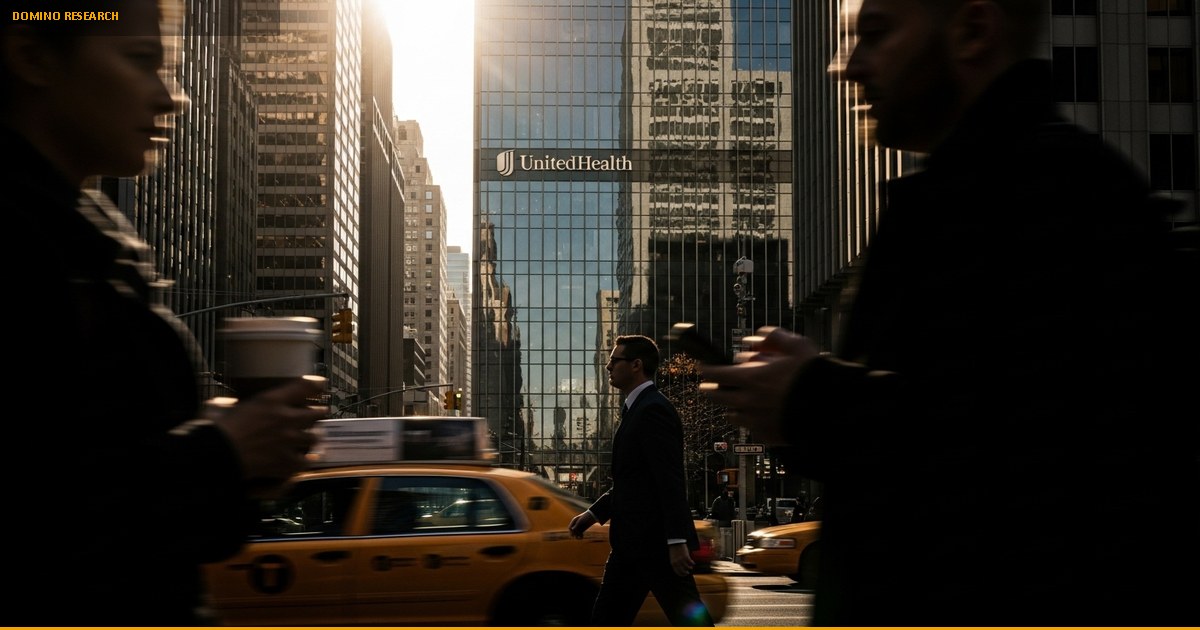
Two years ago, Novo Nordisk was the hottest company in Europe. Its weight-loss drug Wegovy was so popular that people joked it would bankrupt the snack aisle. Investors piled in. The stock soared. Novo became more valuable than every company on the continent.
Then the story flipped. Competitors showed up. Sales forecasts cratered. The CEO stepped down. And now the company is laying off thousands of workers.
This isn't just a story about one pharmaceutical company having a bad year. The rise and fall of Novo Nordisk rewired how investors think about food stocks, healthcare spending, and what happens when a trillion-dollar narrative runs into reality. The dominoes are still falling — and some of them are landing in places you wouldn't expect.
What just happened
Novo Nordisk, the Danish drugmaker behind Ozempic and Wegovy, has had one of the most dramatic reversals in recent corporate history.
The company's shares tumbled after it forecast a steep drop in sales. Multiple analysts downgraded the stock in the weeks that followed, and the selloff accelerated as competitors posted stronger-than-expected trial data.
The board announced that CEO Lars Fruergaard Jørgensen would step down by mutual agreement after the company fell behind rivals in the weight-loss drug market. And the pain didn't stop at the C-suite: Novo announced it's cutting 9,000 workers amid intensifying competition, with layoffs hitting production line jobs at a key US plant.
Think of it like a restaurant that invented the most popular dish in town — then watched a dozen competitors copy the recipe and undercut the price. The food is still in demand. But the original chef is no longer the only game in town.
First domino: Novo built for a monopoly it no longer has — and the capex hangover is the real problem
Novo Nordisk invested heavily in manufacturing capacity to meet what it assumed would be unchallenged global demand for Wegovy and Ozempic. That included expanding production at a key US facility — the same facility where it's now cutting production line jobs.
The company forecast a steep drop in sales. That's not just a revenue problem — it's a cost-structure problem. Novo built a fixed-cost base designed for monopoly-level volumes. When those volumes don't materialize, every unsold vial carries the weight of the factory that made it.
Contrast this with Eli Lilly, which entered the GLP-1 market later and with a leaner manufacturing footprint. Lilly doesn't have to fill the same number of production lines to break even. In a price war — which is exactly where this market is heading — the company with the lower fixed-cost base has a structural advantage.
Novo's 9,000-person layoff isn't just trimming fat. It's an admission that the company over-invested for a future that isn't coming. The CEO's departure by mutual agreement confirms the board sees this as a strategic miscalculation, not a temporary setback. For investors, the lesson is specific: single-product moats are fragile, but single-product moats with heavy capex commitments are dangerous.
Novo Nordisk vs. Eli Lilly: The GLP-1 Pivot
| Metric | Eli Lilly | Novo Nordisk |
|---|---|---|
| Market position | Emerging (Mounjaro/Zepbound) | Dominant (Ozempic/Wegovy) |
| Recent outlook | Stronger trial data posted | Sales forecast steep decline |
| Capex strategy | Entered market with flexibility | Built for monopoly volumes |
| Leadership | Stable management | CEO stepping down |
Second domino: The real GLP-1 winners aren't the obvious ones
Eli Lilly is the most visible beneficiary, with Mounjaro and Zepbound gaining ground. But the more interesting story is further down the ladder. Mid-cap pharma companies are building oral GLP-1 drugs and combination therapies that could reshape the entire market.
Novo faces increased competition from rivals developing next-generation GLP-1 drugs. Pill versions matter most because they remove the need for needles. That's the number-one reason patients give for not starting or sticking with GLP-1 therapy. A pill version of what Wegovy does could dramatically expand the addressable market while cutting Novo and Lilly out of the delivery equation.
Combination therapies — drugs that pair GLP-1 mechanisms with other metabolic pathways — represent another frontier. These aren't small upgrades. They could redefine the whole category and make today's injectable GLP-1 drugs look like first-generation smartphones.
For investors, the question isn't just "Novo or Lilly?" It's whether the next wave of GLP-1 innovation comes from companies that aren't yet household names. The mid-cap pharma pipeline is where the asymmetric upside lives — and where acquisition targets are most likely to emerge.

Third domino: Snack stocks and convenience retailers get a reprieve — but not equally
Novo Nordisk's sales forecast calls for a steep drop, suggesting the Ozempic and Wegovy adoption trajectory is weaker than expected. If adoption is lower or duration (how sensitive a bond's price is to interest rate changes) shorter than Wall Street projected, the threat to food companies was overstated.
When a dominant narrative weakens, stocks that were punished by that narrative often recover. But the recovery won't be uniform. The best opportunities are in sub-categories that got hit far harder than their actual GLP-1 exposure justified.
Convenience store operators are a case in point. Their core customer base skews toward demographics with lower GLP-1 adoption rates — younger, lower-income, and less likely to have insurance coverage for weight-loss drugs. Yet these stocks were discounted alongside premium snack brands as if the GLP-1 threat applied equally across all food retail. That blanket markdown looks increasingly like an error.
The "Ozempic effect" on eating habits is real — GLP-1 drugs as a class are still growing even as Novo loses share. But investors who sold food stocks purely on the GLP-1 thesis should revisit which names were punished beyond what the actual demand data supports.
Fourth domino: Compounding pharmacies quietly win the price war
As branded GLP-1 drugmakers compete and lose pricing power, demand naturally shifts toward lower-cost alternatives. Compounding pharmacies — which make customized versions of drugs at lower prices — stand to benefit from this fragmentation.
Novo Nordisk's weakened position makes it harder for the company to aggressively fight compounders through legal or political channels. When you're cutting 9,000 jobs and replacing your CEO, you have less bandwidth to wage war on discount competitors.
The demand for weight-loss drugs hasn't gone away. Millions of people still want access to GLP-1 therapies. They're just increasingly looking for affordable options. Some companies can deliver these drugs more cheaply — compounding pharmacies, biosimilar makers, and eventually generic manufacturers. The market may be undervaluing how much they stand to gain from Novo's decline.
This is an entirely new cost tier of GLP-1 delivery that didn't exist two years ago. This looks like the generic drug wave that follows every blockbuster pharma franchise. But this time, it's arriving while the branded drugs are still on patent. FDA shortage rules and compounding regulations are making that possible.
Fifth domino: Bariatric surgery and diabetes devices get a second look
Drug therapies and surgical interventions tend to coexist rather than fully replace each other. Not every patient responds to GLP-1 drugs. Some stop taking them. Some can't afford them. Some need surgery for reasons beyond weight loss.
As Novo Nordisk's stumble reveals that the GLP-1 adoption curve is bumpier than projected, companies in the surgical and device space deserve a fresh look. Take DexCom's continuous glucose monitors. Investors sold the stock assuming GLP-1 drugs would sharply shrink the Type 2 diabetes population that needs monitoring. But if GLP-1 penetration in that population is lower than feared, the demand destruction thesis was overpriced into the stock.
Likewise, investors marked down Intuitive Surgical's bariatric procedure volumes as if injectable weight-loss drugs would make surgery obsolete. The data so far suggests otherwise — bariatric surgery referrals have remained more resilient than the stock price implied.
This doesn't mean these stocks are automatic buys. But the blanket discount the market applied to anything that competed with GLP-1 drugs now looks too aggressive — and Novo's troubles are forcing investors to re-examine the assumptions behind those markdowns.
The last time this happened
Novo Nordisk's arc has a clear historical echo: Gilead Sciences and its hepatitis C drugs, Sovaldi and Harvoni.
In 2014 and 2015, Gilead dominated the hepatitis C market with drugs so effective they were called "cures." The stock soared. Revenue exploded. Gilead briefly became one of the most valuable companies in biotech.
Then competitors arrived. AbbVie launched a rival drug. Merck entered the market. Prices dropped. Gilead's hepatitis C revenue peaked and then fell sharply — not because the drugs stopped working, but because the company lost its monopoly.
From peak to trough over 2015–2017, Gilead's stock fell roughly 40%. The company eventually stabilized — but not through organic pipeline execution. Gilead's recovery came through M&A: it acquired Kite Pharma to enter CAR-T cell therapy, then bought Immunomedics to push into oncology. The lesson is that companies in this position often can't innovate their way out. They buy their way out.
That M&A implication matters directly for Novo. Does the company have the balance sheet to acquire its way into the next generation of obesity treatments? And if so, which mid-cap GLP-1 developers — the oral formulation companies, the combination therapy startups — become acquisition targets? Gilead's playbook suggests that Novo's path forward may run through someone else's pipeline, not its own.
The parallel isn't perfect. Hepatitis C was curable, with a finite patient pool. Obesity is chronic, and the addressable market keeps expanding. But the competitive pattern rhymes. A company builds a dominant franchise around a breakthrough drug. Investors bet on decades of monopoly-level growth. Competitors show up faster than expected. And the stock gives back years of gains. The drug still works — but the investment thesis doesn't.
Novo may follow a similar path: stabilizing as a strong but no longer dominant player in the GLP-1 market. But going from "Europe's most valuable company" to "one of several competitors" is painful for shareholders. Gilead's experience suggests the recovery — if it comes — will look very different from the original growth story.
What could go wrong with this satisfying narrative
The GLP-1 market grows faster than anyone expects. If adoption accelerates globally — driven by new indications like heart disease, kidney disease, or addiction — even a smaller market share could yield massive revenue for Novo. The bearish thesis assumes the growth story is broken, but a doubling market makes even smaller slices huge. Tripwire: watch Novo's next two quarterly earnings for GLP-1 revenue stabilization. If revenue holds above the low end of the company's own reduced guidance range and new-prescription market share stops declining quarter-over-quarter, the turnaround thesis is live.
Novo Nordisk's next CEO executes a turnaround. New leadership could cut costs more aggressively, accelerate pipeline drugs, or strike acquisition deals — following the Gilead playbook — that restore investor confidence. Companies in crisis sometimes emerge leaner and more focused. Tripwire: the CEO appointment itself is the first signal. If Novo hires an external candidate with M&A experience rather than promoting an internal R&D leader, the market will read that as a pivot toward acquisitions. Watch for the announcement and the first strategic review that follows.
Regulators crack down on compounding pharmacies. The FDA has already scrutinized compounded GLP-1 drugs for quality and safety concerns. A regulatory crackdown would eliminate the low-cost alternative thesis and push patients back toward branded drugs — benefiting Novo and Lilly at the expense of compounders. Tripwire: the FDA's shortage list is the key variable. If the FDA removes semaglutide from the drug shortage list — which would legally restrict compounding pharmacies from making copies — the compounding thesis is effectively dead. Monitor FDA shortage list updates quarterly.
The food-stock reprieve is already priced in. If food and restaurant stocks have already recovered from their GLP-1 discount, the third-domino trade is over before it starts. Tripwire: compare current price-to-earnings multiples for snack and convenience-store names against their pre-Ozempic-narrative averages. If they've already reverted to historical norms, the easy money has been made.
Watchlist
| Ticker | Level | Status | Why |
|---|---|---|---|
| NVO | Monitor for stabilization | watching | The stock has given back most of its post-Wegovy gains. A new CEO appointment is the first catalyst — watch whether the hire signals internal R&D focus or an M&A-driven Gilead-style pivot. The next two quarterly earnings calls will show whether GLP-1 revenue is stabilizing or still declining. |
| LLY | Monitor relative strength vs NVO | watching | Eli Lilly is the most direct beneficiary of Novo's stumble. Watch new-prescription market share data in upcoming earnings for evidence that Lilly is capturing Novo's lost share rather than splitting it with mid-cap entrants. |
| HIMS | Monitor compounded GLP-1 revenue as % of total | watching | Hims & Hers has been offering compounded GLP-1 drugs at significant discounts to branded pricing. Watch quarterly revenue from compounded GLP-1 for acceleration as branded pricing pressure intensifies. The key downside: if the FDA removes semaglutide from the shortage list, the compounding window closes. |
| ISRG | Monitor bariatric surgery volume data | watching | Intuitive Surgical makes the robotic systems used in bariatric procedures. If the GLP-1 demand-destruction thesis was overstated, surgical volumes could surprise to the upside. Watch quarterly bariatric procedure counts in earnings calls for divergence from the bearish narrative. |
| DXCM | Monitor diabetes device utilization data | watching | DexCom makes continuous glucose monitors. The stock was punished on fears GLP-1 drugs would reduce demand among Type 2 diabetes patients. Watch CMS diabetes device utilization data and DexCom's new-patient additions — if GLP-1 penetration in the Type 2 population is lower than feared, the demand destruction thesis is overpriced. |
Get the weekly digest
One email every Saturday. New stories, new research, no upsell. Unsubscribe with one click.