What to know
- Inflation hit 14.8% in March 1980 — wages, rents, groceries, mortgages were eating savings — and three Fed chairmen before Volcker had failed to stop it. He took the job in August 1979 after a private one-on-one with Carter.
- His October 6, 1979 'Saturday Night Special' switched the Fed to targeting money supply rather than interest rates, letting the prime rate rip from 11% to 21.5% by December 1980 — the highest in US history before or since.
- The cost was the worst recession since 1937: unemployment 10.8%, manufacturing employment fell 17%, the Carter and then Reagan administrations both told Volcker to stop, and farmers blockaded the Fed building with tractors.
It was a Saturday afternoon in October 1979, and Paul Volcker was about to announce that the Federal Reserve, three months into his tenure as chairman, was changing the way it set interest rates for the first time in a generation.
Volcker had flown back from an International Monetary Fund meeting in Belgrade three days early. The press release had been drafted in an hour. The seven members of the Board of Governors had been summoned on a weekend, the first such meeting in anyone's memory. Television networks were briefed at 6 p.m. That evening.
The announcement was technical. The Fed would no longer target the federal funds rate directly. It would target the money supply — the quantity of dollars in the system — and let interest rates go wherever the market took them. To anyone who had not spent a career thinking about monetary policy, this sounded like accounting. To the people who had, it was a declaration of war.
Unchaining interest rates from a target meant they could go anywhere. Within fourteen months, they did.
The Country Was on Fire
By 1979, inflation had been the central economic problem of American life for a decade. Three Fed chairmen had failed to fix it.
It is hard to remember now, in a world where 4 percent inflation feels like a crisis, what 13 percent inflation felt like to live through. By the spring of 1979, prices in the United States were rising at a pace that compounded the value of a savings account into uselessness within three years. A worker who deposited a thousand dollars in a bank account paying the legal maximum 5.5 percent in interest would, after four years of 13 percent inflation, have less purchasing power than when she started.
The causes were a tangle. The 1973 OPEC embargo had quadrupled oil prices. The Vietnam War had been financed without raising taxes. Wage-and-price controls under Nixon had distorted what little market signal remained. The 1979 Iranian Revolution had spiked oil again. American workers, no fools, were demanding wage increases to keep up — which then raised the prices their employers charged, which then justified another wage demand. Economists called it a wage-price spiral. Households called it groceries getting more expensive every week.
Three Fed chairmen had tried to break the cycle and failed. William McChesney Martin, who served until 1970, had famously described the Fed's job as taking away the punch bowl just as the party gets going. By the time he left, the punch bowl was overflowing. Arthur Burns, who replaced him, was widely thought to have kept rates too low to help Richard Nixon's 1972 reelection. G. William Miller, who took over in 1978, lasted seventeen months. The dollar collapsed on his watch. Foreign central banks were dumping it. Gold, which had traded at $35 an ounce when Nixon broke the link to gold in 1971, was crossing $400.
In July 1979, Jimmy Carter convened what he called the Camp David retreat, a ten-day session where he canceled his vacation and brought in pollsters, intellectuals, and labor leaders to figure out what was wrong with the country. He emerged with a televised speech now remembered as the malaise speech, fired four cabinet members, and on August 6, nominated Paul Volcker to chair the Federal Reserve.

American supermarkets and gas stations in 1979 — the daily face of double-digit inflation. (Photo: U.S. Air Force photo / Public domain)
The Tall Man with the Cigar
Volcker was 6'7", chain-smoked cheap cigars, and had spent twenty years inside the Treasury and the Fed waiting for someone to do what he was about to do.
Paul Volcker was 51 years old when Carter offered him the job. He had been the president of the New York Fed for four years, and before that the under secretary of the Treasury who had advised Nixon to break the gold link in 1971. He was a Democrat, technically, though his economics were closer to Milton Friedman than to John Kenneth Galbraith. He was famously frugal — he lived in a one-bedroom apartment in Washington, owned no car, smoked Antonio y Cleopatra cigars at $0.50 a pack, and was widely rumored to clip coupons.
The meeting in the Oval Office on July 24, 1979, lasted thirty minutes. Volcker told Carter, plainly, that if he took the job he would tighten money. He would not coordinate Fed policy with White House political needs. He would, in effect, cause a recession to break inflation. Carter, who was running for re-election the following year, said yes anyway.
This was, in retrospect, the decision that lost Carter the 1980 election. Volcker's program would push unemployment from 5.8 percent when he took office to 7.5 percent by November 1980. Carter would lose every state except his home Georgia, plus four others, to Ronald Reagan. Carter would later say he had no regrets — "the country needed it, and Paul was the only one who could do it" — but he was clear-eyed about the tradeoff he had agreed to.
When Volcker arrived at the Fed in early August, he found a board of governors that had been doing things the same way for two decades. The Fed targeted the federal funds rate — the rate at which banks lent to each other overnight — by buying or selling Treasury bonds in the open market. If the funds rate rose above target, the Fed bought bonds, putting cash into the system. If it fell below, it sold. The mechanism kept the funds rate stable but didn't directly control how much money was in the economy. Volcker thought this was the wrong target. Inflation was a monetary phenomenon. To kill inflation, you had to control the quantity of money.
Volcker told Carter, plainly, that if he took the job he would tighten money. He would, in effect, cause a recession to break inflation. Carter, who was running for re-election the following year, said yes anyway.
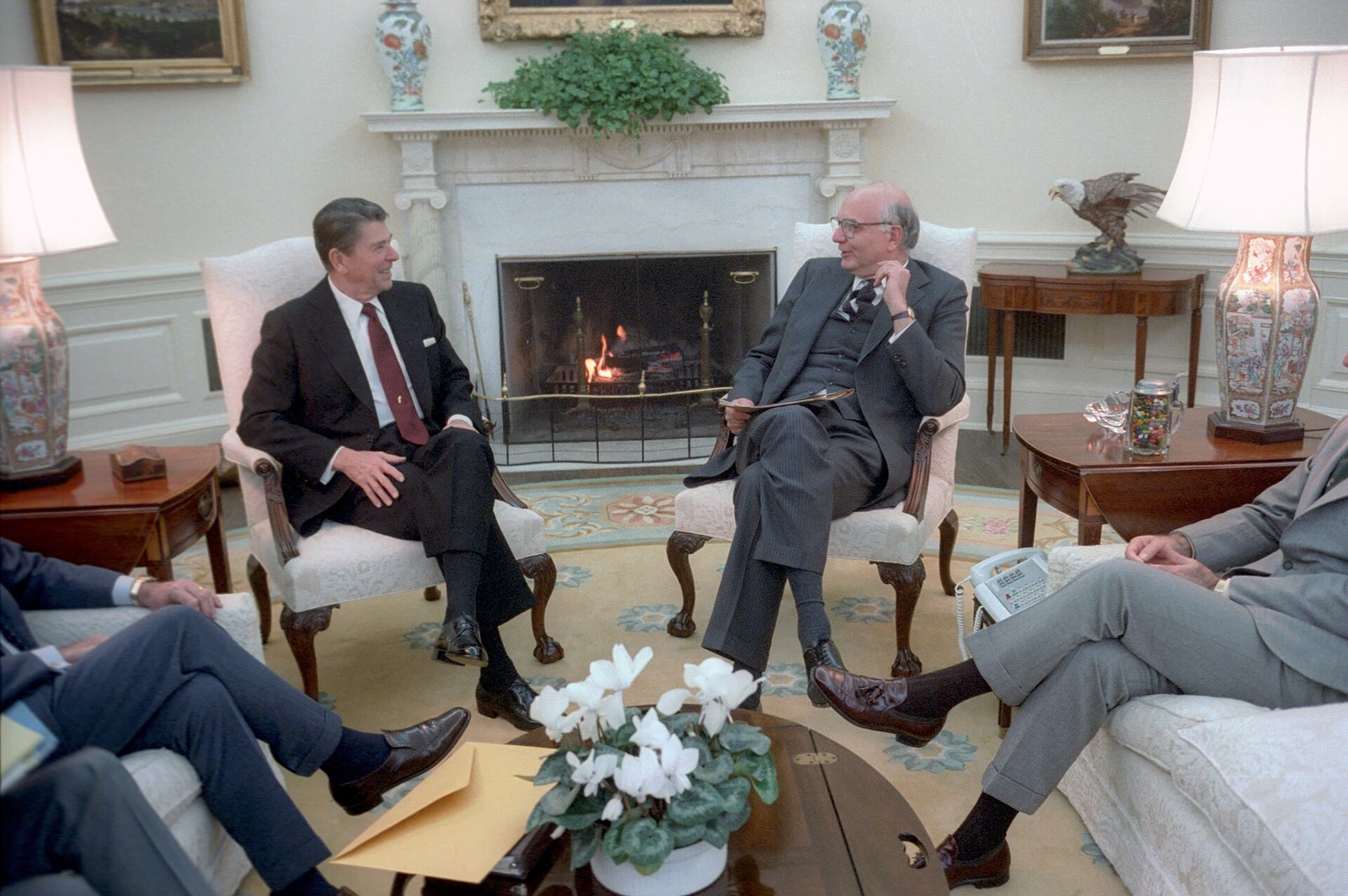
Paul Volcker at 51, when Jimmy Carter offered him the chairmanship. (Photo: Series: Reagan White House Photographs, 1/20/1981 - 1/20/1989 Collection: White House Photographic Collection, 1/20/1981 / Public domain)
The Saturday Night Special
On October 6, 1979, Volcker called an emergency meeting and rewrote the Fed's playbook in a single afternoon.
Volcker had been testing the idea for weeks with his fellow governors. By early October he had the votes. On Tuesday, October 2, he flew to Belgrade for the IMF annual meeting. By Wednesday, he was alarmed enough by what he heard there — finance ministers privately writing off the dollar, central bankers asking why the Fed wasn't doing more — that he flew home three days early. He landed in Washington on Friday night.
On Saturday morning, October 6, the Federal Open Market Committee met in emergency session. The decision was unanimous. Effective immediately, the Fed would shift its operating procedure: target the money supply, let interest rates float. The Board also raised the discount rate by a full percentage point and imposed reserve requirements on certain bank liabilities for the first time. The package was announced at 6 p.m. on a Saturday — deliberately, so that markets would have the weekend to absorb it before Monday open.
The Wall Street Journal called it the Saturday Night Special the next morning. The technical name, never used outside Fed staff, was the New Operating Procedure. The press release ran four hundred words and changed nothing about the Fed's mandate or its legal structure. It changed only the rule the Fed would follow for setting day-to-day policy. That was enough.
Within six weeks, the federal funds rate jumped from 11.5 percent to 17 percent. The prime rate — the rate banks charged their best corporate customers — went from 13.25 percent to 15.75 percent. Mortgage rates, which had been near 11 percent when Volcker took office, were heading toward 17. Markets had not seen rates like this in living memory. The bond market, which had been complacent about inflation, repriced in a panic.
By December 1980, the prime rate had hit 21.5 percent. It is the highest prime rate in American history. It will probably remain so. To borrow $200,000 for a home at 21.5 percent, with a 30-year amortization, requires a monthly payment of nearly $3,600 in 1980 dollars — which is about $14,000 a month in 2026 money. The mortgage market effectively closed. New home construction collapsed. Auto sales fell off a cliff. The recession that began in January 1980 was technically brief but extraordinarily painful, and by the time the second leg of the recession bottomed in late 1982, unemployment had reached 10.8 percent — the highest since the Great Depression.
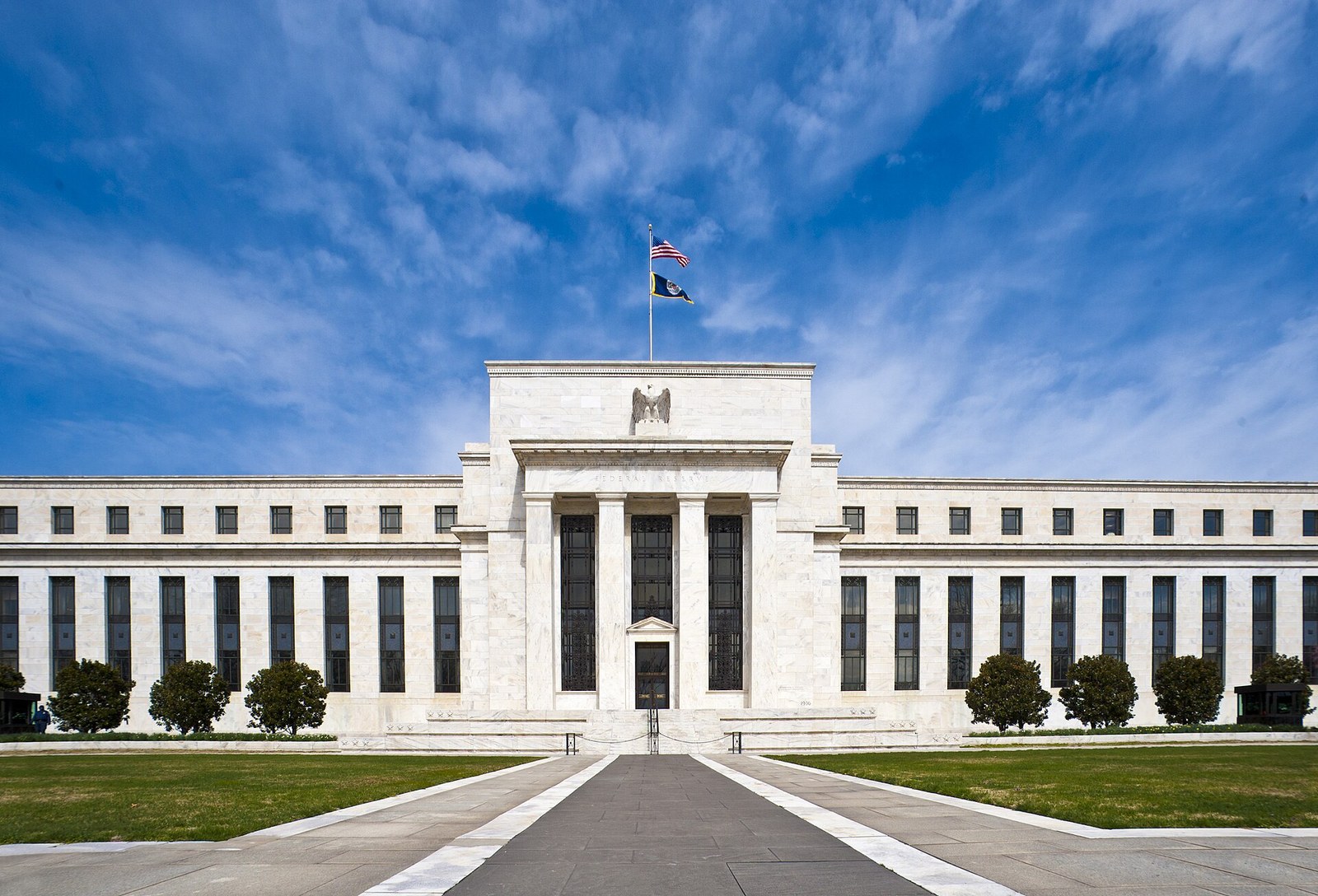
October 6, 1979 — the Fed announced the Saturday Night Special at 6 p.m. so markets had the weekend to absorb it. (Photo: Federalreserve / Public domain)
Tractors at the Door
Farmers blockaded the Fed building with their tractors. Members of Congress demanded Volcker's impeachment. He kept going.
The political reaction was immediate and bipartisan. The 1980 election handed Reagan the White House and a Republican Senate, on a platform that included supply-side tax cuts and tight money. But within a year, Reagan's own staff was telling Volcker to ease off. The recession was hurting Republican incumbents in midterm states. Treasury Secretary Don Regan publicly criticized Fed policy. House Majority Leader Jim Wright threatened legislation that would override Fed independence. Senator Robert Byrd introduced a bill that would have required the Fed to lower interest rates by Senate vote.
In 1981, hundreds of farmers drove their tractors to Washington and circled the Federal Reserve building on Constitution Avenue. They were paying interest rates of 18 to 20 percent on operating loans against crops that had crashed in price after the Soviet grain embargo. Many were in danger of foreclosure. They camped at the Fed for days. Volcker continued to drive his unmarked car to work past the picket line.
The homebuilders' association sent the chairman two-by-fours through the mail, sometimes with notes attached describing the homes that would have been built with them. The auto industry sent unsold car keys. Volcker kept going.
The single most important thing he had — more important than his height, his cigars, or his personal frugality — was the political cover Reagan grudgingly gave him. Reagan never publicly endorsed Volcker's program, but he never publicly broke with it either. His private pressure was less than the public criticism suggested. A different president, with a different temperament, might have replaced Volcker with someone willing to ease the squeeze. Reagan did not. When Volcker's term came up for reappointment in 1983, Reagan kept him on.
By mid-1982, the data started to turn. Inflation, which had peaked at 14.8 percent in March 1980, was running at 6 percent. By the end of 1982 it was at 4. By 1983 it was at 3. The recession ended in November 1982. Unemployment began to fall. The recovery, when it came, was strong — and the inflation expectations that had been embedded in every American business plan and labor contract for a decade started, finally, to come unglued. Workers stopped demanding automatic cost-of-living adjustments. Companies stopped pricing in next year's price increases. The wage-price spiral broke.
What Broke
The recession Volcker engineered was the second-worst since the Great Depression. The damage was real, and uneven.
It is fashionable now to describe the Volcker shock as the necessary medicine that broke the inflationary fever. In retrospect, that is roughly true. In the moment, it was much uglier. Manufacturing employment fell 17 percent between 1979 and 1982 — the steepest decline since the war. The Rust Belt, which had been weakening throughout the 1970s, lost a generation of jobs that mostly never came back. Cleveland, Pittsburgh, and Detroit hollowed out in ways the country is still living with.
The pain was distributed unevenly. Workers in unionized manufacturing took the hardest blow — partly because their wage agreements, with built-in cost-of-living escalators, had become an unsustainable target. Volcker's monetarist framework treated the wage spiral as the proximate cause of inflation, and the way to break a wage spiral was to break union bargaining power. By the time the recession ended, the share of private-sector workers in unions had fallen from 21 percent to 16 percent. It would keep falling.
Farmers were the second hardest hit. The combination of high real interest rates on operating loans, a strong dollar that crushed export prices, and the lingering Soviet grain embargo pushed roughly 200,000 farms into foreclosure between 1981 and 1986. Rural communities in the Midwest emptied out at a rate not seen since the 1930s. The 1985 Farm Aid concert, where Willie Nelson and John Mellencamp tried to draw national attention to the foreclosures, was a direct response to the Volcker years.
Latin America was the third casualty, and it almost broke the system. Mexico, Brazil, Argentina, and most of the rest of the region had borrowed dollars heavily during the 1970s, when real interest rates were negative and oil exports looked like they would generate dollar revenues forever. When Volcker raised real rates from negative two percent to positive eight percent, the cost of servicing those dollar debts roughly doubled. In August 1982, Mexico defaulted. The 1982 Latin American debt crisis followed. The IMF and the major American banks spent the next decade restructuring loans and writing off losses. The Latin American "lost decade" of the 1980s was, in significant part, the Volcker shock exported.
Volcker was aware of all of this, and he carried the weight of it. In private interviews late in life he was clear that the cost had been very high, and that he had not enjoyed any of it.
The Playbook Every Fed Chair Has Studied Since
Greenspan, Bernanke, Yellen, Powell — all of them have spent their careers measured against what Volcker did.
When Alan Greenspan replaced Volcker in 1987 and faced his own incipient inflation problems, he tightened deliberately. In his memoir, he wrote that Volcker's tenure had given the Fed something it had lacked for decades — credibility with markets, the assurance that if the central bank said it would defend the value of the dollar, it actually would. That credibility lowered the cost of every subsequent inflation fight.
Ben Bernanke, when he faced the 2008 financial crisis, drew on the opposite half of the Volcker example. He had spent his academic career studying the Great Depression, where the Fed had tightened too much and turned a recession into a collapse. Volcker had shown that a determined Fed could break a wage-price spiral; Bernanke believed a determined Fed could equally break a deflationary panic. Quantitative easing, the open-ended liquidity programs of 2008-2014, was Volcker's lesson run in reverse.
Jay Powell's 2022-2024 inflation fight — the most intensive Fed tightening cycle since 1980 — was explicitly modeled on the Volcker template. Powell quoted Volcker by name at Jackson Hole in August 2022, when he committed the Fed to keeping rates high "for some time." The federal funds rate went from zero in March 2022 to 5.5 percent by July 2023, the steepest hiking cycle in 40 years. Inflation, which had peaked at 9.1 percent in June 2022, was back below 4 percent by mid-2023.
The critical difference between 2022 and 1980 was that Powell did not need to take rates to 21.5 percent to do it. The credibility Volcker bought was still working. Markets believed the Fed would do whatever it took. That belief alone — without the actual rate hikes Volcker needed — pulled inflation expectations down faster than they came down in 1980.
This is the practical legacy of the Saturday Night Special. Not the specific operating procedure, which the Fed abandoned by 1982 once the inflation fight was won. Not even the high rates, which were a tactic. The legacy is the credibility — the demonstrated willingness, on October 6, 1979, to inflict serious pain on the American economy in defense of the value of the dollar. That credibility is a public good. It was created at extraordinary cost. Every Fed chair since has been spending it.
The credibility Volcker bought was still working. Markets believed the Fed would do whatever it took. That belief alone — without the actual rate hikes Volcker needed — pulled inflation expectations down faster than they came down in 1980.
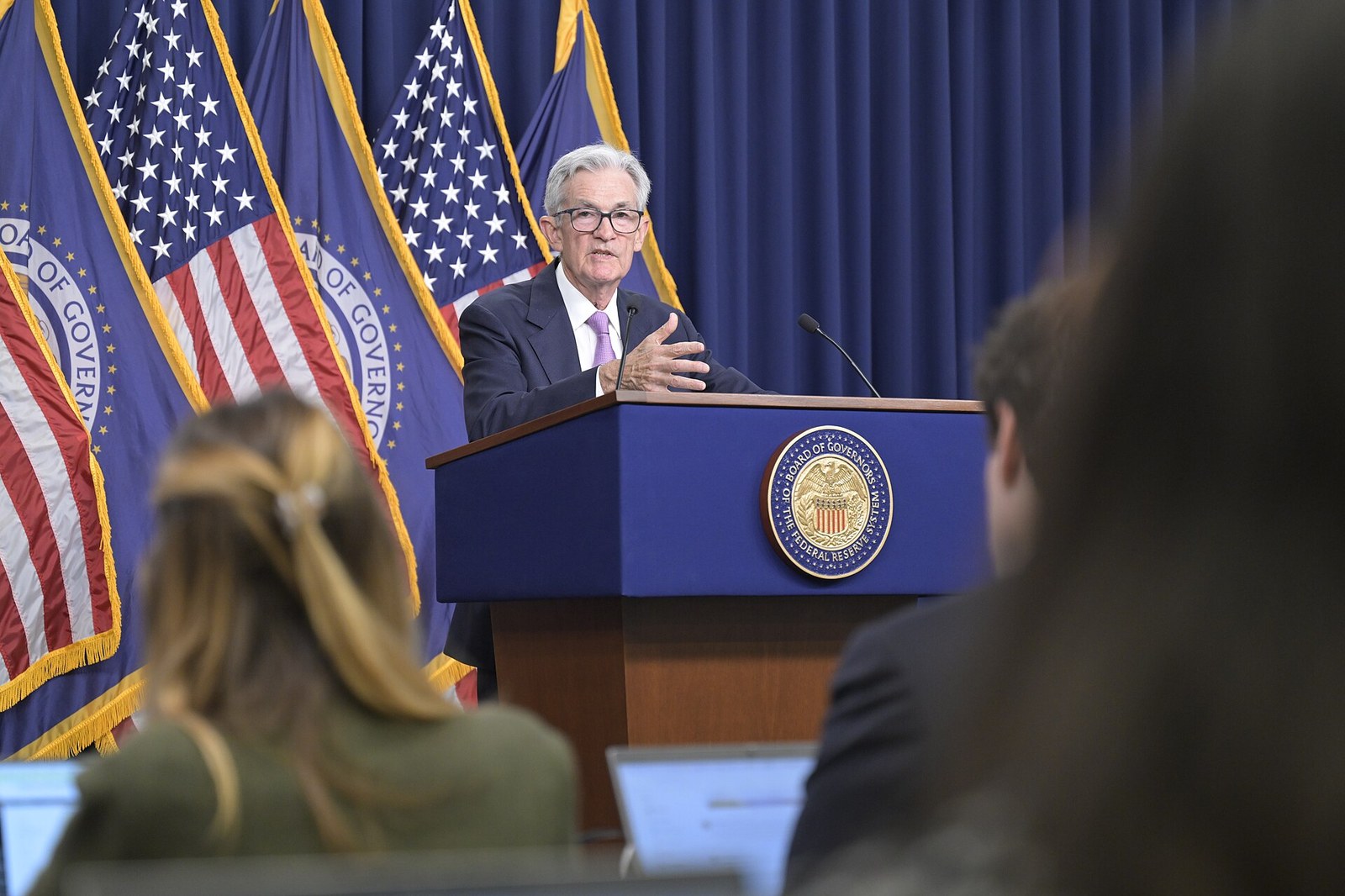
Powell, Jackson Hole, August 2022 — quoting Volcker by name when he committed the Fed to higher rates 'for some time.' (Photo: Federalreserve / Public domain)
What This Story Tells Us Today
The Volcker shock is the strongest available evidence that monetary policy can break inflation, and that the cost of doing so is real. It is also evidence that political independence — the Fed's ability to do unpopular things without immediate political consequence — is the precondition for the central bank to do its job. Carter agreed to that independence, knowing it might cost him reelection. Reagan honored it, even when his own staff was lobbying against. Without that pair of decisions, Volcker could not have done what he did.
For the current moment, two implications. First, when central banks talk about credibility — Powell, Lagarde, Bailey, Ueda — what they mean is the inheritance Volcker created. Inflation expectations stay anchored only because markets believe the Fed will act. The minute markets stop believing, the cost of every future inflation fight rises sharply. The credibility account is a real asset on the Fed's balance sheet, and it depreciates whenever the Fed equivocates.
Second, the political conditions for what Volcker did are weaker now than they were in 1979. Carter's willingness to accept a recession on his watch was unusual then; it would be vanishingly rare today. Reagan's willingness to stay out of Volcker's way for two years was also unusual; modern presidents publicly demand specific Fed policies routinely. If a future Fed chair has to engineer a Volcker-style break — and the structural drivers of inflation in the 2030s, from deglobalization to demographics to defense spending, suggest one might — the political cover may not be there.
The person who took the call from Augusta in 1911 and the man who took the call from Belgrade in 1979 had this in common: they were both willing to do something the country would hate them for. In 2026, the question is whether the institutions that protected them — antitrust law for one, central-bank independence for the other — are still strong enough to protect the next person who has to.
Get the weekly digest
One email every Saturday. New stories, new research, no upsell. Unsubscribe with one click.