What to know
- Rolls-Royce's pay-per-flight-hour model meant the COVID recovery hit its revenue like a coiled spring — costs had been slashed, but the revenue base came roaring back at full scale.
- The fund flows feedback loop is the least-discussed domino: UK equity income funds that were forced buyers as RR.L re-entered index tiers now face forced selling risk if the stock corrects — creating amplified volatility in both directions.
- At a trailing P/E around 18x as of early April 2026, the easy money is gone — but the downstream dominoes through suppliers, fund flows, and sterling are just starting to fall.
Three years ago, Rolls-Royce was the stock people joked about at dinner parties. Not because it was exciting — because it looked like it might not survive. The iconic jet engine maker was bleeding cash, grounding planes meant grounding revenue, and the share price had cratered so badly that long-term holders were genuinely wondering if they'd ever break even.
Fast forward to spring 2026, and Rolls-Royce has pulled off something that almost never happens in public markets: a full-blown resurrection. The stock hasn't just recovered. It's up nearly 1,000% from its pandemic-era lows.
That kind of move doesn't just reward the people who held on. It sends shockwaves through the entire ecosystem — from the funds that own the stock, to the suppliers that build its parts, to the currency of the country where it's listed. Let's trace the chain.
The last time this happened
Rolls-Royce, the British company best known for making jet engines that power wide-body aircraft, has staged one of the most dramatic corporate turnarounds in modern market history. From its pandemic-era lows, the stock has delivered returns approaching 1,000%.
As of early April 2026, the US-listed ADR (ticker: RYCEY) traded around $17, up from a 52-week low of approximately $9.34 — meaning the stock roughly doubled in the prior year. The London-listed shares were around 1,250p, giving the company a market cap. Rolls-Royce has compressed a comparable re-rating into roughly three years.
One structural reason for the speed difference: Rolls-Royce didn't have GE Capital's balance sheet overhang. GE spent years unwinding a huge financial services arm loaded with hard-to-value liabilities and heavy regulation. Rolls-Royce's restructuring was operationally painful but financially simpler — cut headcount, exit non-core businesses, and let the flight-hour recovery do the rest. That cleaner starting point removed a major deleveraging drag and let the market re-rate the equity faster. Whether that speed reflects superior execution or an over-eager market is the central question for anyone buying at these levels.
First domino: The pay-per-flight-hour machine
Rolls-Royce earns the majority of its revenue from long-term service agreements — called TotalCare contracts — priced per engine flying hour. The company has described these agreements as covering the vast majority of its installed wide-body engine fleet. When international travel collapsed during COVID, those flight hours — and that revenue — evaporated overnight.
But here's what the company did while nobody was flying: it slashed costs ruthlessly. It restructured. It got lean. So when air travel came roaring back, Rolls-Royce had the same revenue potential but a much smaller cost base. The profit leverage was enormous.
As of early April 2026, the trailing P/E — how many years of actual past earnings the stock currently costs — sat around 18x. That looks reasonable for a company growing this fast. But the stock trades at a premium to what analysts expect it to earn going forward, which may mean a lot of good news is already baked into the price.
Second domino: Ceasefire math hits different when you're paid by the hour
In early April 2026, reports of an Iran ceasefire sent aerospace stocks surging. Rolls-Royce jumped sharply in a single session, and the FTSE 100 rallied strongly. GE Aerospace — Rolls-Royce's biggest competitor — also posted a significant gain. Airlines felt it too: IAG, the parent company of British Airways, surged nearly 10%.
But here's the asymmetry most coverage missed. Rolls-Royce's pay-per-flight-hour model means it captures ceasefire upside faster than competitors whose revenue is more weighted to new engine orders. New engine sales take years to flow through the backlog. Flight hours respond immediately — when routes reopen and fuel costs drop, planes fly more hours the very next week, and Rolls-Royce's TotalCare revenue ticks up in near real-time.
That structural gap shapes how the two stocks trade against each other. In a geopolitical de-escalation scenario, Rolls-Royce isn't just "another aerospace stock that goes up." It's the one with the shortest lag between peace and revenue. Note: the Middle East situation was still shifting as of mid-April 2026. Check the latest reporting on any ceasefire developments before acting on this thesis.
Rolls-Royce Recovery Timeline

Third domino: MRO shops and blade makers — the real leverage play
Jet engines aren't one-and-done products. They're serviced over 20- to 30-year lifespans, creating a long tail of recurring aftermarket revenue for every company in the supply chain. Fleet age is a big deal here. Many Trent 700 and Trent XWB engines entered service in the mid-2010s. They're now due for their first major overhauls. That means MRO (maintenance, repair, and overhaul) shops and specialist parts makers are entering a period of surging demand.and surge that's structurally locked in for years.
The nodes with the most leverage right now are single-crystal turbine blade manufacturers and test-cell operators. Turbine blades are the most expensive part you replace during an overhaul. They run hotter than the melting point of the metal they're made from — surviving only because precision-drilled air channels cool them from the inside. They must be swapped on strict schedules. The companies that cast these blades have limited global capacity and high barriers to entry, which means pricing power rises disproportionately when overhaul volumes increase.
The headline belongs to Rolls-Royce. But the outsized percentage gains may belong to the less glamorous companies that keep those engines running for decades — particularly as the installed fleet ages into its heaviest maintenance years.
Fourth domino: The fund flows trap door
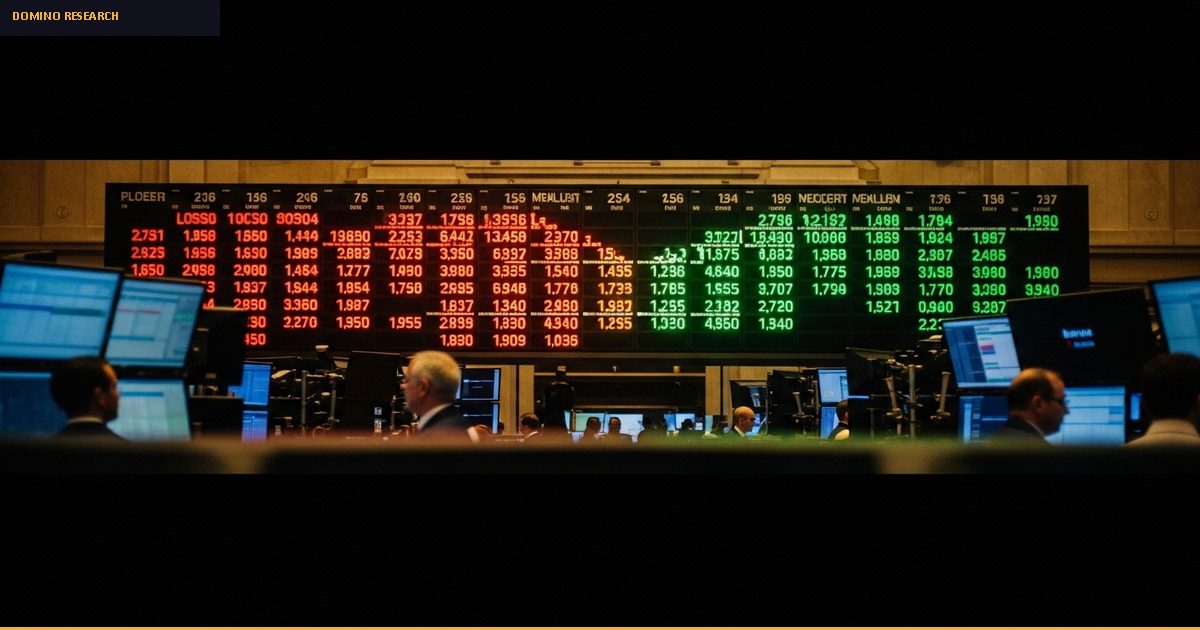
As Rolls-Royce re-entered higher index tiers on the FTSE, UK equity income funds — many of which track or benchmark against the FTSE 100 — became forced buyers. These aren't hedge funds making a conviction bet. They're passive and quasi-passive vehicles that must hold the stock once it crosses certain market-cap thresholds. That mechanical buying creates demand that has nothing to do with fundamentals.
The reflexive loop works in reverse too. If Rolls-Royce fell hard enough to drop out of an index tier, the same funds that had to buy would now have to sell. That would deepen the decline for reasons that have nothing to do with the company's actual earnings. With Rolls-Royce commanding a market cap in the range of £104 billion as of early April 2026, it's large enough that even modest rebalancing flows can move the stock — and the broader UK market with it.
This is the trap door beneath the virtuous cycle. The same index mechanics that amplified the rally will amplify any correction.
Fifth domino: A quiet tailwind for the British pound
Rolls-Royce is listed in London. Its market cap as of early April 2026 made it one of the largest companies on the FTSE 100. Every foreign fund manager who wants exposure has to convert their dollars, euros, or yen into sterling first.
A sustained re-rating of UK equities — led by high-profile stories like Rolls-Royce — could provide modest support for the pound over time. It's not a trade you'd make in isolation. But if you're already positioned in UK assets, it's a tailwind worth understanding.
Meanwhile, CEO Tufan Erginbilgic has been talking to the Aerospace Technology Institute (ATI), a UK government aerospace research program, about grant funding to develop the next-generation UltraFan engine. A company with a soaring stock price and a market cap — total value of its outstanding shares — above £100 billion has far more political leverage when asking for government co-investment than one trading at pandemic lows. That's a domino most investors aren't watching at all.
What could go wrong
Valuation is the biggest risk — and it has a specific trigger. As of early April 2026, the stock traded at a trailing P/E around 18x, which looks reasonable in isolation. But the premium investors are paying relative to forward expected earnings suggests significant optimism is already priced in. Here's the number to watch: if the next earnings release shows operating margin — profit from operations as a percentage of revenue — dropping below the mid-teens range, the stock's valuation multiple could shrink fast. That mid-teens level is what current analyst estimates are built on. A beta of 1.23 means Rolls-Royce moves about 23% more than the broader market in either direction — amplifying both gains and losses. A break below 800p on the London shares would signal the turnaround narrative is fracturing.
A flight-hour collapse. Rolls-Royce's revenue model is a beautiful machine when planes are flying. It's a liability when they're not. Here's the threshold: industry data suggests that if wide-body engine flying hours stay more than 15–20% below pre-COVID levels for a long stretch, the leaner cost structure still can't produce positive free cash flow. A new pandemic, a major geopolitical escalation that grounds transatlantic routes, or a sustained recession that kills long-haul travel demand would hit this company harder than most industrials.
The UltraFan funding risk. CEO Tufan Erginbilgic has been pursuing ATI grant funding for the next-generation UltraFan engine program. If Parliament or the ATI board says no, Rolls-Royce has two options. It can fund the multi-billion-pound program from its own balance sheet, which would squeeze free cash flow — cash left after running the business and investing in it — and possibly the dividend. Or it can delay the program and hand next-generation engine leadership to GE Aerospace and its rivals. Pratt & Whitney. Either outcome would challenge the growth narrative that supports the current premium valuation.
Currency risk for US investors. RYCEY is a dollar-denominated ADR of a pound-denominated stock. If sterling weakens against the dollar, US holders lose even if the London shares go up. This is not a theoretical risk — GBP/USD has moved more than 10% in a single year multiple times in the past decade.
Watchlist
| Ticker | Level | Status | Why |
|---|---|---|---|
| RR.L | ~1,250p (as of early April 2026) | monitoring | The main event. Near-1,000% from pandemic lows but trailing P/E around 18x suggests it's not obviously overpriced yet. Thesis trigger: watch for underlying operating margin in the next earnings release — if it falls below mid-teens, the premium valuation unwinds. Below 800p invalidates the turnaround narrative. |
| RYCEY | ~$17 (as of early April 2026) | monitoring | US-listed ADR of Rolls-Royce. Same company, but adds GBP/USD currency risk — if sterling weakens 5%+, US holders underperform London holders by that margin even if the business executes perfectly. Thesis trigger: a sustained GBP/USD move below 1.20 would erode ADR returns materially. |
| GE | Thesis trigger: relative valuation vs. RR.L | watching | GE Aerospace is the closest US-listed comp and benefits from the same flight-hour recovery. Thesis trigger: if GE trades at a meaningful discount to Rolls-Royce on forward P/E despite similar growth, it becomes the relative-value play. Also watch for GE earnings as a read-through on global wide-body engine demand. |
| IAG.L | Thesis trigger: transatlantic passenger volume data | watching | British Airways parent. Highly cyclical — airline stocks amplify aerospace demand shifts in both directions. Thesis trigger: monthly IATA passenger data showing sustained transatlantic traffic growth above 2019 levels confirms the flight-hour thesis; a reversal below 2019 levels is a warning for Rolls-Royce's TotalCare revenue. |
| EWU | Thesis trigger: sustained foreign inflows into UK equities | watching | iShares MSCI United Kingdom ETF. Performance depends on broad UK market sentiment, not just Rolls-Royce — but if the RR.L story pulls foreign capital into London-listed equities broadly, EWU captures that flow. Risk: UK market breadth is narrow, and EWU is heavily weighted toward financials and energy, not aerospace. |
Get the weekly digest
One email every Saturday. New stories, new research, no upsell. Unsubscribe with one click.