What to know
- TSMC manufactures roughly 60% of the world's semiconductors and over 90% of the most advanced ones — every Apple chip, every Nvidia AI accelerator, every modern phone CPU is made on TSMC's machines.
- Its founder Morris Chang invented a business model in 1987 that the entire US chip industry had rejected: a foundry that designs nothing and manufactures everything for everybody else.
- Today TSMC is the most geopolitically dangerous company in the world — a single Taiwan island, two main fabs, and any disruption shuts down phones, cars, AI, and weapons systems globally.
It is February 1985. Morris Chang is 54 years old. He is sitting in a conference room in Hsinchu, Taiwan, listening to a government official ask him to leave the United States, leave the chip industry he has spent three decades inside, and start something that does not exist yet — a company that will only manufacture other people's designs. No products of its own. No brand on the box. Just a factory. Chang says yes. The most important company on Earth begins with a man nobody outside the chip industry has heard of saying yes to an idea every American executive he had pitched it to had already turned down.
The Refugee Who Knew Chips
China, Hong Kong, Boston — Morris Chang's first 30 years made him the right man for an industry nobody had built yet.
Morris Chang was born in 1931 in Ningbo, a coastal Chinese city south of Shanghai. By the time he was a teenager, his family had fled Japanese bombs three times, eventually reaching Hong Kong before he turned 18. He arrived in Boston in 1949 to study mechanical engineering at Harvard, then transferred to MIT to finish a master's. He failed his MIT doctoral qualifying exam twice. He gave up on academia and took a job at Sylvania, a small electronics company, in 1955. The work was transistors. He did not know it yet, but he had landed inside one of the most important industries of the 20th century four years before most Americans had heard the word semiconductor.
In 1958 he moved to Texas Instruments, where he spent the next 25 years climbing. He pioneered TI's manufacturing yield methods. He ran the entire global semiconductor business by his late forties. By the time he was 50, he was a vice president at Texas Instruments and on the short list to be CEO. He was not chosen. The job went to a man named Mark Shepherd. Chang stayed for two more years, then took a job at General Instrument in New York. That lasted thirteen months. By 1984 he had been pushed out of two American chip companies in a row. His career, by Silicon Valley's reckoning, was over.
Then the phone call from Taiwan came. K.T. Li, the Taiwanese minister who had built Taiwan's Hsinchu Science Park from rice paddies in the 1970s, wanted Chang to move to Taipei. Li's pitch: Taiwan would put up the money, Chang would get to start any company he wanted. Chang flew over to look. He met with Premier Sun Yun-suan. He started writing a plan.
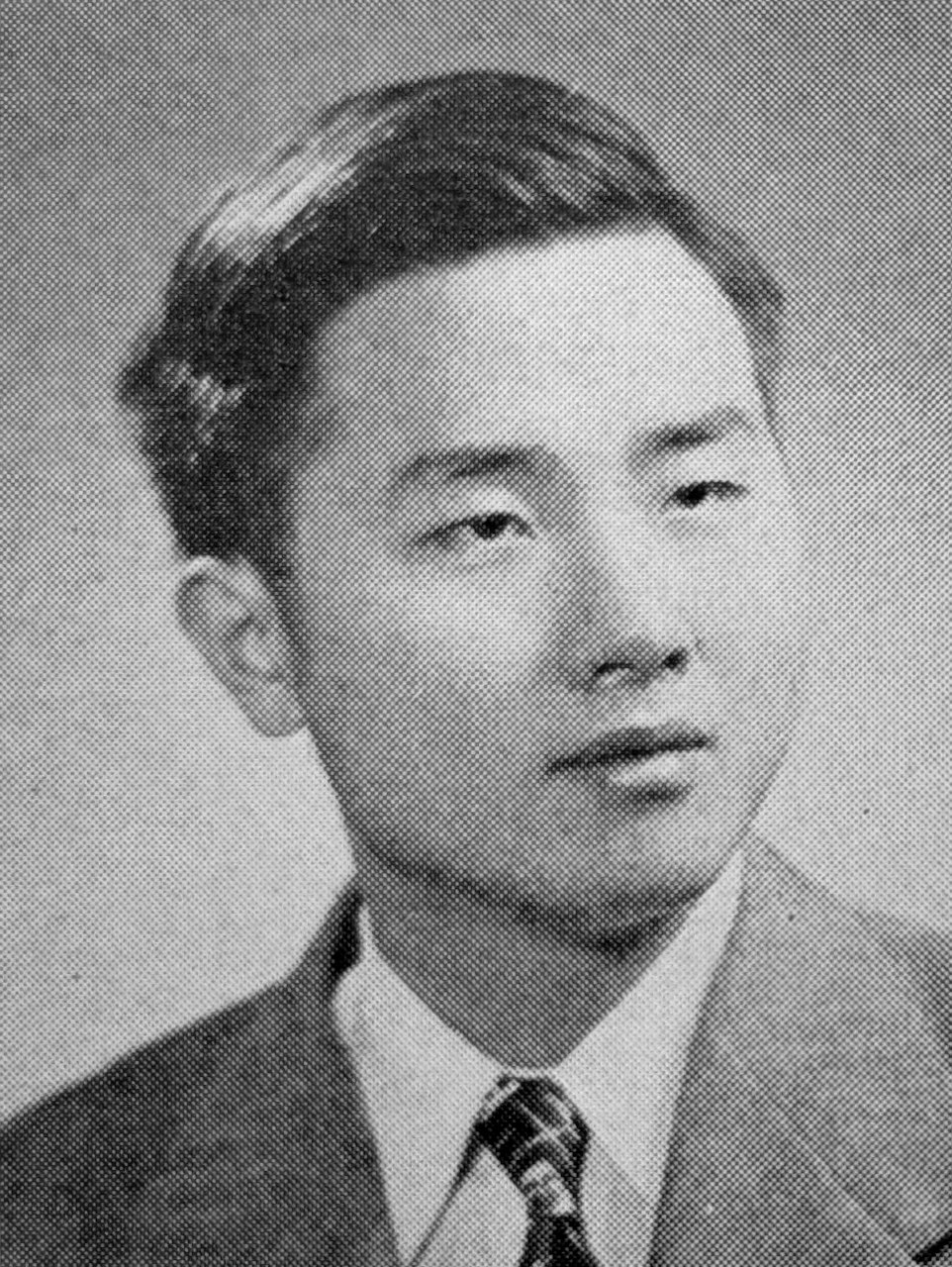
Morris Chang, founder of TSMC, in a public appearance.
The Idea Everyone Said No To
Hsinchu, 1986. Chang had a model in his head that nobody on Wall Street thought would work.
Chang's idea was simple in description and radical in implication. In 1985, every chip company in the world did two things: it designed its own chips, and it built the factories to manufacture them. Intel designed Intel chips and made them in Intel fabs. Texas Instruments did the same. Building a fab cost a billion dollars. Designing a new chip cost hundreds of millions. The two activities were assumed to be inseparable. Anyone who wanted to make chips needed both.
Chang's bet was that they did not. He would build a company that designed nothing and manufactured everything. It would be a contract manufacturer for the chip industry. Its customers would be young engineers who had brilliant chip ideas but no billion-dollar fab budget. He called it a pure-play foundry. Today the model is so obvious it is hard to understand how strange it sounded then. Chang pitched it to Intel. Intel said no. He pitched it to Texas Instruments. They said no. He pitched it to several Japanese chipmakers. They said no. The model assumed thousands of fabless chip companies would emerge to keep the foundry busy. In 1986, those companies did not exist.
The Taiwanese government put up 48% of the seed money. Philips, the Dutch electronics conglomerate, put up another 28% in exchange for a license to TSMC's process technology. The remaining quarter came from private Taiwanese investors who K.T. Li personally arm-twisted into participating. TSMC was founded in February 1987. Its first fab, built on land in Hsinchu Science Park, was a year behind the leading edge from day one. Most observers gave the company a few years before it folded. Chang had bet his retirement and his reputation on a company that, in its first year of operation, had eight customers and lost money on most of them.
He had bet his retirement and his reputation on a company that, in its first year of operation, had eight customers and lost money on most of them.
The Customer Who Saved Everything
Cupertino, late 1980s. A new kind of chip company without a fab needed Chang's foundry as much as he needed them.
What Chang had not predicted was the speed at which fabless companies would emerge. The personal computer revolution made chip design accessible to small teams. Modems, graphics, audio, networking — every category needed custom silicon and not every team could afford a fab. In 1985, the year before TSMC was founded, a startup called Chips and Technologies became one of the first companies to design semiconductors without owning manufacturing. By 1990 there were dozens of similar companies. Each one needed someone to actually make their chips. TSMC, which had spent three years offering manufacturing capacity nobody initially wanted, suddenly had more customers than capacity.
The largest of these new customers was a graphics startup founded in 1993 called Nvidia. Its CEO, a 30-year-old Taiwanese-American named Jensen Huang, had grown up partly in Taiwan and had childhood ties Chang did not have to manufacture himself. Nvidia had no fab. Its first chip was made on TSMC's process. By the late 1990s, every major fabless chip company in the world — Broadcom, Qualcomm, AMD's graphics arm before it spun out, Marvell — had a TSMC partnership. The pattern that defines Silicon Valley today was already locked in: design in California, manufacture in Hsinchu.
Chang stepped down as CEO in 2005, returned in 2009 when his successor stumbled, then retired again in 2018. He kept buying time for the model to compound. By the early 2020s, TSMC had something no other manufacturer had: every advanced chip company in the world depended on its process technology, and no single one of them was big enough to walk away.
TSMC's headquarters in Hsinchu Science Park, the heart of Taiwan's semiconductor industry.
The Machine From the Netherlands
Veldhoven, 2018. The most expensive industrial tool ever built arrived at TSMC's door, and the rest of the chip industry started falling behind.
The bet that defined the next stage of TSMC's dominance was made in 2014. A Dutch company called ASML had spent more than a decade trying to build a new kind of lithography machine — extreme ultraviolet, or EUV, capable of etching patterns far smaller than any previous tool. The machine cost more than $150 million. It took several Boeing 747s to ship one. It used a laser to vaporize droplets of molten tin 50,000 times a second to generate the right wavelength of light. Industry insiders called it the most complex machine humans had ever built.
Intel, the world's leading chipmaker for the previous four decades, decided EUV was too risky and stuck with older lithography. Samsung experimented but moved cautiously. TSMC committed all the way. Chang's successor C.C. Wei placed the largest single equipment order in semiconductor history. By 2019, TSMC was using EUV in production. By 2022, Intel had failed to deliver three generations of leading-edge chips. Apple, which had been making its iPhone processors at Samsung, switched its entire production to TSMC. Nvidia's AI chips moved exclusively to TSMC.
The gap that opened was stark. By 2024, TSMC was producing more than 90% of the world's most advanced chips — the ones below 7 nanometers. Samsung's foundry business had a small share. Intel had essentially zero. The ASML EUV bet had compounded into a technological lead so wide that no other manufacturer was within three years of TSMC's leading-edge process. Every iPhone, every Nvidia GPU, every advanced AMD processor, every Tesla self-driving chip ran through Hsinchu.
An ASML extreme ultraviolet lithography machine, the most complex industrial tool ever built.
The Silicon Shield
Taipei, 2022 onward. The most important company on Earth was suddenly the most geopolitically exposed.
The strategic problem with TSMC is geographic. Its leading-edge fabs are clustered in Hsinchu and Tainan, both on the western coast of Taiwan, less than 100 miles from the Chinese mainland. Taiwan is not formally recognized as a country by the United Nations. The People's Republic of China has stated repeatedly that it considers Taiwan a renegade province and reserves the right to take it by force. As of the early 2020s, two-thirds of the chips powering the global economy passed through a single small island that China claims and the United States is treaty-bound to defend.
The Taiwan government calls TSMC its silicon shield. The argument is that the rest of the world has too much to lose if TSMC is disrupted, so any Chinese military move on Taiwan would trigger a global recession that would damage Beijing as severely as everyone else. The argument cuts both ways. Some American defense analysts have argued the United States should consider destroying TSMC's fabs preemptively if a Chinese invasion looked imminent, on the theory that letting them fall into Beijing's hands would be a strategic catastrophe. Chang himself, in a rare 2022 interview, called any such talk insane.
The response from Washington has been to try to copy what Hsinchu has. The 2022 CHIPS Act allocated $52 billion to bring chip manufacturing back to the United States. TSMC committed to a $40 billion fab in Arizona. Construction started, hit delays, and by 2024 the project was years behind schedule and billions over budget. The American workforce did not have the precision manufacturing culture that TSMC's Taiwan fabs depend on. Even the company itself could not easily reproduce, on American soil, what it had built in Hsinchu. The dependency was not a temporary accident. It was a moat 35 years deep.
The Taiwan government calls TSMC its silicon shield. Some American defense analysts have argued the United States should consider destroying TSMC's fabs preemptively.
Taiwan, where the global economy's most concentrated industrial dependency sits 100 miles from mainland China.
The Quiet Empire
If TSMC stops, the world stops. Most people have never heard the name.
By the late 2020s, TSMC's market capitalization was occasionally above $1 trillion, putting it among the ten most valuable companies in the world. Its fabs ran 24 hours a day, 365 days a year. Its revenue was concentrated in a small set of customers — Apple alone accounted for about a quarter of it, Nvidia and AMD together for another large slice. The company had become structurally indispensable to the global economy in a way no manufacturer had been since the Ford Motor Company's peak a century earlier.
Morris Chang was 94 in 2025. He still occasionally appeared at industry events. He had become the rare founder whose company outgrew not just his own initial vision but the imagination of an entire industry that had told him no for two years before he found a country willing to back him. Texas Instruments, the company that passed him over for CEO, had become a midsize chipmaker focused on analog components. Intel, the giant that had refused to consider his foundry model, was a struggling company trying to copy what TSMC had perfected. The man who failed his doctoral qualifier twice had built the single most important factory in human history.
A non-trivial part of the world's economic stability now rests on whether two industrial campuses in western Taiwan remain operational. The line between an ordinary phone in your pocket and a global recession runs through Hsinchu Science Park.
The man who failed his doctoral qualifier twice had built the single most important factory in human history.
What This Story Tells Us Today
The most important company on Earth is one that most consumers couldn't pick out of a lineup. There is a pattern in this. The infrastructure of the modern economy is built on a small number of unbranded chokepoints — TSMC for advanced chips, ASML for the machines that make them, Taiwan Semiconductor Research Institute for the talent pipeline behind both. Each chokepoint took 30 to 40 years to build. None of them can be replicated quickly. Trying to build new ones with subsidies and political will, as the United States is now doing, is producing slow and expensive results, because the binding constraint was never money.
For an investor, the lesson is that durable competitive advantage rarely shows up in the consumer brands you recognize. It shows up in the companies whose customers can't switch. For everyone else, the lesson is that the modern world has fewer load-bearing walls than it looks like, and almost none of them are visible from the news cycle. When Morris Chang said yes in 1985, he was not building a chip company. He was building one of the planet's most important pieces of infrastructure. The fact that almost no one outside the chip industry knew his name for the next 35 years was a feature of the model, not a bug.
Get the weekly digest
One email every Saturday. New stories, new research, no upsell. Unsubscribe with one click.