What to know
- Three brothers — Nelson Bunker Hunt, William Herbert Hunt, and Lamar Hunt — accumulated control of roughly one-third of the world's deliverable silver supply between 1973 and 1980, pushing the price from $1.95 to $49.45 an ounce.
- When commodity exchanges changed the rules to force them to liquidate, silver collapsed 80% in a few weeks, and the Hunts found themselves owing more than $1 billion in margin calls they could not meet.
- A consortium of major US banks, coordinated by the Federal Reserve, organized a $1.1 billion emergency loan package — secured by physical silver and Hunt family oil holdings — to prevent a chain reaction of broker and bank failures.
It is the morning of March 27, 1980. The price of silver has just dropped from $48 an ounce to $11 in the space of a few weeks. A meeting is being convened on the trading floor of the New York Federal Reserve. The chairman of the Fed, Paul Volcker, is personally on the phone. The reason is that one Dallas family — the Hunt brothers — owes their brokers something between $1 billion and $1.7 billion they cannot pay. If the brokers fail to collect, the brokers themselves will fail. If the brokers fail, several major Wall Street banks will fail with them.
The Family Trust
Dallas, 1973. The three sons of an oil billionaire decided that the dollar was being debased and silver was the answer.
Nelson Bunker Hunt, William Herbert Hunt, and Lamar Hunt were the sons of H.L. Hunt, the East Texas oil wildcatter who had made one of the largest American fortunes of the early 20th century. By the early 1970s the three brothers had inherited control of one of the largest privately held oil and gas conglomerates in the United States, plus a roster of other holdings that included real estate, racing horses, and the AFL franchise that became the Kansas City Chiefs.
Nelson Bunker Hunt — most often just called Bunker — was the public face of the family's commodities strategy. He was, by all contemporary accounts, a man with strong political views, deep paranoia about American currency, and a willingness to act on his convictions with billions of dollars. He believed inflation was permanent and that paper currency would eventually collapse. He believed gold was a partial hedge but politically risky. He believed silver was the better answer because the world consumed more silver than it mined each year, governments did not stockpile it, and it was both a precious metal and an industrial commodity.
In 1973 the price of silver was $1.95 per ounce. The Hunts began buying. They did not buy through a single account or even a single broker. They bought through dozens of separate accounts, often in the names of family members, often through commodity futures contracts that allowed them to control large amounts of silver with only a fraction of the cash up front. By 1979 they controlled, directly or through partners, an estimated 100 million ounces of physical silver and futures contracts on perhaps another 100 million ounces. That was more than one-third of the deliverable global supply outside the Soviet Union.

Nelson Bunker Hunt, the second-eldest son who led the family's silver accumulation. (Photo: Cpl. Michele Hunt / Public domain)
The Run
Late 1979. Silver went from $11 to $50 in 90 days. The exchanges began to panic.
By the autumn of 1979, the Hunts had partnered with a group of wealthy Saudi investors, putting the combined buying power above what the futures market had been designed to handle. Silver, which had been at $6 in early 1979, rose to $11 by midsummer, then to $20 by November, then to $35 by December. On January 18, 1980, silver hit an intraday high of $49.45.
In cash terms, the Hunts had increased the value of their silver position from a few hundred million dollars to roughly $4.5 billion. On paper they were among the wealthiest families in the world. In practice, they had a problem. The futures contracts they held required them to either accept delivery of physical silver — which would have meant receiving and paying for tens of millions of additional ounces — or to roll the contracts forward, which required posting margin.
The US commodities exchanges, watching the price rise and worrying about systemic risk, began to act. On January 7, 1980, the COMEX changed its rules. It limited any single trader to 3 million ounces of silver futures and required them to liquidate any position above that limit by February. Similar limits were imposed on other US exchanges. The CFTC backed up the exchanges. The Hunts could no longer build the position. They had to start unwinding it.
Unwinding 200 million ounces of silver is not a thing the market can absorb quietly. Every offer the Hunts made to sell pushed the price down. Every push down increased the margin calls on their remaining positions. By late February silver had dropped to the high $30s. By mid-March it was in the low $20s. The Hunts were running out of cash to meet margin calls.
The price was not telling investors anything about silver. The price was telling investors how much money the Hunts had to spend that day.
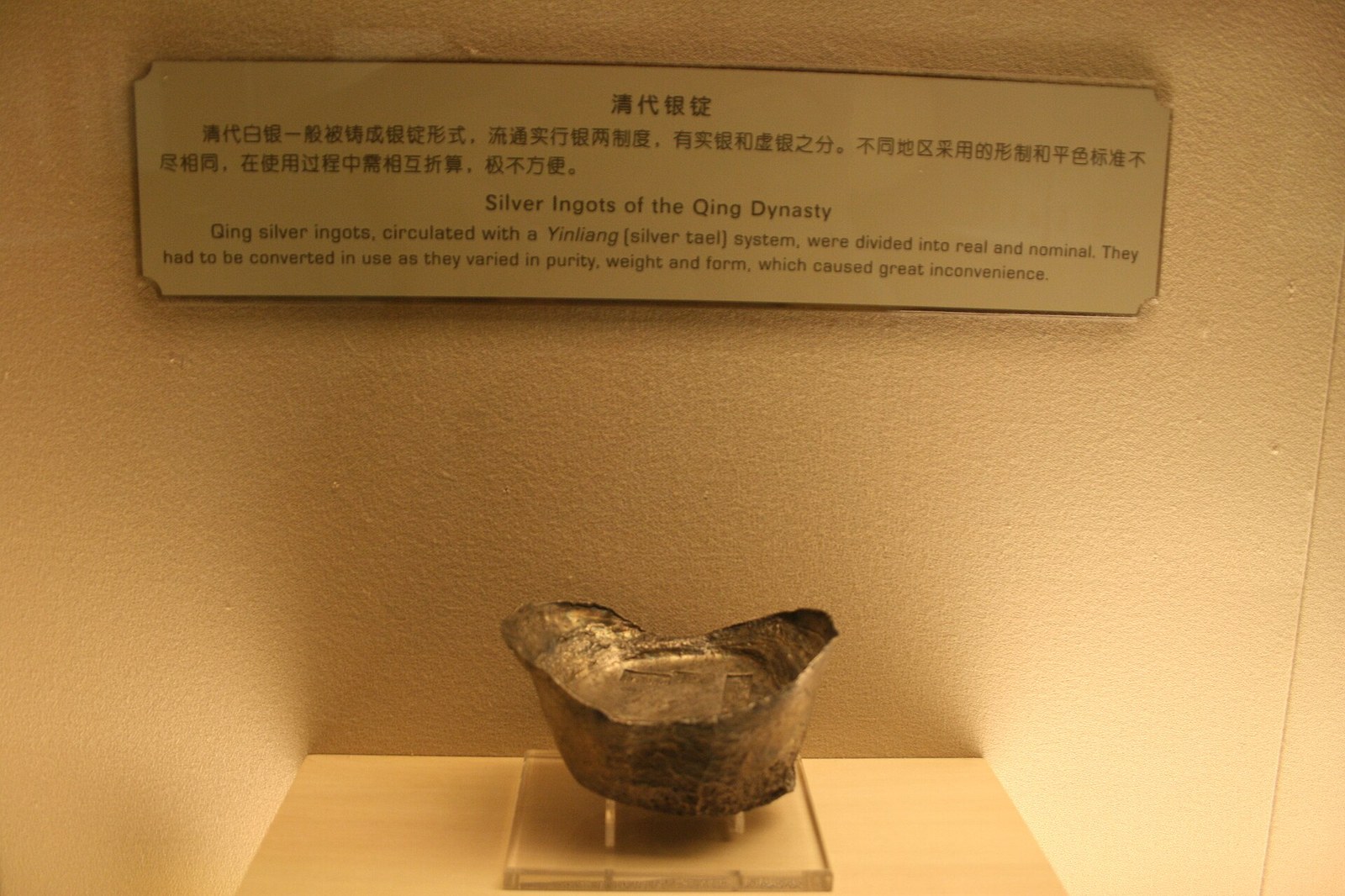
Silver bullion. The Hunts controlled hundreds of millions of ounces by 1980. (Photo: Gary Lee Todd, Ph.D. / CC0)
The Margin Calls
March 25, 1980. Bunker Hunt could not meet a $135 million margin call to his broker, Bache Halsey Stuart Shields.
On March 25, 1980, Bunker Hunt's broker, Bache Halsey Stuart Shields, called him with a routine margin demand: $135 million by end of day. Hunt did not have $135 million in cash. He had hundreds of millions of dollars in physical silver, but selling that silver into a falling market would push the price further down and trigger even larger margin calls on his remaining futures positions. He had hundreds of millions of dollars in oil and gas assets, but he could not liquidate those overnight. He had real estate that was even less liquid.
Bunker tried to call other brokers and other banks for emergency loans. None would lend without collateral they could seize. By the morning of March 27 — what would become known as Silver Thursday — Bunker Hunt was running out of options. The price of silver opened that morning at $15.80, then crashed to $10.80 in a matter of hours. Bunker Hunt's accumulated paper losses across the family's positions were now in the range of $1.7 billion. Bache Halsey was facing the prospect that one of its largest single clients was about to default on hundreds of millions of dollars. Other Wall Street brokers had similar exposures. Several of the largest US banks had loaned hundreds of millions of dollars to the Hunts secured by silver positions that were now worth less than the loans.
The Federal Reserve, which had spent the previous year fighting one of the worst inflation episodes in American history, suddenly faced a different problem: a private commodity speculation gone wrong was threatening to take down a chunk of the US banking system. Paul Volcker — who had become Fed chairman seven months earlier and was at that moment in the middle of his rate-hike campaign that would eventually break the inflation — got on the phone.
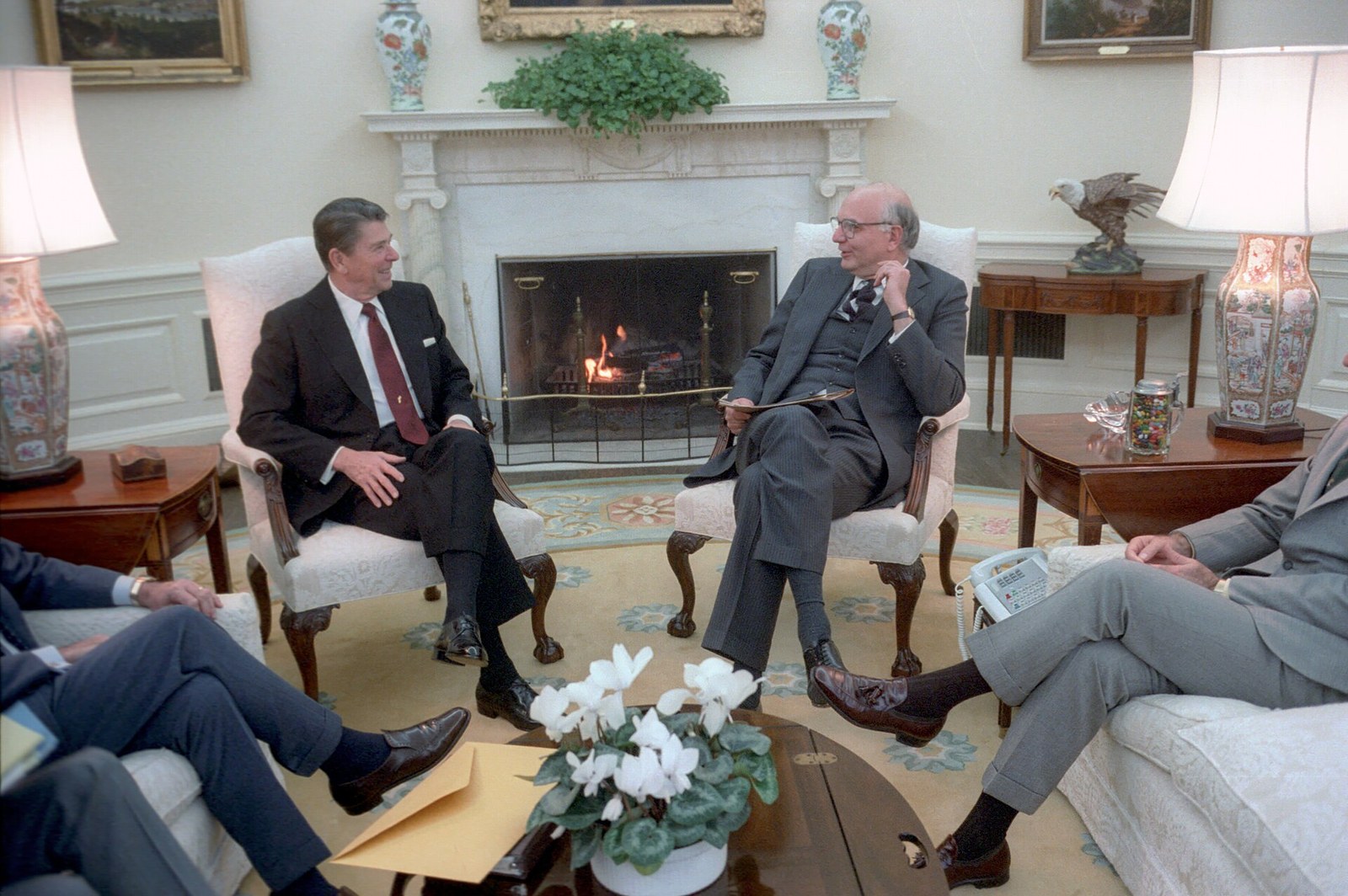
Paul Volcker, who chaired the Fed during Silver Thursday and personally coordinated the 1980 bailout. (Photo: Series: Reagan White House Photographs, 1/20/1981 - 1/20/1989 Collection: White House Photographic Collection, 1/20/1981 / Public domain)
The Bailout
March 28, 1980. A consortium of thirteen major US banks organized a $1.1 billion emergency loan to the Hunts. Silver stopped falling.
What followed in the 36 hours after Silver Thursday was a textbook example of a financial bailout coordinated by a central bank without ever using public money or formal taxpayer guarantees. Volcker did not order anyone to lend to the Hunts. He did not need to. He simply made it clear, in a series of phone calls to the chief executives of the major US banks, that he viewed an orderly resolution as preferable to a chain of bankruptcies.
A consortium of thirteen banks led by Morgan Guaranty Trust assembled a $1.1 billion emergency loan package over the weekend of March 29-30. The loan was secured by the Hunts' remaining silver, plus their oil and gas properties, plus other family assets pledged to the banks. The interest rate was punitive. The covenants were strict. The Hunts personally guaranteed the loan. They had no real choice — the alternative was bankruptcy and the seizure of their entire fortune to settle the silver positions.
The deal worked in the narrowest sense. Silver stopped falling. The brokers got paid. The banks did not fail. The systemic risk was contained. But the Hunts were ruined as a financial force. Over the next five years, they were forced to sell their silver positions, much of their oil and gas holdings, and large parts of the family's other assets to repay the consortium loan. The Commodity Futures Trading Commission and the Department of Justice opened investigations into market manipulation. In 1988, after a long civil trial, a jury found Nelson Bunker Hunt and his brother William Herbert Hunt guilty of conspiring to corner the silver market. Bunker Hunt eventually filed for personal bankruptcy in 1988.
The family fortune, which had been one of the largest in the United States in the 1960s, never recovered. By the time Bunker Hunt died in 2014 at age 88, his net worth was estimated at around $10 million — a thin slice of what his father had left him. Lamar Hunt, who had been less directly involved in the silver bet, kept the Kansas City Chiefs and the family's sports holdings, which would later be worth billions on their own.
Volcker did not order anyone to lend to the Hunts. He did not need to. He simply made it clear that an orderly resolution was preferable to a chain of bankruptcies.
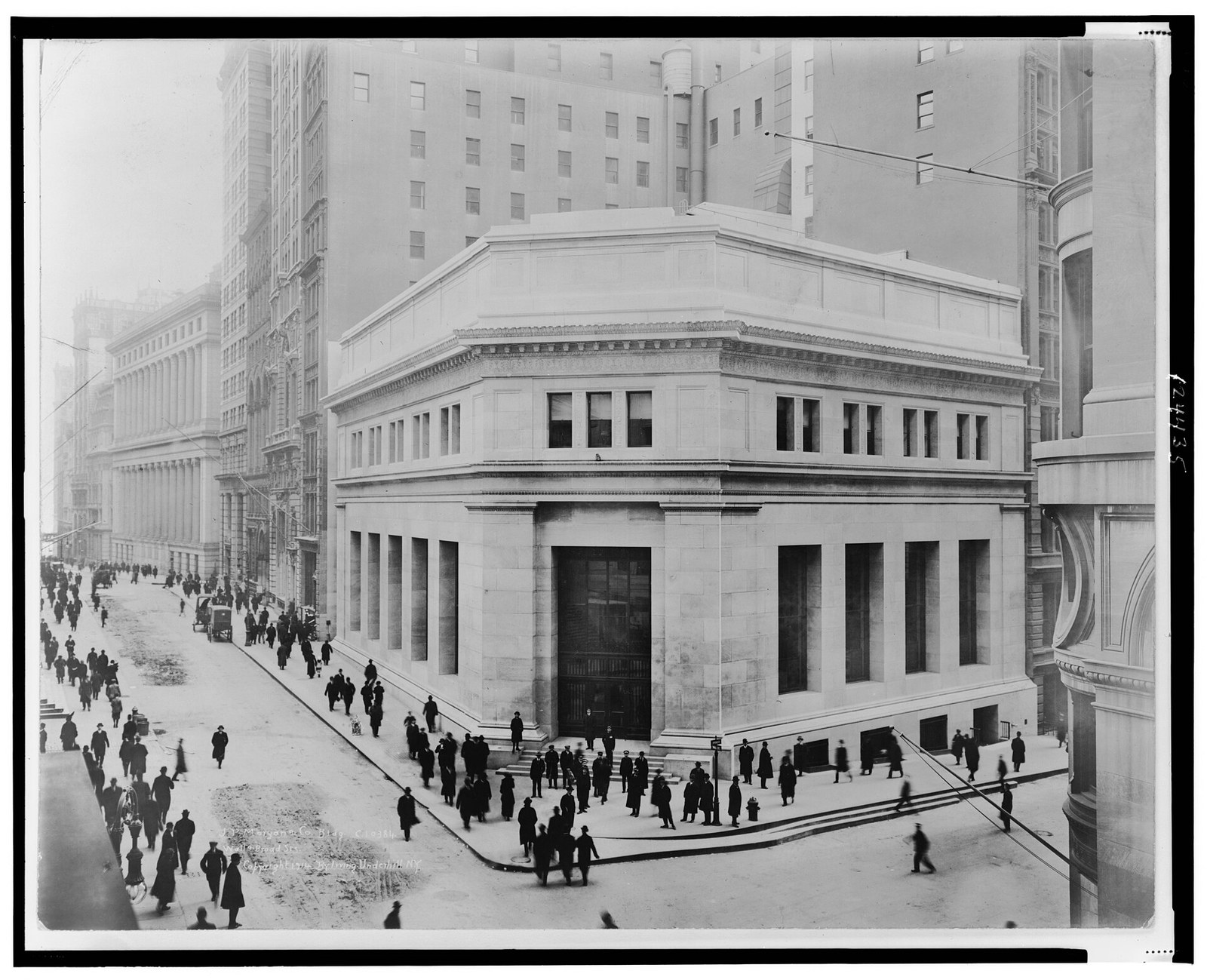
The New York Federal Reserve, where a thirteen-bank consortium loan was assembled in 36 hours to save the Hunts and the brokers exposed to them. (Photo: Underhill, Irving, -1960, photographer / Public domain)
The Long Echo
Forty years later, every commodity trading firm in the world still operates under rules written because of the Hunts.
The Hunt episode reshaped commodity-market regulation in ways that are still felt every day. Position limits on individual traders, margin requirements on commodity futures, reporting requirements for large concentrated positions, and emergency authority for exchanges to change rules mid-trade — all of these were strengthened in the immediate aftermath. The Commodity Futures Trading Commission, which had been a relatively weak agency in 1980, gained both authority and political legitimacy.
The deeper lesson, the one that doesn't show up in the regulations, is about who gets bailed out and how. The 1980 silver bailout was assembled in a weekend, with no public money, on the basis of phone calls from a Fed chairman to a handful of bank CEOs. It was shaped not by law but by relationships and by a shared assessment of what would happen if it failed. That same model — a Federal Reserve mobilizing the largest US banks to absorb a private failure that threatened the system — has been used repeatedly since: in the 1998 Long-Term Capital Management collapse, in the 2008 rescue of Bear Stearns, and in dozens of smaller cases that never made the front page.
The Hunts also remain the textbook case for what happens when one trader becomes too big for a market. When silver hit $50 in January 1980 and the Hunts owned a third of the world's deliverable supply, the market had effectively ceased to function. The price was not telling investors anything about silver. The price was telling investors how much money the Hunts had to spend that day. Every regulator since 1980 who has worried about a single fund growing too large in a single asset — and that worry shows up almost annually — has the Hunt brothers as the case they are trying not to repeat.

Position limits, margin requirements, and CFTC reporting rules — most modern commodity-market regulation traces back to the Hunt episode. (Photo: USAID Vietnam / Public domain)
What This Story Tells Us Today
The Hunt brothers' silver bet has all the elements of a story modern markets keep producing in different costumes. A wealthy actor accumulates a position in an asset they have a strong conviction about. The position grows large enough that the price stops being about supply and demand and starts being about that one actor's ability to keep buying. Eventually the rules change, the position has to be unwound, and the unwind reveals leverage that nobody outside the family knew about.
The modern version of this is not silver. It is more often a hedge fund taking concentrated positions in less liquid corners of the equity market, a private credit fund accumulating exposure to a single borrower, a single trader at a major bank running a 'derivatives' book that is large enough to move the asset class. The names change. The shape of the failure does not.
The practical lesson is that whenever you see one actor whose positions are large relative to a market's daily volume, you are looking at a setup with the same risk profile as the Hunt silver bet. The unwind, when it comes, will not be smooth. The price drop will be much faster than the price rise. And whoever financed the position will be the one negotiating with the Federal Reserve over a weekend.
Get the weekly digest
One email every Saturday. New stories, new research, no upsell. Unsubscribe with one click.