What to know
- Approximately $8 billion in customer funds were misappropriated at FTX, and the exchange went from solvent to bankrupt in roughly 72 hours in November 2022.
- The collapse accelerated a structural shift toward self-custody, decentralized finance, and proof-of-reserves — changes still shaping crypto infrastructure in 2026.
- Post-FTX, proof-of-reserves became a baseline expectation for centralized exchanges, and the SEC used retail loss concentration to justify applying securities law to crypto platforms — mechanisms that directly affect where and how crypto is held today.
You deposit your life savings at a bank. The CEO lives with his coworkers in a penthouse in the Bahamas. The bank has no board of directors. And one day, a competitor sends a tweet — and your money is just gone.
That's not a hypothetical. That's what happened to millions of FTX customers in November 2022. In roughly 72 hours, one of the biggest crypto exchanges on the planet went from business-as-usual to total collapse.
Nearly four years later, the story of FTX reads less like a crypto scandal and more like a stress test for an entire financial system. The dominoes it set in motion — who won, who lost, and what got rebuilt — are still shaping how money moves through crypto today.
What happened
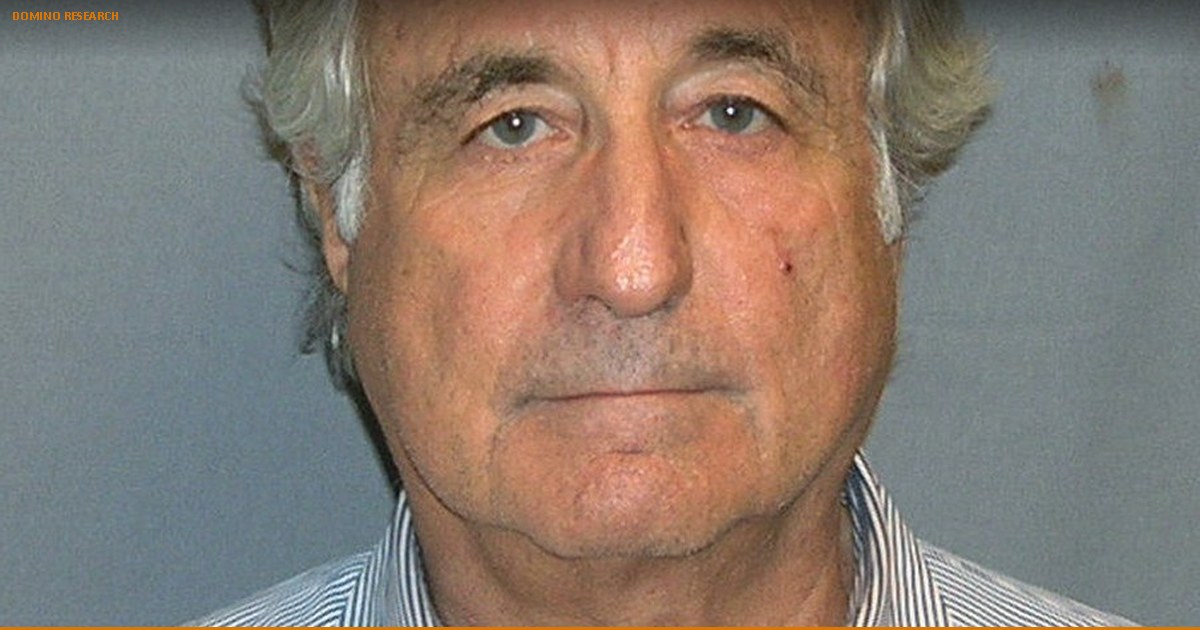
FTX was a cryptocurrency exchange that hit a $32 billion valuation in January 2022. Major venture capital firms poured money into it. Its founder, Sam Bankman-Fried, was on magazine covers. He testified before Congress. He donated to politicians on both sides of the aisle.
Behind the scenes, FTX insiders lived and worked in a tightly intertwined operation. They were secretly funneling customer deposits to Alameda Research, FTX's sister trading firm.
In November 2022, Changpeng Zhao — the CEO of rival exchange Binance — sent a single tweet suggesting he'd sell his holdings of FTX's native token. That tweet triggered a rush of withdrawals. Customers wanted their money back. It wasn't there.
Roughly $8 billion in customer funds were stolen. U.S. Authorities charged Bankman-Fried with criminal fraud. He was convicted in November 2023 and sentenced to 25 years in prison in March 2024. What had been the second-largest crypto exchange in the world was bankrupt in days.
First domino: The winners of the bank run weren't who you'd expect
Changpeng Zhao's tweet set off a stampede. Customers rushed to pull funds from FTX and were unable to retrieve their deposits. Bankruptcy recovery efforts have since returned portions of customer funds, but at the time, the money was simply gone.
The obvious winner should have been Binance — it was the biggest exchange and had just torpedoed its rival. But Binance's own market-share spike was short-lived, as regulators turned scrutiny on its own operations. The durable winners were regulated U.S. Platforms, particularly Coinbase, which offered something no offshore exchange could: regulatory licensing, public financial statements, and FDIC-insured USD balances.
This played out in real time when exchanges rushed to prove they weren't the next FTX. Some published wallet addresses. Others hired auditors. But the exchanges that already had regulatory infrastructure in place didn't need to scramble — they just needed to keep the lights on. The crypto industry called it crypto "self-destructing yet again". But beneath the wreckage, platforms that put compliance first were building a lasting edge — one that's still growing today.
The 72-Hour Collapse of FTX
Second domino: Retail losses became the legal lever that changed crypto law
One FTX victim told a sentencing judge: "My whole life has been destroyed". Countless depositors shared that experience, including a British investor who lost a substantial sum when the exchange collapsed. These weren't Wall Street traders who understood counterparty risk. Many were ordinary people who treated FTX like a bank account.
Most of the people who lost money were everyday retail investors with no way to recover their funds. Regulators pointed to that fact to justify treating crypto exchanges like securities firms. The SEC later went after other platforms, pointing to FTX's retail losses as proof that exchange customers needed the same protections as stock investors.
Class-action lawsuits against FTX's celebrity endorsers and venture backers broke new legal ground. The key question: can people who promoted an unregistered platform be held responsible for what depositors lost? These cases, still working through courts as of 2026, are setting precedent for exchange liability that will outlast the FTX bankruptcy itself. The human cost was real — but its legal afterlife is reshaping the entire regulatory framework.
Third domino: The great migration to self-custody
Ethereum and decentralized finance protocols became alternative options for users seeking to avoid centralized custodians. When a centralized exchange fails, users tend to migrate toward self-custody and decentralized alternatives — and FTX was the biggest test of that pattern yet.
Hardware wallet sales surged in the weeks following the November 2022 collapse. Decentralized exchange volumes climbed as users moved trading activity on-chain. Regulated exchanges like Coinbase and Kraken kept running normally through the crisis. So did transparent DeFi protocols like Uniswap and Aave. Not all of crypto was FTX.
The FTX collapse strengthened the long-term case for decentralized finance by proving the risks of centralized intermediaries. The very thing crypto was built to avoid — trusting a middleman with your money — had blown up in the most spectacular way possible. By 2026, self-custody and on-chain transparency have moved from ideological talking points to practical infrastructure requirements.
FTX vs. MF Global: Identical Playbook, 11 Years Apart
| Metric | FTX (2022) | MF Global (2011) |
|---|---|---|
| Founder/CEO background | Sam Bankman-Fried, MIT math prodigy | Jon Corzine, Goldman Sachs chief, ex-governor |
| Public image | Magazine covers, Congressional testimony | Respected Wall Street veteran |
| Hidden scheme | Customer deposits funneled to Alameda Research | $1.6B customer funds diverted to proprietary trading |
| Collapse timeline | 72 hours | Days |
| Customer funds misappropriated | $8B | $1.6B |
Fourth domino: The VC pullback handed DeFi builders an unexpected advantage
FTX reached its $32 billion valuation with backing from some of the most respected names in venture capital. When the fraud was revealed, those losses were career-defining. Sequoia Capital published a write-down memo. Major crossover funds that had chased crypto exposure — including firms better known for late-stage tech bets — quietly exited the sector entirely.
The obvious consequence was a funding drought for crypto startups. But the ripple effect was more interesting. The pullback hit VC-backed centralized finance (CeFi) companies hardest. Meanwhile, bootstrapped DeFi protocols — apps that run on blockchains with no central company in charge — which never needed venture funding to operate — kept building. Projects that ran on open-source code and protocol revenue didn't need a Series B.
This created a structural shift in who builds crypto infrastructure. VC money stayed on the sidelines until crypto ETF (a fund that lets investors buy crypto exposure through a normal brokerage account) approvals started pulling big investors back in — through a completely different door. By the time venture money returned, the competitive landscape had tilted toward decentralized builders who had survived the drought on their own terms.
Fifth domino: The regulatory reckoning
When a major political donor is revealed as a fraud, it creates reputational risk for every politician and cause associated with that donor. Bankman-Fried had been one of the largest political donors in the 2022 cycle. Suddenly, every lawmaker who'd taken his money had a problem — and a motivation to act.
Major financial frauds historically trigger waves of new regulation. Enron led to Sarbanes-Oxley. The 2008 crisis led to Dodd-Frank. The FTX collapse sped up crypto regulation by years. Between 2023 and 2025, regulators launched multiple enforcement actions and Congress pushed forward new legislation.
The scandal also created demand for new verification infrastructure. Proof-of-reserves — a system where exchanges publicly prove they hold the assets they claim to — barely existed before FTX. By 2026, it has become a baseline expectation for any centralized platform seeking institutional business. Several major exchanges now publish regular third-party attestations of their reserves, a practice that was virtually unheard of before November 2022.
The last time this happened
FTX and Enron followed an identical playbook: charismatic founders, opaque operations, shocking collapse. But the more structurally precise parallel is MF Global, the futures brokerage that imploded in October 2011.
MF Global's CEO, Jon Corzine — a former Goldman Sachs chief and New Jersey governor — oversaw a firm that misappropriated roughly $1.6 billion in customer funds to cover proprietary trading losses. The collapse took days, not months. Customer funds that were supposed to be segregated had been commingled with the firm's own bets. Sound familiar?
The MF Global aftermath exposed a clear gap in the rules. Regulators required firms to keep customer funds separate — but had no way to check in real time whether they actually did. The CFTC tightened rules, but the core problem — trusting a centralized intermediary to self-report its own compliance — was never fully solved. FTX exploited an almost identical gap, just in a less-regulated market. The lesson isn't that regulation failed. It's that regulation built on self-reporting by the regulated entity has a structural blind spot — and the coming wave of crypto legislation will face the same design challenge.
What could go wrong
Risk 1: Regulation overshoots. The post-FTX regulatory push could stifle legitimate innovation alongside fraud. If lawmakers can't distinguish between a decentralized protocol and a centralized exchange, the rules they write will hurt good actors more than bad ones. Signal to watch: If major crypto exchange registration rules pass without a meaningful DeFi carve-out, the innovation-suppression scenario is live. Legitimate DeFi protocols relocating offshore would confirm the overshoot.
Risk 2: Memory fades. Financial markets have short memories. If crypto prices rally hard enough, retail investors may forget the lessons of FTX and pile back into unregulated platforms offering higher yields. Signal to watch: If retail exchange inflows on unregulated offshore platforms exceed their 2021 peak volumes during the next major rally, the amnesia cycle has restarted.
Risk 3: Self-custody isn't for everyone. The shift toward self-custody sounds great in theory. In practice, if you lose your private key, your money is gone forever. There's no customer service line to call. The "be your own bank" narrative only works if people are willing and able to handle that responsibility. Signal to watch: If high-profile self-custody losses (forgotten keys, phishing attacks) begin generating their own wave of negative headlines, the pendulum could swing back toward centralized custodians — recreating the same concentration risk FTX exposed.
Risk 4: Another fraud is hiding in plain sight. FTX passed due diligence from top-tier VCs. If those firms couldn't catch a multi-billion-dollar fraud, there may be others operating right now that nobody has flagged yet. Signal to watch: Any major exchange that resists or delays third-party proof-of-reserves attestation, or that shows unusual withdrawal restrictions during periods of market stress, should be treated as a red flag.
Watchlist
| Ticker | Level | Status | Why |
|---|---|---|---|
| COIN | Monitor | watching | Coinbase was the primary beneficiary of the post-FTX trust shift as the largest regulated U.S. crypto exchange. Since November 2022, it has navigated its own SEC enforcement battles while gaining market share from offshore competitors. The forward signal: whether Coinbase can maintain its regulatory moat as new legislation potentially levels the playing field for competitors. |
| HOOD | Monitor | watching | Robinhood offers crypto trading through a regulated brokerage structure. Post-FTX, it captured displaced retail demand from users seeking familiar, regulated interfaces. The forward signal: whether Robinhood's crypto revenue diversifies beyond trading fees as the market matures. |
| ETH-USD | Monitor | watching | Ethereum is the backbone of decentralized finance. The post-FTX shift away from centralized exchanges drove increased DeFi activity on Ethereum. The forward signal: whether Ethereum's DeFi total value locked continues to grow as a share of overall crypto market capitalization — a measure of whether the self-custody thesis is structural or cyclical. |
| BTC-USD | Monitor | watching | Bitcoin is the largest crypto asset and was the first to benefit from institutional re-entry via spot ETF approvals in 2024. The forward signal: whether institutional BTC allocations hold during the next major market stress event — the real test of whether post-FTX trust infrastructure actually works. |
Get the weekly digest
One email every Saturday. New stories, new research, no upsell. Unsubscribe with one click.