What to know
- Ferrari unveiled its first EV, the Luce, at $640,000 — and the stock dropped over 5% as memes went viral.
- The real risk isn't one bad design — it's whether Ferrari's luxury premium is starting to crack.
- The selloff shows that viral ridicule is now a material financial risk for any company whose valuation depends on brand perception.
Six hundred and forty thousand dollars. That's the sticker price on a car the entire internet just compared to a rental.
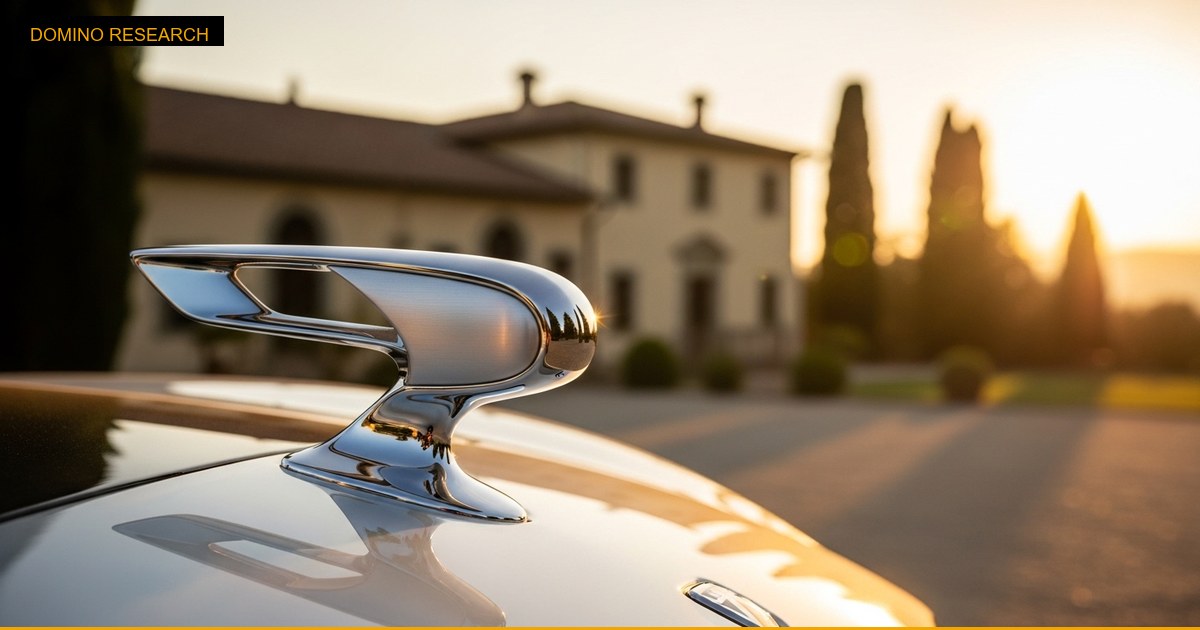
Ferrari unveiled the Luce — its first-ever fully electric car, designed with Jony Ive, the guy who shaped the iPhone. The reaction was immediate, brutal, and extremely online. Memes comparing it to a Nissan Leaf flooded social media within hours.
Normally, internet jokes don't move stock prices. But Ferrari isn't a normal company. Its entire business model runs on one thing: the idea that a Ferrari is the most desirable car on the planet. When that idea takes a public beating, rational investors reassess the brand premium, and the stock price adjusts accordingly.
What happened next tells you something important about how brand value works in 2026 — and why it matters even if you'd never buy a Ferrari.
What just happened
On May 22, 2026, Ferrari pulled the covers off the Luce, a $640,000 all-electric vehicle designed in collaboration with Jony Ive, the former Apple design chief. It was supposed to be a landmark moment — Ferrari's entry into the electric era.
The market didn't celebrate. Ferrari's U.S.-listed shares dropped 5.26% to $329.91 on the day, while the Milan-listed shares fell even harder, slumping 8%. Trading volume in the U.S. Hit 2.14 million shares — more than three times the 20-day average.
The catalyst wasn't a mechanical failure or a recall. It was memes. An avalanche of online mockery targeted the Luce's design, and the company shed roughly $5 billion in market value in a single session. Barron's summarized the mood bluntly: the Luce's design "doesn't reach the standards buyers expect from the luxury automaker".
Barron's summarized the mood bluntly: the Luce's design 'doesn't reach the standards buyers expect from the luxury automaker.'
First domino: Ferrari's luxury premium is on trial
Ferrari was recently described as Europe's most valuable automaker. Its market cap (the total value of all the company's shares) sits around $58.1 billion — for a company that sells roughly 14,000 cars a year. That math only works if investors believe the brand is untouchable.
The stock has collapsed nearly 40% from its 52-week high, and now trades just above its 52-week low. For a company that still commands a trailing P/E (how many years of past earnings the stock costs) above 30 — expensive by any auto industry standard — the concern isn't one bad news day. It's whether the Luce signals that Ferrari's management is making choices that dilute the brand's exclusivity.
If that perception sticks, the premium multiple compresses further — and there's still a long way down.
Second domino: The companies betting on luxury EV credibility just lost their cover story
If the world's most desired car brand can't get people excited about a $640,000 EV, that's bad news for startups like Rimac and Lucid. Their whole fundraising pitch depends on ultra-luxury buyers paying a premium for electric performance. Rimac's entire valuation rests on the idea that electric hypercars are the future of the exotic segment. Lucid has pitched itself as the Tesla of the ultra-premium tier. Both need investors to believe the luxury-EV market is real and growing.
The mass-market data already told a cautionary tale. Ford disclosed billions in cumulative losses from its electric vehicle division through its recent earnings reports. Demand for high-priced EVs has broadly underperformed expectations across the U.S. Market. Ferrari was supposed to be the exception — luxury buyers are different, they'll pay anything for the badge. The Luce reaction suggests they won't pay anything for a badge on a car they find ugly.
The downstream risk is real. Battery cell suppliers and top-tier parts makers set aside factory capacity expecting luxury EV demand. If exotic brands slow their timelines, those investments could be stranded. When the bellwether stumbles, the supply chain feels it.
Third domino: Memes are now a material financial risk
For a company like Ferrari — where the product IS the brand, and the brand IS the stock price — viral ridicule is functionally equivalent to a product recall. It attacks the one thing that justifies the premium: the perception that Ferrari is cool.
This matters because of Ferrari's beta (how much the stock moves when the broader market moves 1%): 0.587. That means the stock normally moves less than the market on any given day. A 5.26% single-day drop for a low-volatility stock is enormous.
And it was caused by tweets, not by fundamentals. No earnings miss. No product defect. Just a wave of mockery that reprogrammed investor sentiment in hours.
For a company where the product IS the brand, and the brand IS the stock price, viral ridicule is functionally equivalent to a product recall.
Fourth domino: Jony Ive's design halo takes a dent
Instead, Ive's involvement became part of the punchline. The Luce was designed in direct partnership with the Apple alumnus, and every meme comparing it to a Nissan Leaf implicitly asks: this is what the iPhone guy came up with?
A high-profile design flop can hurt a designer's reputation and make brands less eager to work with them next time. Ive's track record at Apple likely gives him a long runway — but the Luce is now the most visible thing he's done since leaving Apple, and the verdict is not kind.
For Ferrari, the risk is that the Ive partnership was supposed to be the creative engine behind their electric future. If the first product lands this badly, the entire creative direction is in question.
Fifth domino: The combustion Ferraris just got more collectible
Scarcity and exclusivity drive the collector car market. If Ferrari's EV push stumbles and the company pulls back on electric plans, it makes traditional gas-powered models look even more desirable. Every SF90 Stradale and 296 GTB on the road becomes a little more rare, a little more "last of the breed."
This is the non-obvious angle. The Luce backlash may actually be bullish for Ferrari's existing product line — just not for the stock. Collectors don't care about share prices. They care about whether the thing in their garage is becoming more or less special.
The stock has dropped meaningfully over the past month. But if you're a Ferrari owner watching this unfold, your car might actually be worth more today than it was yesterday.
The last time this happened
The closest parallel isn't from the auto industry — it's from fashion. In 2001, Burberry was one of the most prestigious luxury brands in the world. Then its signature plaid became a meme in British tabloid culture, associated with football hooligans and reality TV. The brand spent nearly a decade — and hired multiple new creative directors — to rebuild the perception of exclusivity.
The financial damage was measurable. Through the mid-2000s, Burberry's stock returns trailed peers like LVMH by a wide margin. It underperformed the broader luxury sector for roughly five years while the brand rebuilt itself. The stock didn't start beating peers for good until Christopher Bailey took creative control and began rebuilding the brand around 2007–2008.
The mechanics are the same. A luxury brand's value lives in perception. When that perception flips — from aspirational to mockable — the financial damage is real and slow to repair. Ferrari's situation isn't as severe. One product launch isn't the same as a years-long cultural shift. But the lesson is clear: for companies that sell status, a viral perception problem is harder to fix than a mechanical one. You can recall a car. You can't recall a meme.
What could go wrong — with our thesis
The biggest risk to the bearish case is that Ferrari simply doesn't care. The Luce could be a deliberate loss-leader — a car built just to meet emissions rules so Ferrari can keep selling V12s in Europe as those rules get stricter. If management explicitly frames it that way on the next earnings call, the stock could recover quickly. Specific trigger: if Ferrari's CEO calls the Luce a "compliance" or "regulatory" play on the Q3 2026 earnings call, the brand-risk story gets much weaker.
Second risk: the memes fade. Internet outrage has a half-life measured in days. If the Luce controversy is forgotten by late June 2026, the $5 billion selloff becomes a buying opportunity, not a structural break. Ferrari's core business — combustion supercars with multi-year waitlists — is unchanged. Specific trigger: if RACE closes above $370 within 60 trading days on heavy volume — and nothing changed in the business — then the selloff was pure emotion. That would kill the bearish case.
Third risk: the design grows on people. The original iMac was mocked as a toy. The Cybertruck was called ugly. Some polarizing designs age well. If early Luce buyers post glowing reviews and the car looks better in person, the narrative flips.
Watchlist
| Ticker | Level | Status | Why |
|---|---|---|---|
| RACE | $329.91 (closing price on May 22, 2026) | monitoring | The stock closed at $329.91 after a 5.26% drop on 3x normal volume, sitting just above its 52-week low of $312.51. Trailing P/E remains above 30 — still expensive for an automaker, but well below where it traded at the 52-week high of $519.10. The question is whether the brand premium rebuilds or keeps compressing. |
| Confirms: Close above $370 within 60 trading days on above-average volume = selloff was a one-day overreaction, bearish thesis invalidatedBreaks: Close below $312.51 (52-week low) on above-average volume = new leg down, premium re-rating underway | |||
| P911.DE | Porsche AG closing price as of late May 2026 | monitoring | Porsche AG (the sports car manufacturer, not the Porsche SE holding company) is the closest luxury auto peer to Ferrari. If Ferrari's EV stumble causes investors to re-examine luxury auto multiples broadly, Porsche AG could see sympathy selling. Note: P911.DE trades on the Frankfurt exchange and has different liquidity dynamics than RACE. |
| Confirms: Porsche AG holds current levels through June 2026 = contagion contained to FerrariBreaks: Porsche AG drops more than 5% in the next 30 days without company-specific news = luxury auto re-rating is real | |||
Get the weekly digest
One email every Saturday. New stories, new research, no upsell. Unsubscribe with one click.