What to know
- ARM blew past TD Cowen's freshly raised $265 price target within days of the upgrade — closing at $256.73 and setting up a wave of analyst scrambles to catch up.
- A $3 billion shelf registration for employee shares could quietly flood the market with new supply as insiders sit on life-changing gains.
- The FTC is formally investigating ARM's licensing practices — a risk the rally is ignoring at a 300+ trailing P/E.
Every chip in your phone, your laptop, and probably your car runs on blueprints designed by one company. That company just had its best day in months — and the ripple effects are bigger than most people realize.
ARM Holdings doesn't make chips. It designs the instruction manuals that chipmakers use to build them. Think of it as the architect in a construction boom. When the architect is suddenly in massive demand, every contractor in town gets busier.
On Tuesday, May 20, 2026, ARM's stock surged 15%. For a company worth over $270 billion, that's roughly $35 billion in new market value — created in about six and a half hours of trading.
But the most interesting part of this story isn't the rally itself. It's what's hiding underneath it.
What just happened
ARM closed at $256.73 on May 20, 2026, up 15.05% on the day. Trading volume hit roughly 17.8 million shares — about 1.47 times its 20-day average. The stock pushed within striking distance of its 52-week high of $259.44.
Three forces converged. First, chip stocks bounced ahead of Nvidia's earnings report. Second, TD Cowen nearly doubled its price target on ARM — from $165 to $265 — on May 7, citing the company's growing role in AI-related CPU design. Third, falling bond yields made high-growth stocks like ARM more attractive to investors.
The result: ARM's biggest single-day move in months, dragging the entire semiconductor sector higher with it.
ARM doesn't make chips. It designs the instruction manuals that chipmakers use to build them. When the architect is in massive demand, every contractor in town gets busier.
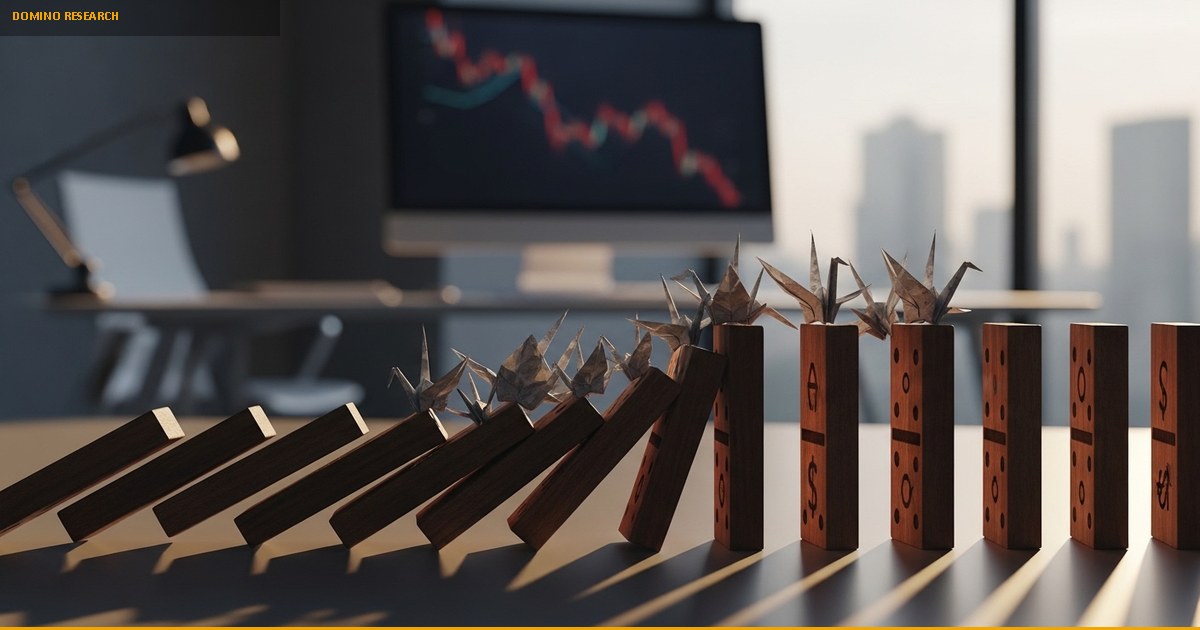
First domino: ARM's ballooning valuation shifts leverage against its own licensees
ARM's revenue comes from upfront licensing fees and per-chip royalties. The bigger ARM gets, the harder it becomes for licensees to push back on pricing during contract renewals. A $270 billion ARM has more leverage — and more investor pressure to monetize that leverage — than a $100 billion ARM did a year ago.
Qualcomm and ARM have already been locked in licensing disputes in recent years. MediaTek, which depends heavily on ARM architectures for its mobile chips, faces similar dynamics. When ARM's stock surges on an "AGI CPU growth narrative", it signals to the market — and to ARM's own board — that the company should be extracting more value from its intellectual property.
That's why the sector-wide chip rally on May 20 hides a less obvious side effect. The companies celebrating alongside ARM may soon have to pay more for the privilege of using its designs.
Second domino: ARM's valuation is now pricing in a very specific future
As of May 20, ARM was up roughly 47% over the prior four to five weeks, which means the market has been furiously repricing ARM's AI growth story in a compressed window.
TD Cowen's $265 price target — up from $165 — was based on what the firm called ARM's "AGI CPU growth narrative". But ARM already closed at $256.73, meaning the stock is within 3% of that freshly raised target.
When a stock blows through analyst targets this fast, it typically triggers a wave of upgrades from other firms scrambling to catch up. That creates a self-reinforcing cycle: higher targets attract more buyers, which pushes the price higher, which forces more target hikes. The question is whether the underlying business can grow into this valuation — or whether the music stops first.
Third domino: SoftBank's paper gain becomes a strategic weapon
ARM's market cap as of May 20 stood at roughly $273 billion. A 15% move on that base translates to approximately $35–40 billion in added market value — most of which accrues to SoftBank as the majority holder.
The real story isn't the arithmetic. SoftBank's Vision Fund portfolio has been under pressure. ARM is now the asset that could let Masayoshi Son raise fresh capital without fire-selling other holdings. A higher ARM valuation helps SoftBank in three ways. It gives them better collateral for loans. It makes fundraising easier for any future Vision Fund. And it gives Son more leverage across his entire portfolio.
Meanwhile, ARM's CEO Rene Haas was appointed to an expanded role at SoftBank Group International in April 2026. That tighter link between parent and subsidiary suggests SoftBank is turning ARM into the engine of its next big move — not a passive holding to sell off piece by piece.
A 15% move on a $273 billion company translates to roughly $35–40 billion in added market value — most of which flows to SoftBank as the majority shareholder.
Fourth domino: A $3 billion share shelf nobody's watching
ARM filed a shelf registration covering 13,821,271 ordinary shares — valued at approximately $3.06 billion — tied to employee stock ownership plans. A shelf registration is pre-approval. The company can issue these shares at any time without extra regulatory sign-off.
With the stock up roughly 47% in the four to five weeks leading up to May 20, employees holding options are sitting on life-changing gains. That creates a quiet supply headwind: more shares hitting the market, diluting existing shareholders' ownership percentage.
This doesn't mean the stock crashes tomorrow. But in a momentum-driven rally, a growing pool of motivated sellers acts as a slow brake. The shelf is filed, the gains are massive, and the incentive to lock in profits grows with every uptick.
Fifth domino: The FTC investigation the rally forgot
ARM is under a formal U.S. The Federal Trade Commission is running an antitrust probe into ARM's chip licensing practices and its push into chip design. The company has disclosed this risk in its regulatory filings. ARM also faces regulatory scrutiny in South Korea.
This is not a minor footnote. ARM's revenue comes from two streams: upfront licensing fees and per-chip royalties. Both depend on ARM's ability to set terms that chipmakers must accept. If the FTC decides ARM's licensing practices are anticompetitive, it could force the company to cut royalty rates or offer looser terms. That would squeeze the high gross margins — revenue minus direct costs, as a percentage — — revenue minus direct costs, as a percentage — holding up the current valuation.
During momentum rallies, regulatory risk tends to get ignored. Investors focus on the growth story and discount the tail risk (the small chance of a catastrophic loss). But at a 300+ trailing P/E, there is no margin for error. Any negative regulatory headline could trigger a sharp repricing in a stock this expensive.
Historical parallel: Nvidia's 2023 parabolic run — and its 20% gut-check
ARM's setup right now looks a lot like Nvidia's run in 2023: a steep rally fueled by a big tech narrative, sky-high valuation multiples, and analysts hiking targets after the stock already moved. Nvidia surged from roughly $150 in early January 2023 to over $500 by November 2023. AI excitement took hold, and analysts kept hiking their targets after the stock had already moved.
The key difference: Nvidia was already posting triple-digit revenue growth year over year when its rally began. Data center GPU demand was showing up in actual earnings reports. ARM's trailing P/E above 300 suggests the market is pricing in earnings that haven't materialized yet — it's narrative, not numbers, doing the heavy lifting.
What happened with Nvidia: the stock did keep going — but not before a 20%+ drawdown in late 2023 that shook out momentum traders. ARM has already more than doubled from its 52-week low of $100.02. The higher it climbs without earnings catching up, the more fragile the setup becomes.
What could go wrong
The valuation corrects violently. ARM trades at a trailing P/E above 300. Stocks at these multiples don't need bad news to sell off — they just need the growth narrative to pause. If ARM's next earnings report shows royalty revenue growing slower than expected, the multiple compresses fast.
The FTC investigation escalates. ARM is under formal antitrust investigation for its licensing practices. A consent decree could force ARM to lower royalty rates or offer more flexible licensing terms — compressing the high gross margins that drive the current valuation. At this multiple, that kind of structural revenue risk is not priced in.
Employee share sales create a supply overhang. The $3.06 billion shelf registration means up to 13.8 million shares could hit the market. In a momentum-driven rally, even modest insider selling can spook sentiment and trigger a cascade of stop-loss orders.
Nvidia's earnings disappoint. ARM's May 20 surge happened partly in anticipation of strong Nvidia results. If Nvidia's data center revenue growth slows or its guidance disappoints, the whole semiconductor AI trade loses its anchor. ARM, as the priciest name in the sector, would likely fall the hardest.
Watchlist
| Ticker | Level | Status | Why |
|---|---|---|---|
| ARM | $256.73 (May 20, 2026 close) | at 52-week high | The center of the story. Surged 15% on AI chip architecture excitement and analyst upgrades. Valuation is extreme — trailing P/E above 300. |
| Confirms: Closes above $265 (TD Cowen target) within 14 days = momentum thesis intactBreaks: Closes below $210 for 3 consecutive days = rally broken, valuation repricing underway | |||
| NVDA | Post-earnings close | catalyst imminent | ARM's rally was partly driven by pre-Nvidia earnings excitement. Nvidia's results will either validate or undercut the entire semiconductor AI trade. |
| Confirms: NVDA beats data center revenue estimates by >5% and guides higher = chip rally has legsBreaks: NVDA closes below $120 post-earnings (roughly 10% below mid-May levels) = sector-wide pullback likely, ARM most exposed as highest-multiple name | |||
| SFTBY | Tracking ARM exposure | derivative play | SoftBank owns the majority of ARM. Every $10 move in ARM translates to billions in SoftBank's portfolio value. Tighter integration with CEO dual role. |
| Confirms: SFTBY breaks above its own 52-week high within 30 days = market pricing in ARM windfallBreaks: SFTBY diverges negatively from ARM for 2+ weeks = market skeptical of conglomerate discount | |||
| SMH | Sector ETF | broad chip exposure | The VanEck Semiconductor ETF captures the sector-wide rally. If ARM's surge is a real signal about AI chip demand, SMH should hold its gains. |
| Confirms: SMH stays within 3% of its May 20 close for 2 weeks = sector strength confirmedBreaks: SMH drops more than 8% from May 20 close = sector rotation out of chips | |||
Get the weekly digest
One email every Saturday. New stories, new research, no upsell. Unsubscribe with one click.