What to know
- AMD's warrant deal with Meta was filed in February and ignored for months — the market only started pricing it in this week, a lag that itself signals how under-the-radar the structure remains.
- Meta locked in a massive GPU deal that gives it AMD shares for a penny each — if it buys enough chips.
- The warrant structure and CEO pay package both point to $600 as a shared bet between AMD and its biggest customer.
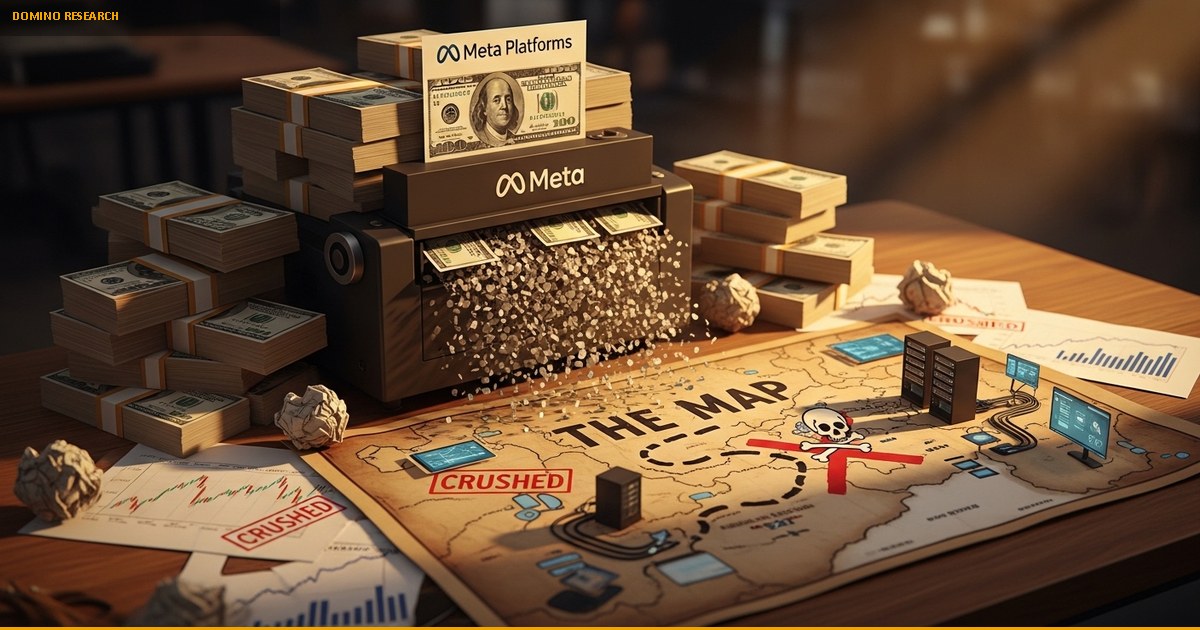
Your biggest customer walks in and says: "I'll buy so many of your products that you should just give me stock." That's essentially what happened between AMD and Meta earlier this year. And this week, the market finally started to price it in.
AMD ripped nearly 8% in a single session, leading a wave of chip stock breakouts. But the headline move isn't the interesting part. Buried in an SEC filing from February is a deal structure that tells you exactly how big both companies think this AI spending cycle is going to get.
The number they're both betting on? $600 a share. That's more than double where AMD trades today.
What just happened
AMD surged roughly 8% on April 16, 2025, closing near its 52-week high of $267.08. The stock had traded as low as $83.75 over the past year, making the move all the more dramatic.
The session came on serious volume — AMD traded approximately 1.77 times its 20-day average. It wasn't alone: Onsemi and Semtech also broke out of technical bases the same day, following a string of chip stock breakouts in recent sessions.
Investors were reacting to faster-growing AI demand. Still, questions remain about how much of that momentum turns into actual sales growth.
First domino: Meta's loyalty program on steroids
AMD issued Meta a warrant to purchase up to 160 million shares of common stock at $0.01 per share. That's not a typo — one cent.
The catch: those shares don't vest all at once. They unlock in tranches as Meta buys more AMD Instinct GPUs, measured in gigawatt equivalents. Meta has committed to purchase the first 1 gigawatt. Full vesting requires Meta to buy 6 gigawatts total.
To put that in perspective, a gigawatt is roughly the power output of a nuclear reactor. Meta is committing to buy enough AI chips to consume the equivalent of multiple power plants. And the final tranche of the warrant only vests if AMD's stock price hits $600.
At AMD's recent market cap (the total value of all a company's outstanding shares), 160 million shares represents meaningful dilution. But AMD is betting the revenue from selling that many GPUs will more than offset the shares it gives away.
Second domino: Lisa Su's compensation is anchored to the same $600 target
According to AMD's SEC filings, Su received a special performance-based equity award with a target value reported at $75 million. The entire award is based on performance. Zero shares vest unless the stock hits specific price targets over multiple years.
The highest hurdle in the award structure: $600 per share — the same threshold that triggers the final tranche of Meta's warrant. At the time of the grant, AMD's all-time high was $267.08. The board was essentially telling Su: we'll pay you generously, but only if you more than double the stock from its all-time peak.
Both the customer deal and the CEO's pay are tied to the same ambitious stock price. That creates an unusually tight link between how well management executes and how well shareholders do. Everyone is rowing toward $600, and the timeline to get there stretches into the early 2030s.
Third domino: The volume signature says this isn't retail hype
The broader market kept rallying with AMD at the front of the pack. But the interesting question isn't that multiple chip stocks moved together — it's who was buying.
The volume profile offers a clue. AMD traded at nearly 1.8x its 20-day average, and the move came without a company-specific catalyst like an earnings beat or product launch. When a whole sector breaks out on heavy volume with no company-specific news, that's a fingerprint of large funds rebalancing their portfolios. Think sovereign wealth funds adding to their chip holdings, or long-only tech funds that spent 2024 underweight in AI hardware finally giving in and buying.
This matters because it's structurally different from the 2023 AI hype rotation, which was concentrated almost entirely in Nvidia. That cycle was a single-stock momentum trade dressed up as a sector thesis. This time, the buying is spreading across the supply chain — GPU makers, power chip firms, analog chip companies. That suggests big funds are betting on the whole infrastructure buildout, not just chasing the headline name.
Institutional buying at this scale tends to be sticky. Fund managers building sector positions add over weeks or months, creating sustained demand that outlasts the initial breakout.
Fourth domino: The dilution trade-off hiding in plain sight
If Meta fully vests those shares, it's getting them for essentially nothing. That dilutes every existing shareholder's ownership stake. AMD currently has roughly 1.6 billion shares outstanding, so full vesting would increase the share count by approximately 10% — a significant hit to per-share economics unless revenue growth outpaces it.
As of mid-April 2025, AMD's trailing P/E (how many years of past earnings the stock currently costs) was approximately 106.6x — expensive by any traditional measure, but justified only if analyst forecasts for dramatic AI-driven earnings growth prove correct. The gap between trailing and expected future earnings is where the entire bull case lives.
Most retail investors celebrating the surge may not fully appreciate this trade-off. The warrant is a subsidy to Meta, funded by existing shareholders, in exchange for a massive long-term revenue commitment. If GPU revenue scales as both companies expect, the dilution looks trivial in hindsight. If it doesn't, shareholders absorbed a 10% ownership hit for nothing.
Fifth domino: Six gigawatts need somewhere to plug in
Meta's warrant milestones are measured in gigawatt equivalents of AMD GPU products, with full vesting at 6 gigawatts. Deploying GPUs at scale requires matching investments in power plants, cooling systems, and grid upgrades.
Every dollar spent on AI GPUs pulls forward multiple dollars of spending on the physical infrastructure to run them. Data centers need electricity, backup power, water cooling, and connections to the grid. Power infrastructure companies could quietly benefit from hyperscaler GPU deals this large.
Deals like AMD-Meta make the spending timeline more concrete and more visible. The AI boom isn't just a chip story — it's an energy story, a construction story, and a utility story.
The last time this happened
AMD has been here before — sort of. In the late 2010s, the company staged a dramatic comeback in server CPUs with its EPYC processors, breaking Intel's decade-long monopoly in data centers. The playbook was similar: win a few hyperscaler contracts, prove the product works at scale, then watch the market re-rate the stock.
From 2018 to 2021, under Lisa Su's leadership, AMD went from a $10 stock to over $160 as data center CPU market share climbed from near zero to roughly 20%.
The current AI GPU push mirrors that earlier breakout, but at a much larger scale. The data center CPU market was measured in tens of billions of dollars. The AI accelerator market is projected to be multiples of that. If AMD can replicate even a fraction of its CPU playbook in GPUs, the revenue ramp could be significantly steeper.
The risk is that Nvidia's lead in AI GPUs is structurally deeper than Intel's lead in CPUs ever was. Nvidia's CUDA framework is the default toolkit for AI development. The vast majority of machine learning models on platforms like HuggingFace are built and tested on CUDA. AMD's ROCm ecosystem is a distant second in developer adoption. AMD had a clear architectural advantage with EPYC that let it win on performance-per-dollar. In GPUs, the hardware may be competitive, but the software switching costs create a moat that didn't exist in the CPU fight.
What could go wrong
AMD's beta is nearly 2x the market — so a 5% S&P 500 drop means roughly 10% downside for AMD, regardless of its AI story. If the broader market sells off on recession fears, trade policy, or a Fed surprise, AMD amplifies the pain.
Revenue growth must outpace dilution. Investors were already weighing whether AI momentum can fully translate into sales growth. If AMD's data center GPU segment doesn't show faster revenue growth quarter over quarter in the next two earnings reports, the premium valuation collapses. And those 160 million warrant shares would amplify per-share losses instead of looking trivial.
Nvidia's moat may be deeper than AMD hopes. Nvidia's CUDA ecosystem creates years of developer lock-in, with the overwhelming majority of AI frameworks and pre-trained models built on CUDA. One Meta deal doesn't overcome that switching cost; it takes multiple hyperscalers defecting to build a competing platform.
The $600 target could be aspirational, not predictive. Both the Meta warrant and Lisa Su's pay package use $600 as a milestone. But companies set ambitious targets all the time. The existence of a $600 hurdle doesn't mean the stock will get there — it means management and the board thought it was aggressive enough to be worth incentivizing.
Watchlist
| Ticker | Level | Status | Why |
|---|---|---|---|
| AMD | $267.08 (52-week high) | testing | A clean break above the 52-week high signals a new leg higher; rejection here means the rally needs a breather. If AMD has already cleared this level by the time you read this, the next structural resistance is the $280–$300 zone where round-number selling and options activity tend to cluster. |
| NVDA | Next quarterly earnings | watching | Nvidia's next earnings report is the litmus test for the entire AI chip trade. If Nvidia's AI GPU revenue growth slows below expectations, the sector gets repriced and AMD gets dragged down regardless of its own fundamentals. |
| ON | Breakout confirmation | watching | Onsemi broke out alongside AMD on April 16. If it holds above its base, it confirms institutional rotation into chips is broad, not just an AMD story. |
| META | Next earnings capex guidance | watching | Meta's next capital spending update will signal whether it's accelerating or slowing GPU purchases — directly tied to AMD's warrant milestones. If Meta signals deceleration in GPU capex, the $600 thesis weakens materially. |
| EQIX | Data center demand | watching | Six gigawatts of GPUs need data center space and power. Equinix is a proxy for whether AI infrastructure buildout is accelerating. |
| TLT | Rate sensitivity | watching | Long-duration Treasury ETF as a macro hedge. If rates spike or recession fears mount, high-beta growth stocks like AMD sell off hardest. TLT moving sharply in either direction is an early warning that the macro backdrop is shifting under the AI thesis. |
Get the weekly digest
One email every Saturday. New stories, new research, no upsell. Unsubscribe with one click.